Halloweed Is Coming: 7 Cannabis Horrors Every Grower Knows
Author: Bartholomew Alen – Grow Island
October brings back horror movies, cobwebs, carved pumpkins, and everything that feels slightly unsettling. A grower, however, does not need demons or abandoned castles to make their heart rate rise. Sometimes all it takes is opening the grow tent and spotting a tiny web between the leaves, a grey patch on a flower, or a plant that looked perfect yesterday but today appears to have escaped from the set of a horror movie.
Welcome to the first act of Halloweed. In this seasonal opener, we collected seven cannabis horror scenarios that almost every experienced grower has either faced personally or at least hopes never to experience.
We are talking about spider mites, mold, runaway pH, overwatering, lighting failures, hermaphroditic plants and, of course, the classic finale of the genre: the pre-harvest disaster. The goal is not simply to scare you. For every horror, we also explain the early warning signs, what may be behind the problem, and how to reduce the chances of it happening.
What is Halloweed?
Grow Island Halloweed is a Halloween-themed blog series. During October, we take a slightly more playful approach and mix cannabis culture with horror movies and pop culture while keeping the educational side serious. A spider mite invasion may become a funny story years later, but while it is happening, nobody is laughing.
1. Spider mites – the eight-legged nightmare
If there were a classic monster movie made specifically for growers, the main villain probably would not be a giant shark or an alien. It would be a barely visible spider mite.
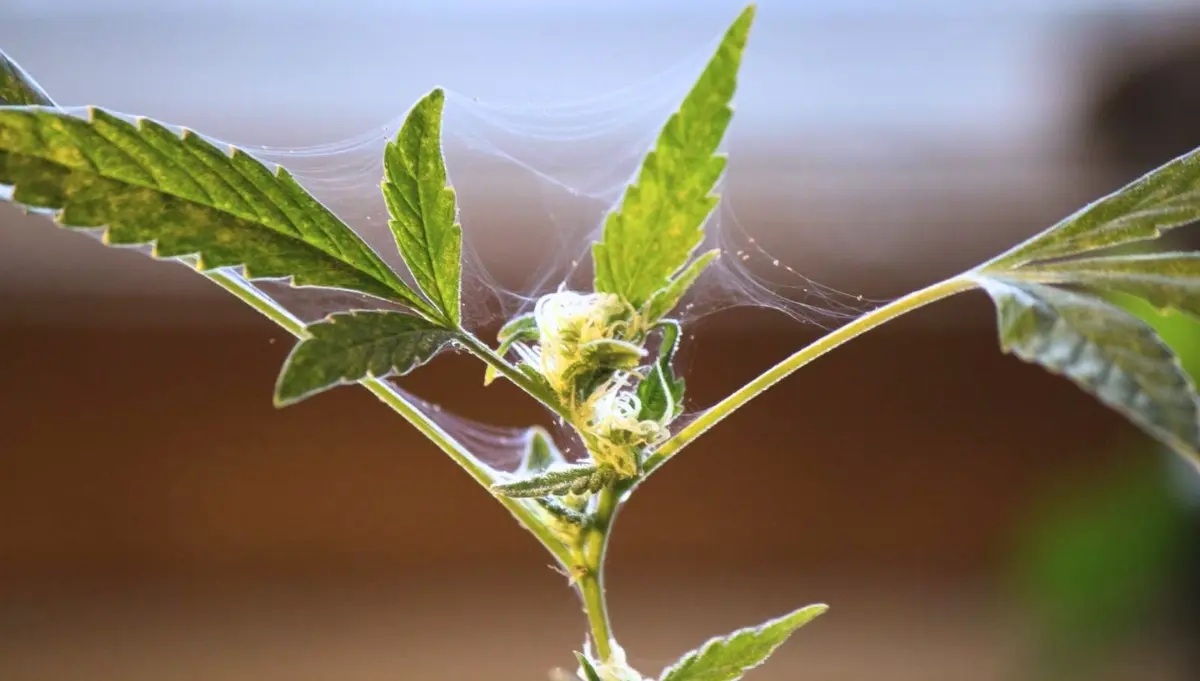
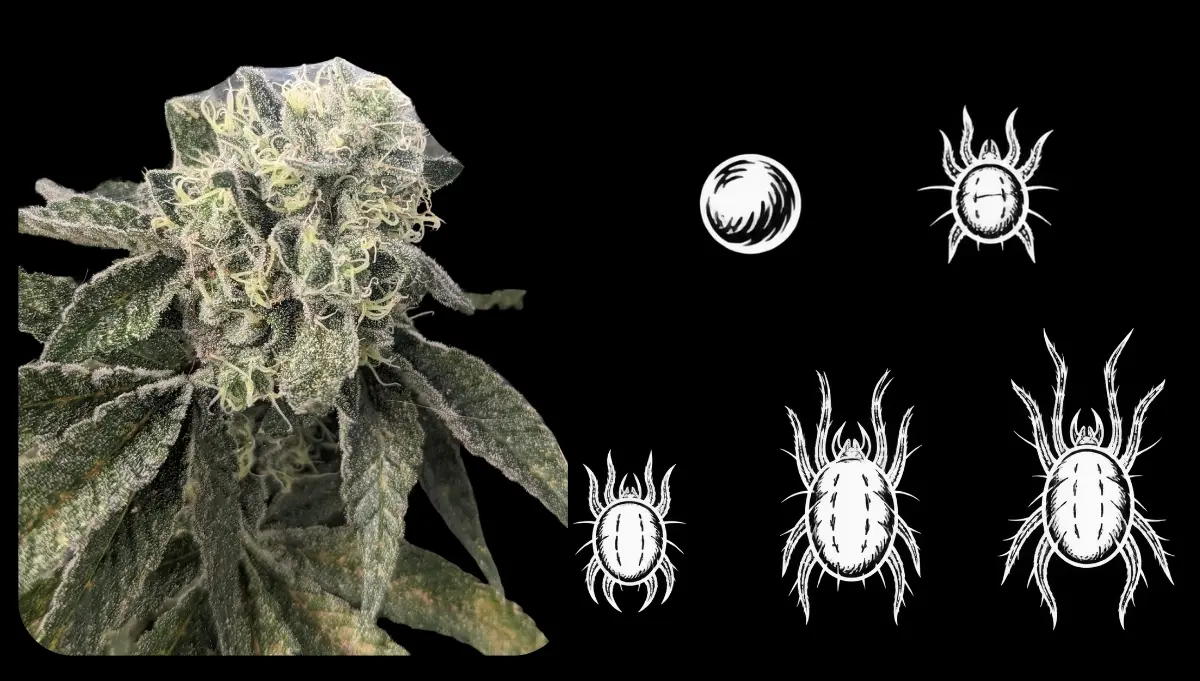
Spider mites are especially unpleasant because an early infestation can be easy to overlook. Tiny pale or yellowish dots may appear on the leaves, while fine webbing can later develop around leaf stems, branches, and between different parts of the plant.
The real horror begins when you realize that the strange leaf you noticed yesterday was not an isolated problem, but the first sign of an entire colony.
Early signs of a spider mite infestation
- small pale or yellowish dots on the leaves,
- tiny moving pests on the undersides of leaves,
- fine web-like strands,
- mottled or fading foliage,
- rapid decline in plant condition during a heavy infestation.
The classic grower mistake
“There are only one or two dots on that leaf. I’ll check it tomorrow.” That is roughly the grower equivalent of a horror-movie character deciding to go into the basement alone to investigate a strange noise.
The best strategy is regular inspection. Check the undersides of the leaves as well, especially when new plants, seedlings, or clones are introduced into an existing grow area.
Grower Tip:
If possible, do not place a new plant directly among your existing plants. A short isolation period and a thorough inspection can mean far less work than dealing with a full pest infestation later.
2. Mold – when the monster lives inside the flower
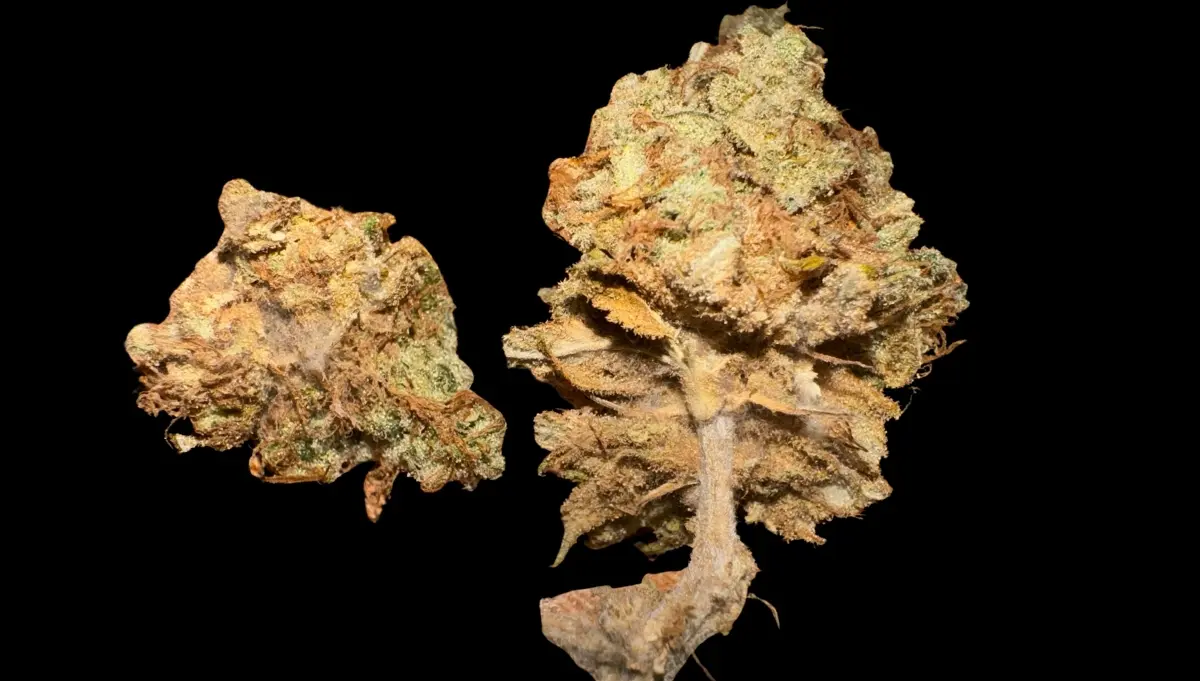
There is a moment when a grower admires the increasingly dense flowers and is already planning the harvest in their head. Then something strange appears. A browning section. A grey patch. A small leaf that pulls out of the flower suspiciously easily.
And this is where the horror-movie soundtrack would begin.
Mold on cannabis is particularly painful because the problem often becomes clearly visible only later in flowering, after significant time and energy have already gone into the plant.
What can encourage mold?
- high humidity,
- poor air movement,
- very dense plant growth,
- wet flowers,
- persistently humid microclimates inside dense flowers.
One of the best-known forms is flower rot associated with Botrytis. When the problem develops inside compact flowers, it may initially be difficult to notice from the outside.
That is why humidity, air exchange, and proper air circulation are not simple comfort extras. They are fundamental control points in a stable growing environment.
Halloweed warning
Moldy plant material is not a problem that should simply be scraped off and then ignored.
If you notice mold, handle the affected area carefully and inspect the surrounding flowers thoroughly as well.
Good prevention sounds boring: proper airflow, humidity control, a clean environment, and regular inspections. Those boring habits are exactly what can stop the final weeks from turning into a horror movie.
3. pH crash – the invisible curse
The next monster cannot be seen with the naked eye.
It does not have eight legs. It does not build webs. And it does not appear as a grey patch on a flower.
Instead, the leaves simply start looking strange.
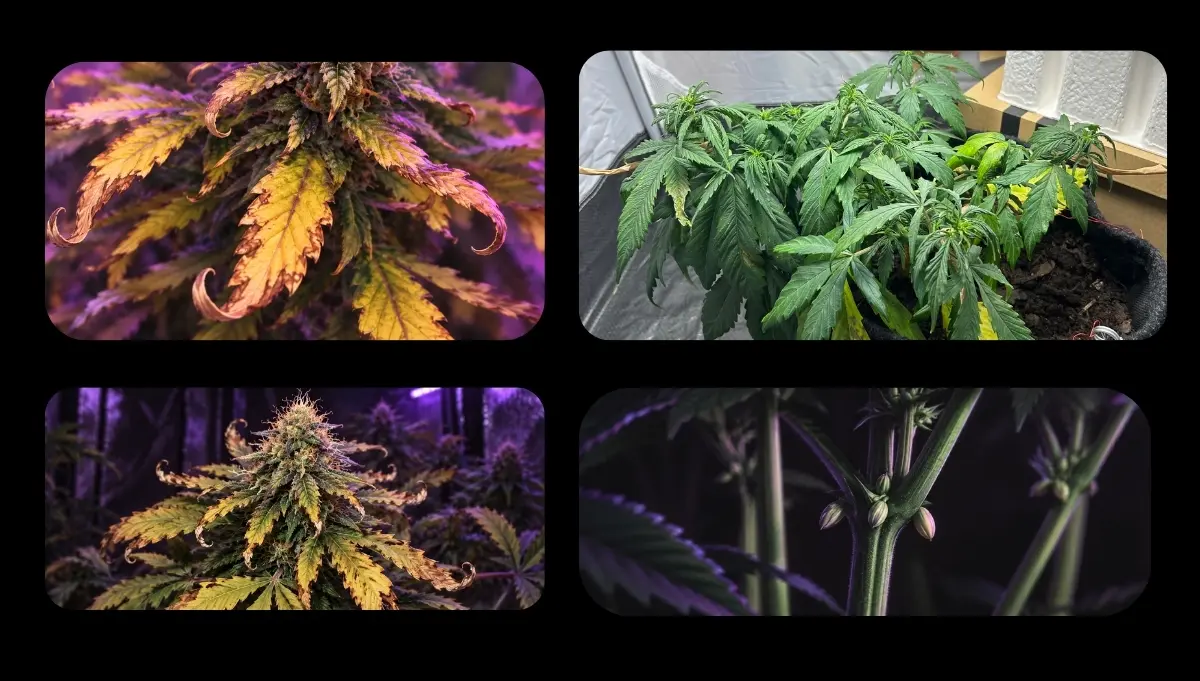
An incorrect pH can be particularly confusing because the visible symptoms may resemble a nutrient deficiency. A beginner’s natural response is often to add even more nutrients.
From that point, the story can quickly move in the wrong direction.
Why does pH matter?
The pH of the root zone affects how available different nutrients are to the plant. The question is therefore not always whether enough nutrients are present in the growing medium, but also whether the plant can actually absorb them under the current conditions.
The classic horror scenario
- The leaves begin to discolor.
- The grower assumes a nutrient deficiency.
- More nutrient solution is added.
- The root environment becomes increasingly unsuitable.
- More symptoms appear.
- The “What on earth is this plant doing?” phase begins.
The lesson is simple: when there is a problem, measure first and change things second.
Grower Tip:
A pH meter is only useful if it works correctly. Regular calibration and proper storage of the electrode are just as important as taking the measurement itself.
4. Overwatering – the swamp monster
Very few beginners lose a plant because they do not care enough about it. Far more often, the plant simply receives too much love.
Especially too much water.
Overwatering cannabis is a classic beginner problem. The plant droops slightly, and the immediate thought is: “Poor thing, it must be thirsty.”
So it gets more water.
Then it looks even worse.
“It must still be thirsty.”
More water.
And somewhere in the background, the imaginary horror soundtrack begins.
The issue is not necessarily one large watering event. The bigger problem is when the root zone remains constantly too wet. Roots need not only water, but also enough oxygen in the growing medium.
Possible signs of overwatering
- consistently heavy and wet growing medium,
- drooping or weak leaves,
- slower growth,
- very slow drying of the growing medium,
- potential root-zone problems over time.
A simple check
Do not water only according to a calendar. Observe the condition of the growing medium, the weight of the pot, and the plant’s reaction. There is usually a clear difference between the weight of a mostly dry pot and one that has just been watered.
5. Lighting failure – nightmare in the middle of the night
The grower finishes the light period in the evening. Everything seems normal.
At three in the morning, they suddenly wake up.
They go to get a drink.
And then they see it.
Light is leaking from the grow tent.
The timer did not switch off.
Welcome to light-cycle horror.
With photoperiod cannabis, a consistent light and dark rhythm is particularly important. A faulty timer, accidentally activated lighting, or another technical failure can therefore become a significant stress factor.
Sometimes the issue is not timing but light intensity itself. If the lamp is too close to the plant or running at excessive intensity, the upper leaves and flowers may begin to show signs of light or heat stress.
Three types of lighting horror
Scroll horizontally to view the table
| Problem |
What can happen? |
What should you check? |
| Faulty timer |
The light cycle may be disrupted. |
Timer, programming, and actual switching times. |
| Excessive light |
Light or heat stress and paling upper leaves. |
Lamp distance, intensity, and temperature. |
| Light leaks |
The dark period may be interrupted. |
Tent lightproofing and status LEDs on equipment. |
Grower Tip:
Do not check your equipment only once at the beginning of the grow. Occasionally verify that timers, fans, and lights really operate when they are supposed to. A quick check can prevent a lot of trouble later.
6. Hermaphroditism – when the plant takes an unexpected turn
Every good horror movie needs a twist.
The grower version usually begins when someone happily inspects the flowers and suddenly notices something that should not be there.
A pollen-producing structure.
With hermaphroditism, both female and male floral characteristics may appear on the same plant. This becomes particularly problematic when the goal is seedless female flowers, because released pollen can fertilize surrounding female flowers as well.
What may be behind it?
Both genetic predisposition and environmental stress may play a role.
Possible stress factors include:
- disruption of the light cycle,
- extreme environmental stress,
- mechanical damage,
- strongly fluctuating growing conditions,
- greater genetic predisposition in certain lines.
The sentence nobody wants to hear halfway through flowering
“Is that a seed?”
Regular observation is essential. During flowering, it is worth inspecting more than just the tops of the plants. Check branches, junctions, and flower sites carefully from time to time.
Choosing suitable genetics is also an important starting point. Grow Island offers genetics from a range of different seedbanks, including the Illuminati Lost Seeds collection.
7. Pre-harvest disaster – the final boss fight
The plant has been developing for months.
The flowers look good.
Only a few days remain.
The scissors have already been cleaned.
You are already arranging the drying area in your head.
And of course, this is exactly when something happens.
This is the finale of every grower horror movie: the disaster just before harvest.
The classic villains of the finale
- sudden mold problems,
- pest infestation,
- fan or exhaust failure,
- extreme temperatures,
- watering mistakes,
- branches snapping under heavy flowers,
- power outages or other technical failures.
Late flowering is a sensitive period because denser flowers and greater plant mass can cause certain problems to become serious more quickly.
Psychologically, this is also one of the hardest times to remain calm. After working with a plant for months, every small change during the final days can suddenly feel like the end of the world.
The rule for the final weeks
The closer harvest gets, the less sense there is in making large, unnecessary changes. Observe, measure, and intervene only when there is a genuine reason to do so.
If you work with young plants or clones, starting with suitable plant material can also prevent many later problems. You can explore different genetics in the Grow Island cannabis cuttings selection.
The 7 grower horrors at a glance
Scroll horizontally to view the table
| Horror |
Early warning sign |
Most important control |
| Spider mites |
Tiny spots, fine webbing |
Regular plant inspection |
| Mold |
Brown or grey areas |
Humidity and air movement |
| pH problem |
Symptoms resembling nutrient deficiency |
Measurement and calibration |
| Overwatering |
Constantly wet growing medium |
Watering rhythm |
| Lighting failure |
Light at the wrong time or light/heat stress |
Timing and lamp settings |
| Hermaphroditism |
Unwanted male floral structures |
Stress reduction and inspection |
| Pre-harvest disaster |
Rapid environmental or technical changes |
Stable environment and regular checks |
The most common mistake: treating problems out of panic
All seven stories share one common element that may be more dangerous than any pest: jumping to conclusions too quickly.
A leaf turns yellow and suddenly three different additives go into the watering solution. A plant droops, so it gets even more water. One strange patch appears, and pH, EC, lamp distance, and watering are all changed at the same time.
After that, it becomes almost impossible to tell what caused the original problem and which new symptoms were created by the attempted fixes.
Do not become the villain of your own grow
When you notice a problem, collect information first. Check the environment, look at the whole plant, measure the relevant values, and only then make targeted changes. If possible, avoid changing five different factors at the same time.
A simple troubleshooting order
- Look at the plant: where are the symptoms appearing?
- Check the root zone: is the growing medium too dry or too wet?
- Measure the environment: temperature, humidity, and light.
- Check pH and the watering routine.
- Look for physical signs of pests or disease.
- Only then decide on a targeted response.
How can your next grow be more comedy than horror?
A large part of successful growing does not look spectacular at all. It consists of inspections, cleanliness, measurements, and consistent routines.
That is exactly why it works.
The grower survival kit
- keep the grow area clean,
- inspect the undersides of leaves regularly,
- monitor temperature and humidity,
- maintain proper air movement,
- do not water automatically just because the calendar says it is watering day,
- use reliable and properly maintained measuring equipment,
- check timers and technical equipment regularly,
- inspect new plants thoroughly before introducing them into the grow,
- inspect the entire plant regularly during flowering.
For suitable equipment, genetics, and environmental control, you can explore Grow Island for grow equipment, lighting, nutrients, genetics, and a wide range of additional growing accessories.
Frequently asked questions – Halloweed FAQ
What is one of the most common cannabis growing problems for beginners?
One classic mistake is overwatering. Many beginners water too often because they are afraid the plant will dry out. A root zone that stays too wet for too long can also cause significant problems.
How can you detect spider mites early?
Inspect both the tops and undersides of leaves regularly. Early signs can include tiny pale dots and very small moving pests. With a heavier infestation, fine webbing may also appear.
Why can high humidity be a problem during flowering?
A humid microclimate can form inside dense flowers. Combined with poor air movement, this may create more favorable conditions for certain fungal problems.
Does every yellow leaf mean nutrient deficiency?
No. Leaf discoloration can have many causes, including nutrient issues, pH imbalance, root stress, watering mistakes, or natural aging. That is why the cause should not be diagnosed from a single symptom alone.
Can disruption of the light cycle cause problems?
With photoperiod cannabis, a consistent light and dark rhythm is important. Regular or significant interruptions of the dark period may cause stress, so a reliable timer and sufficiently lightproof grow space are useful.
How can most grower horrors be prevented?
There is no single magic solution. However, a clean grow area, stable environmental conditions, good airflow, a consistent watering routine, regular measurements, and careful plant observation can significantly reduce the risk of many common problems.
Conclusion: the scariest monsters in the grow tent can often be spotted early
Spider mites arrive like the enemy in a classic invasion horror. Mold is the monster hiding in the background. A pH problem is the invisible curse. Overwatering is the swamp creature. A faulty light timer feels like a supernatural event. Hermaphroditism delivers the unexpected plot twist. And the disaster before harvest is, naturally, the final twenty minutes of the movie when everything seems to fall apart at once.
But there is good news.
Most everyday grower horrors do not appear completely without warning. There are often early signs that can be detected through careful observation and a stable growing routine.
A good grower is therefore not someone who never has problems. What matters is being able to notice changes early, identify the likely cause systematically, and avoid reacting out of panic.
Halloweed continues
This is only the beginning of the season. In the next Halloweed episodes, we will keep mixing cannabis culture with horror-movie atmosphere, strange grower stories, and October pop culture. Until then, one piece of advice: if you hear a strange noise coming from the grow tent at night, check the fan first. Then check the undersides of the leaves. Just to be safe.
About the author
Bartholomew Alen – Grow Island
The Grow Island team creates clear educational content for beginners and experienced growers based on practical growing experience, plant knowledge, and modern grow technology. Our goal is to present information about cannabis cultivation in a clear, objective, and genuinely useful way.
Legal notice
This article is provided solely for general educational and informational purposes. It does not constitute legal advice and does not encourage unlawful activity. Laws relating to cannabis, cultivation, possession, plant material, and use vary by country and region and may change over time. Always check and comply with the laws, age restrictions, and other regulations that apply where you live.









Comments