Cannabis Transplanting – Complete Guide to Pot Size & Roots
Written by: Bartholomew Alen
Cannabis can develop a dense root system in a short time. When the available space becomes too small, roots begin to follow the pot wall, circle the container and displace more and more growing medium. At the same time, the pot dries faster and above-ground growth may slow down. This guide explains how to recognise a root-bound plant, which pot size suits each stage of development and how to transplant cannabis without unnecessary stress.
What does this mean in practice?
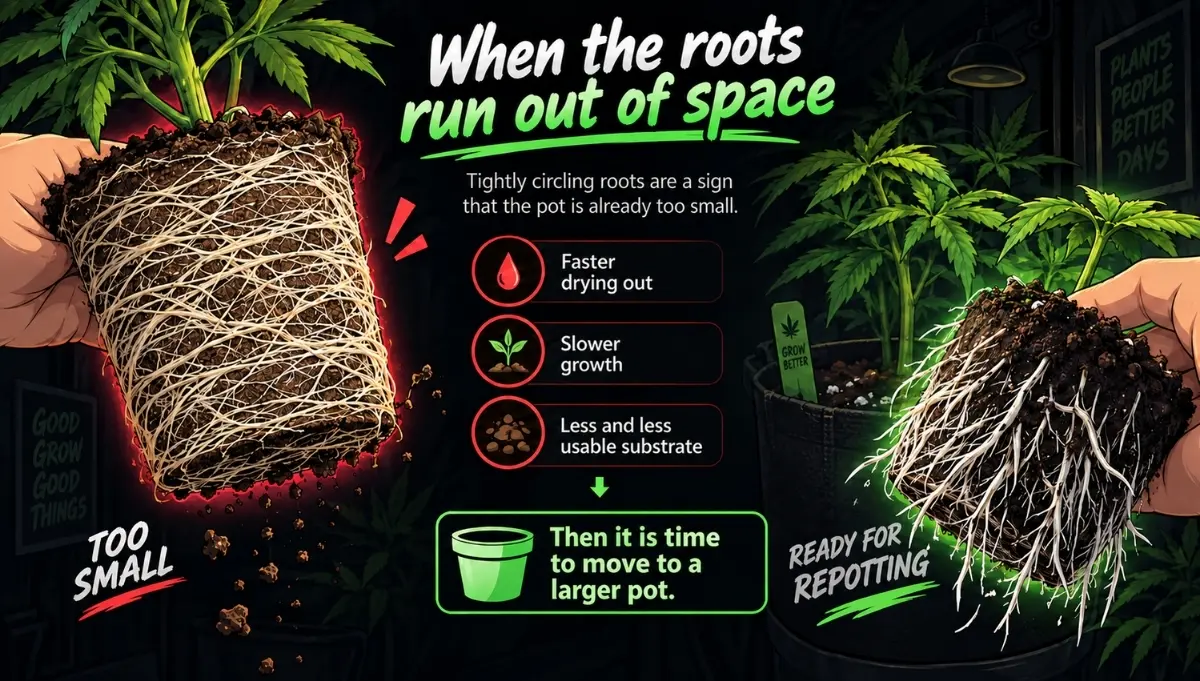
A single root visible at a drainage hole is not yet an emergency. The overall pattern matters: if the pot dries increasingly quickly, growth slows and the root ball consists almost entirely of circling roots, most of the usable root space has been exhausted.
Transplanting should therefore be planned in advance. The goal is not to rescue an already severely weakened plant, but to provide fresh, evenly manageable root space at the right time.
What does root bound mean?
Root bound, or pot bound, describes a condition in which the root ball fills most of the available container space. In smooth plastic pots, growing root tips reach the wall and follow it. This produces circling roots, especially near the bottom of the container. As root density increases, less growing medium remains to hold water, oxygen and nutrients.
Restricted root space affects more than the roots themselves. A meta-analysis of pot size and plant growth shows that available rooting volume can significantly influence biomass development. The exact response depends on species, cultivation method, water availability and nutrition. Cannabis has fewer standardised data sets than conventional horticultural crops, so litre figures should be treated as practical starting points rather than universal laws.
Root condition is closely connected to the health of the plant above ground. For an introduction to structure and function, see what cannabis anatomy reveals about plant health .
When should cannabis be transplanted?
No single symptom proves that root space is restricted. The more of the following signs appear together, the more likely it is that the pot has become too small:
- Several roots grow through the lower drainage holes.
- The pot becomes unusually dry soon after watering.
- Above-ground growth slows despite a stable climate.
- Leaves lose turgor even though watering is appropriate.
- Water tends to run down the inside of the pot wall.
- When removed, the root ball is enclosed by a dense, pale root network.
- The pot tips easily because the canopy is too large for the container.
How to interpret roots at the bottom of the pot
Roots search for moist, oxygen-rich areas. Individual tips can therefore appear at drainage holes early, even while plenty of space remains inside the medium. Do not remove the plant every time one root becomes visible. Also observe drying speed, new growth and the stability of the root ball.
Root bound or another problem?
Slow growth and drooping leaves can also result from overwatering, drought stress, an unsuitable pH, high salt concentration, heat or root disease. A huge new pot will not correct these causes. On the contrary, if the old root ball is already permanently wet, extra moist soil may further reduce its oxygen supply.
The guide to proper cannabis watering helps distinguish these causes. If the plant displays deficiency patterns, also consult the overview of nutrient-related cannabis problems .
What pot size does cannabis need?
The right size depends on vegetative duration, genetics, medium, irrigation strategy, climate and plant count. A short vegetative phase normally requires less volume than an outdoor plant that grows for several months. Frequently irrigated coco is sized differently from organic soil with a large water reserve. The article on why beginners and experts use coco coir explains the special characteristics of this medium.
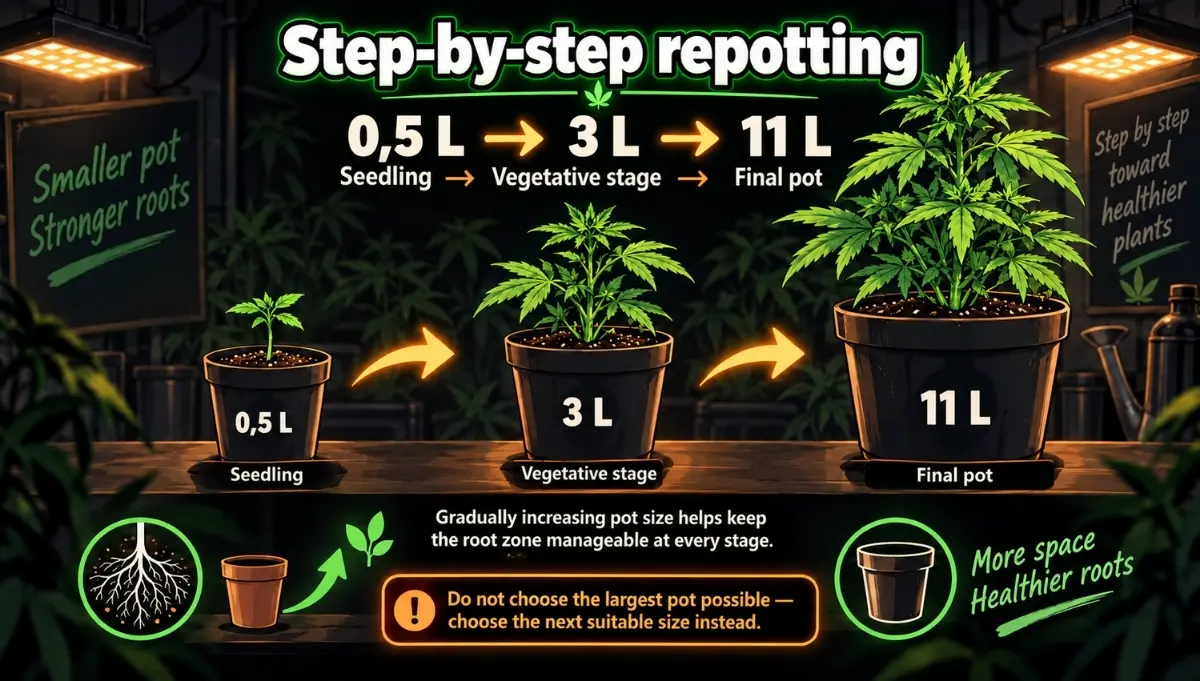
The manageable size is right, not necessarily the largest
A large container provides reserve capacity, but it also stores a large amount of water. A small plant can only root through and dry this volume slowly. If the entire pot is soaked too frequently, the root zone may remain oxygen-poor for a long time.
Choose a size whose moisture cycle you can control reliably. Effective drainage, an aerated medium and an appropriate watering volume are just as important as the litre figure.
Choosing pot shape, material and drainage
Root space is influenced not only by volume, but also by container shape. Tall, narrow pots dry differently from wide containers holding the same number of litres. The lower area of a very deep pot may remain moist for a long time even when the surface already looks dry. Wider pots offer a larger surface area and may dry more evenly, but they require more floor space.
Plastic pots retain moisture comparatively well and are easy to clean. Fabric pots and air-pruning containers expose the outside of the root ball to more air. When root tips meet dry air, their lengthwise growth stops and the plant can produce a more highly branched network of fine roots. This does not eliminate irrigation mistakes: a fabric pot may lose water very rapidly in warm, dry air, while a tightly packed container or one placed in a closed tray may still remain wet for too long.
Four checks before choosing a pot
- Drainage: Several unobstructed holes must allow surplus water to escape without pooling.
- Standing surface: The pot must not sit permanently in runoff. Saucers and trays need to be checked and emptied.
- Medium structure: A loose medium with stable air-filled pores matters more than a decorative pot shape.
- Watering routine: Choose a material whose moisture balance you can manage reliably even on hot or busy days.
A drainage layer of coarse stones at the bottom does not replace a well-structured medium or functioning drainage holes. Instead, it reduces usable root volume. What matters is that the entire medium can absorb water, release the excess and draw air back into its pores after irrigation.
Potting up in stages or planting directly into the final pot?
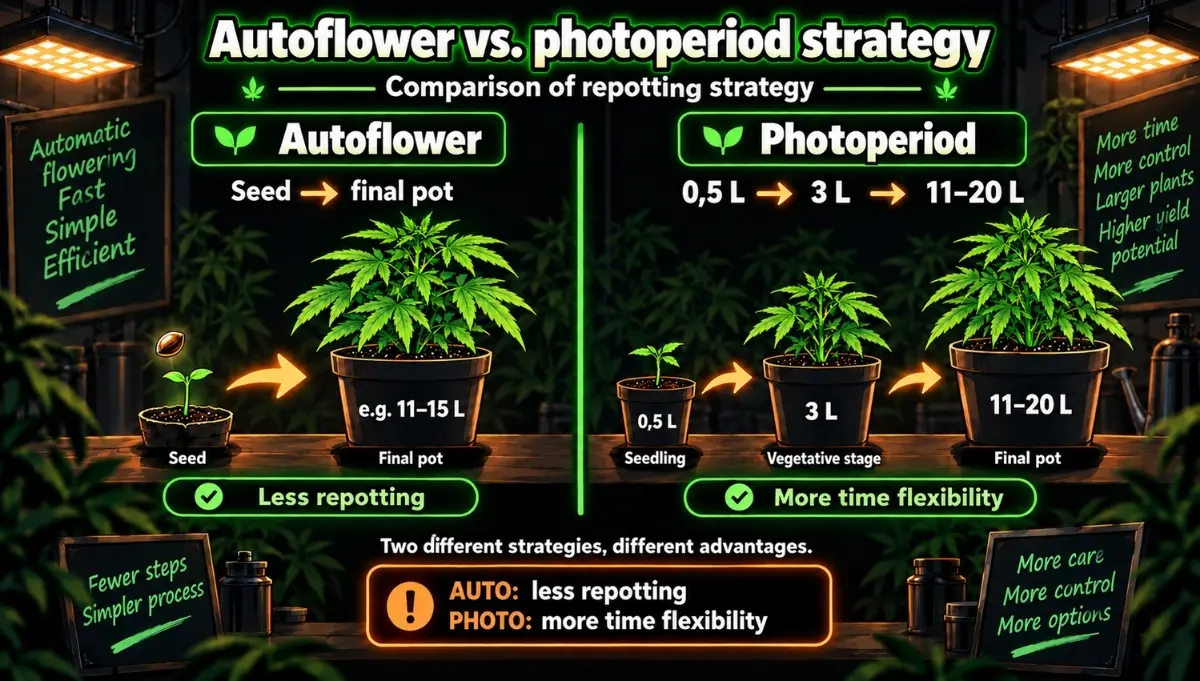
With staged transplanting, a plant might move from 0.5 litres to 3 litres and then to 11 litres. The current root ball can be watered relatively evenly, and the grower can use drying behaviour and root development to decide when the next step is appropriate. Every transfer, however, requires work and introduces a small risk of damage.
Starting directly in the final container avoids later transfers, but it demands disciplined watering. A small root zone must not be treated as though it already occupies the entire large pot. For beginners in particular, excessive water in a large volume is usually a more common problem than insufficient space.
How to transplant cannabis with minimal stress
- Prepare the new pot: Check the drainage, add fresh medium and form a hole that fits the existing root ball.
- Balance moisture: The old ball should be stable but neither dusty-dry nor dripping wet. Slightly moist medium usually holds together well.
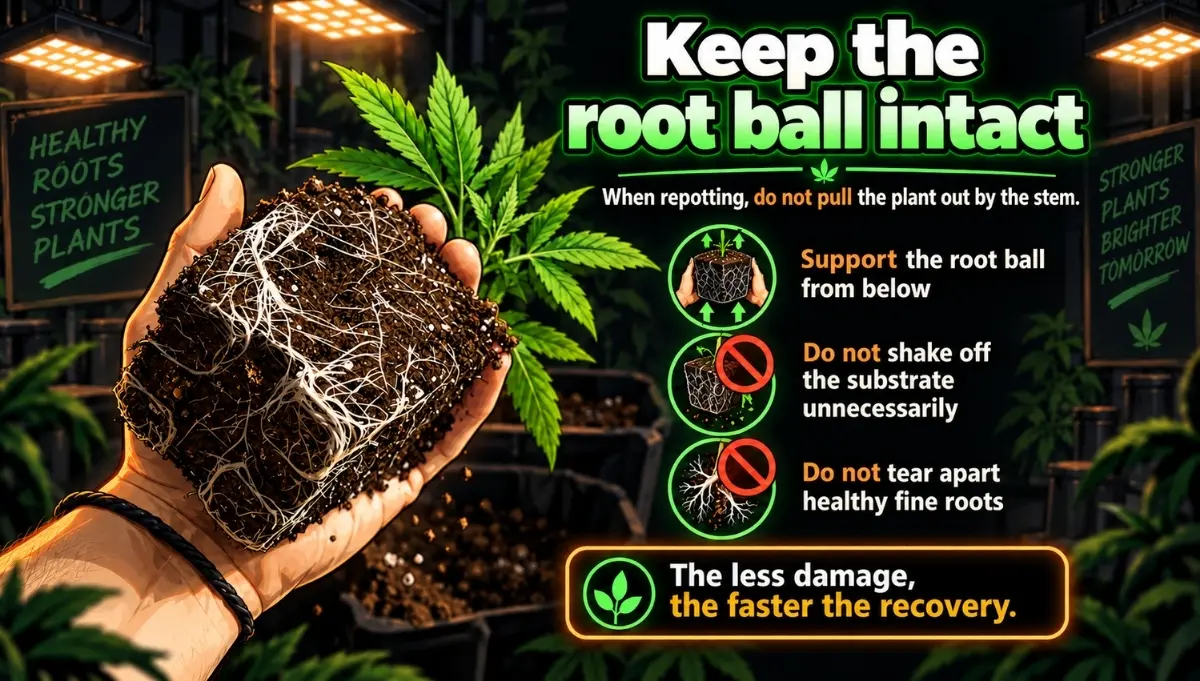
- Release the plant: Gently press the sides of the pot. Never use the stem as a handle.
- Support the root ball: Place one hand over the medium and let the ball slide out in a controlled movement.
- Inspect the roots: Pale, firm roots are a good sign. Dark, soft or unpleasant-smelling areas require investigation.
- Plant at the same depth: Do not bury the original root ball substantially deeper.
- Fill the gaps: Work in fresh medium loosely without compressing it hard.
- Water precisely: Connect the old ball with the adjacent new medium without leaving the entire pot saturated for a long time.
The first 72 hours after transplanting
The plant does not have to grow faster immediately after the transfer. First it establishes contact between the old root ball and the new medium. Damaged fine roots are replaced, new root tips explore the surrounding space and water transport stabilises. A brief pause in growth is therefore not automatically a warning sign.
Keep conditions calm and predictable during this phase. Avoid large changes in light intensity, temperature, feeding and humidity. If the new pot is substantially larger, focus the first watering on the old root ball and a limited ring of fresh medium around it. This creates contact without leaving distant, unrooted areas wet for an unnecessarily long time.
If the plant shows fresh growth after a few days, normal care can be resumed gradually. If the medium remains heavy and wet, develops an unpleasant smell or the plant loses increasing amounts of turgor, inspect the root zone first. More fertiliser will correct neither oxygen shortage nor rot. The guide to proper cannabis watering explains how to assess the moisture pattern systematically.
Why the root ball should remain as intact as possible
Fine root hairs are essential for water and mineral uptake, and they are mechanically delicate. If the root ball falls apart or soil is shaken off aggressively, the plant loses part of its immediately effective absorption surface.
For a young cannabis plant with normal root development, a calm transfer with an intact root ball is therefore more appropriate than routinely tearing it open. Severely deformed, old root balls from perennial woody plants are a different horticultural problem and should not be treated as directly comparable with a young cannabis plant.
What not to do when transplanting
The most important mistakes
- Pulling the plant out of the pot by its stem.
- Shaking all healthy medium away from the roots.
- Tearing the root ball apart without a specific reason.
- Cutting roots with blunt or contaminated tools.
- Applying an aggressive nutrient dose immediately after the transfer.
- Transplanting, topping and heavy defoliation at the same time.
- Exposing the freshly transplanted plant immediately to extreme heat or maximum light intensity.
Several stressors at once make diagnosis more difficult. If you also plan to train the plant, wait for visible new growth and consult the cannabis stress guide . For a broader pre-treatment check, also read the ten most common mistakes in cannabis cultivation .
How long does recovery take?
A healthy root ball transferred cleanly may show visible new growth again after only a few days. A fixed number of days is unreliable, however. Temperature, oxygen supply, moisture, root damage and genetics all affect the speed. New growth is the decisive indicator: upright young leaves and continued shoot extension show that the plant is active again.
A normal pause or a real problem?
A brief slowdown without increasing discolouration can be normal adjustment. If leaves turn yellow quickly, the medium remains wet for days or the root zone smells unpleasant, do not simply add more fertiliser. Check moisture, drainage, temperature and pH first.
If growth restarts unusually slowly, consult slow-growing cannabis plants . At the same time, keep the transpiration load manageable and use the cannabis VPD chart for growth and flowering to check whether temperature and humidity are balanced.
Transplanting autoflowering plants
Autoflowering genetics enter flowering after a short period regardless of the light schedule. A lost week can therefore be harder to recover than with a photoperiod plant whose vegetative phase can be extended. Many growers sow autoflowers directly in the final pot to avoid a late transfer.
This does not guarantee a stress-free start: in the final pot, water volume is the main challenge. At first, water according to the small root zone and expand the irrigated area as the plant grows. If you do transplant an autoflower, do it early, with a well-bound root ball and without simultaneous training. For the foundations of early plant development, read everything you need to know about cannabis seedlings ; available genetics can be explored in the autoflowering seeds category .
Photoperiod plants and a long vegetative phase
Photoperiod plants offer more planning flexibility. With a long vegetative phase, mainlining or ScrOG, staged transplanting can be useful because a larger canopy also needs more stable root space. Complete the final transfer early enough before the switch to flowering for the plant to colonise the new pot.
Outdoors, season length, wind and access to irrigation determine the practical final size. A very large container can provide greater growth potential, but it becomes heavy, requires more medium and must be secured against tipping. Additional planning guidance is available in the guide to outdoor photoperiod cannabis growing and the article on growing cannabis on balconies and terraces .
Plant recommendations
The following plants differ from the selections in the training guide. Match pot volume and the transfer plan to the plant's actual growth. A product description never replaces observation of drying behaviour, root-ball development and overall progress.

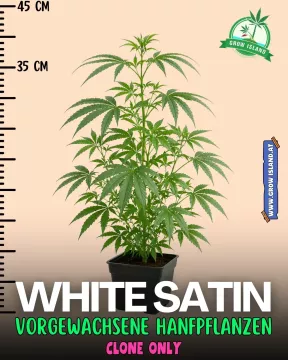
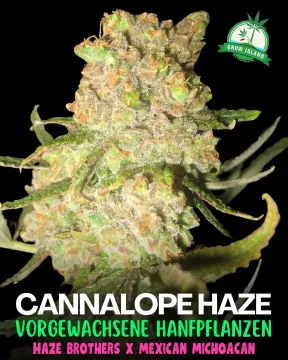

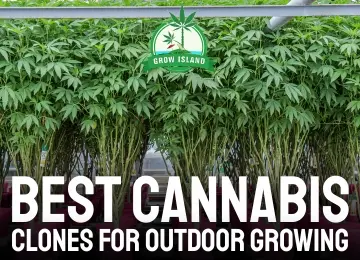
The article on cannabis clones from Grow Island explains how rooted clones can be established after arrival. Growers starting from seed can compare the available options in the cannabis seedlings category .
Frequently asked questions
Must I transplant as soon as one root is visible at the bottom?
No. A single root strand is not enough for a diagnosis. Assess drying behaviour, growth and the density of the complete root ball.
Should I loosen the root ball?
A young cannabis plant with normal root development should be kept as intact as possible. Aggressive tearing damages fine roots. Only a severely deformed or diseased-looking root ball calls for a special case-by-case decision.
Should I fertilise immediately after transplanting?
That depends on the medium. Pre-fertilised soil may already contain sufficient nutrients. A strong additional dose then increases the risk of salt stress. Follow the manufacturer's directions and consider the condition of the plant.
Is a fabric pot better?
Fabric pots and air-pruning containers can reduce circling root growth and improve aeration. They also dry faster and require adapted irrigation. The best pot is the one whose water balance you can manage reliably.
Summary
Timely transplanting provides fresh root space, stabilises the water balance and supports continued growth. Do not wait for an extremely matted root ball, but do not react to one visible root tip either. Combine several signals, choose a manageable pot size and keep the root ball together as much as possible during the transfer.
Autoflowers often benefit from starting in their final pot when watering is managed correctly. Photoperiod plants can be transplanted flexibly in stages. In both cases, stable moisture, oxygen and healthy new growth matter more than a universal litre figure.
Sources and technical basis
Poorter and co-authors: Pot size matters: a meta-analysis of the effects of rooting volume on plant growth . Basis for interpreting the relationship between rooting volume and plant growth.
US Forest Service: Containers, Tropical Nursery Manual . Basis for relationships among container shape, root development, water and nutrients.
University of Florida: The Effect of Container Size . Literature review covering container volume, root restriction and transplant development.
Mississippi State University Extension: Care and Selection of Indoor Plants . General horticultural basis for pot-bound roots and transplant damage.
Note on applicability: Part of the underlying research comes from general horticulture rather than standardised cannabis trials. The litre figures in this article are therefore practical starting ranges and must be adapted to genetics, medium and cultivation method.
Grow Island legal notice
This article is provided solely for general information and education about plant care and horticulture. It is neither legal advice nor an invitation to engage in unlawful conduct.
Laws governing cannabis, hemp plants, seeds, clones, cultivation, possession and processing vary by jurisdiction and may change at any time. Readers are responsible for checking and complying with the laws, age restrictions and official requirements that apply at their place of residence and cultivation before any purchase, possession or use. Current official information for Austria is available from Gesundheit.gv.at and Oesterreich.gv.at .
All figures relating to pot size, growth, recovery and yield are general guidance. Actual results depend on genetics, environment, medium, irrigation and experience, among other factors. To the extent permitted by law, Grow Island does not guarantee a particular cultivation outcome and accepts no liability for damage arising from improper or unlawful use of the information. Mandatory consumer rights remain unaffected.
Product references and recommendations may serve a commercial purpose and may lead to Grow Island offers. Availability, characteristics and prices are determined by the current product page. Sales are made exclusively in accordance with applicable law and the relevant terms and conditions.









Comments