
Win Gardumim Leviosa
A distinctive Illuminati Lost Seeds selection. Observe its individual phenotype instead of comparing every shade of green with another cultivar.
View seeds
Written by Bartholomew Alen
Cannabis nutrient deficiencies: identify yellow leaves, spots and distorted growth correctly
A yellow cannabis leaf does not automatically prove a nutrient deficiency. The same visible symptom may result from unsuitable pH, excessive EC, overwatering, damaged roots, cold substrate, strong light or natural ageing. Reliable diagnosis therefore begins with the location and pattern of the damage, not with a bottle of fertiliser.
This guide explains nitrogen, magnesium, calcium, iron, potassium, phosphorus, sulphur, manganese, boron and copper deficiencies. It also shows how mobile and immobile nutrients behave, how to distinguish a true shortage from lockout, and how to correct the cause without creating a second problem.
First determine whether the problem began on older lower leaves or on young upper growth. Then check whether the veins also turn yellow, where spots develop and whether leaf tips or margins are burnt. Only after that should pH, EC, irrigation and feeding be adjusted.
Mobile nutrients can be relocated from older tissue to new growth when supply becomes limited. Their deficiencies therefore usually appear first on lower, older fan leaves. Nitrogen, magnesium, phosphorus and potassium belong mainly to this group.
Immobile or weakly mobile nutrients cannot be moved efficiently from old leaves to developing tissue. Their deficiencies become visible first near the top, in fresh leaves or at growing points. Calcium, iron, boron, copper, manganese and sulphur are commonly assessed in this group.
This distinction is a powerful starting point, but it is not a laboratory test. Root disease, pH lockout and severe salt stress can produce several patterns simultaneously. For a wider overview, compare the symptoms with Grow Island's guide to nutrient-related problems .
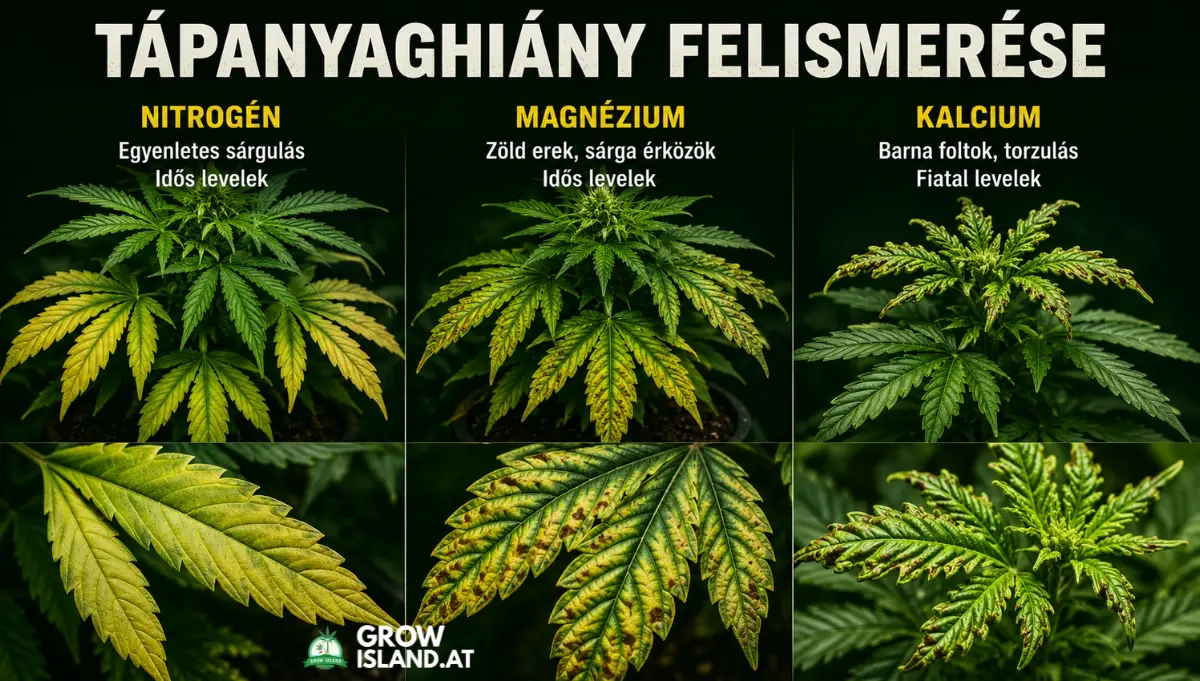
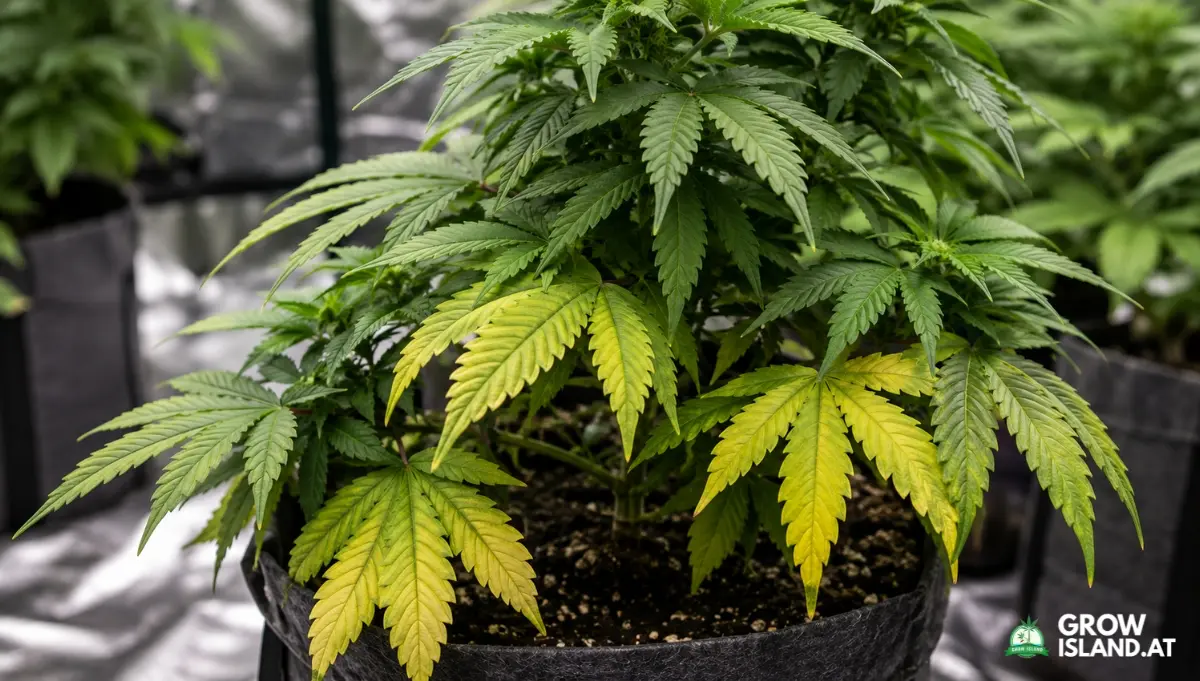
Nitrogen deficiency usually begins on the oldest lower leaves. They lose colour relatively evenly, changing from healthy green to pale green and then yellow. The plant may grow slowly, produce thinner shoots and shed severely affected leaves.
The feed may contain too little nitrogen, the medium may be exhausted, or the roots may be unable to absorb available nitrogen because of unsuitable pH, cold, waterlogging or root damage. A normal late-flowering fade should not be confused with a severe early deficiency.
Check root-zone moisture and pH before increasing nutrition. If the environment is healthy and input EC is genuinely low, increase the balanced base feed gradually. Judge recovery from vigorous new growth; old yellow leaves may not become green again.
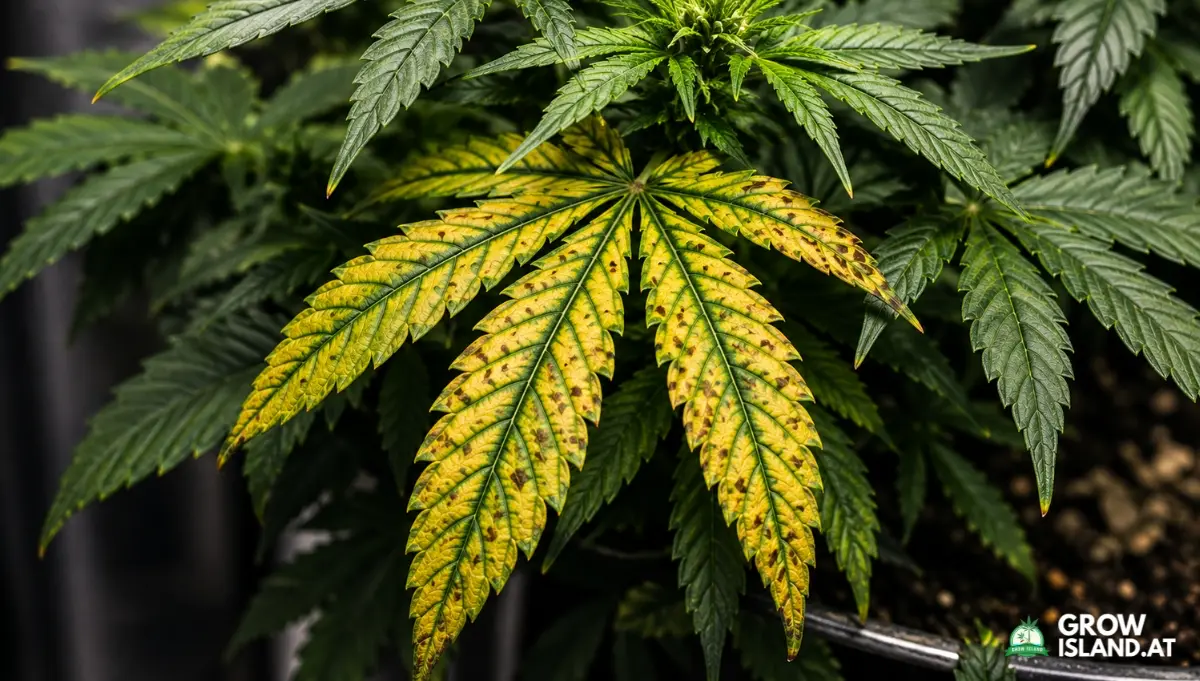
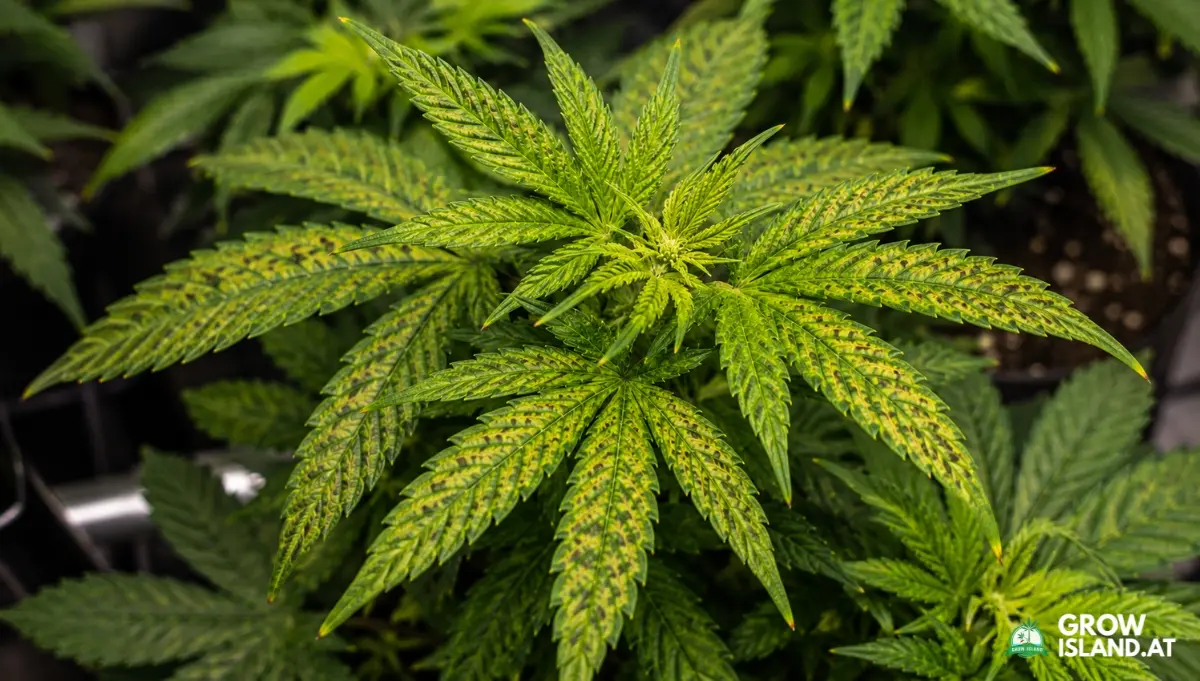
Magnesium deficiency normally affects older leaves first. The tissue between the veins turns yellow while the veins remain greener, creating interveinal chlorosis. Rust-coloured spots may appear as the condition progresses.
Low magnesium supply, very soft or reverse-osmosis water, excessive potassium or calcium, unsuitable pH and salt accumulation may all contribute. Coco has particular cation-exchange behaviour, so use a nutrient programme designed for the medium. The coco coir guide explains this relationship.
Confirm the pattern and root conditions first. Correct pH and irrigation, then use a suitable complete nutrient or measured calcium-magnesium supplement where it is actually needed. Avoid repeatedly adding Cal-Mag without checking the total EC.
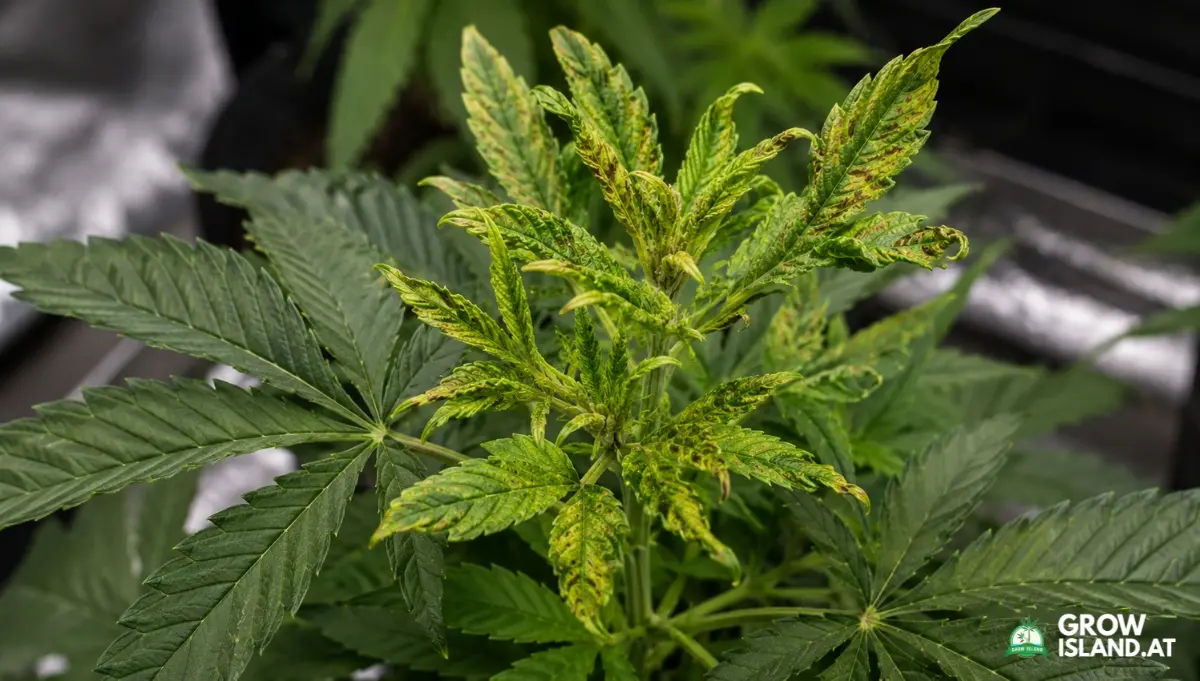
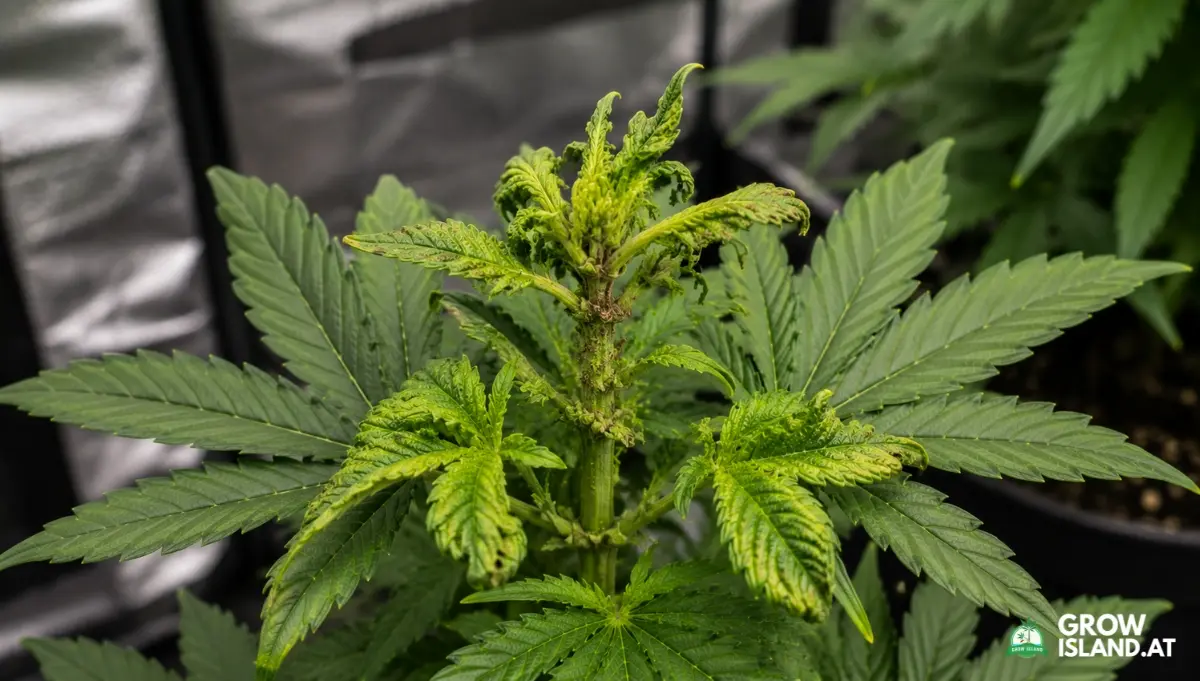
Calcium problems appear mainly in young growth: twisted or irregular new leaves, weak growing points and uneven brown or rust-like spots. The margins may deform and fresh tissue can feel fragile.
Calcium movement depends strongly on water flow through the plant. Very high humidity, weak transpiration, damaged roots, unsuitable pH or an antagonistic nutrient balance can therefore create deficiency-like symptoms even when calcium is present.
Stabilise the root zone and climate, verify pH and review the water analysis. Add calcium only when the water and nutrient system justify it. New, correctly formed leaves demonstrate improvement better than damaged old tissue.
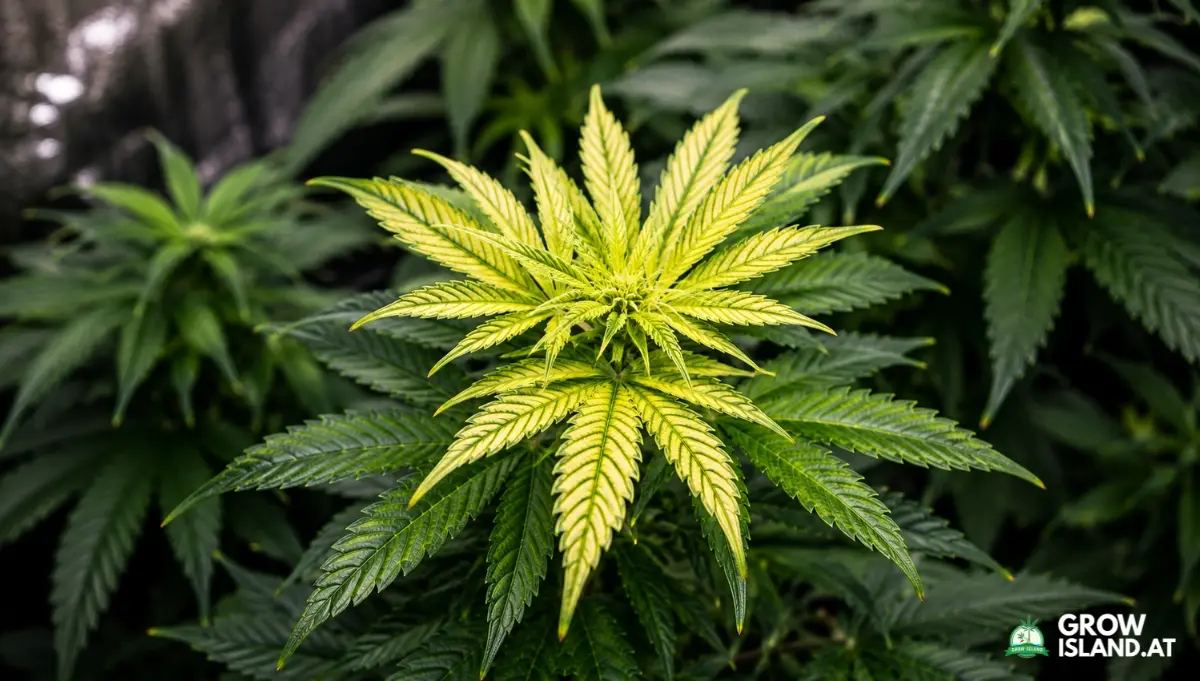
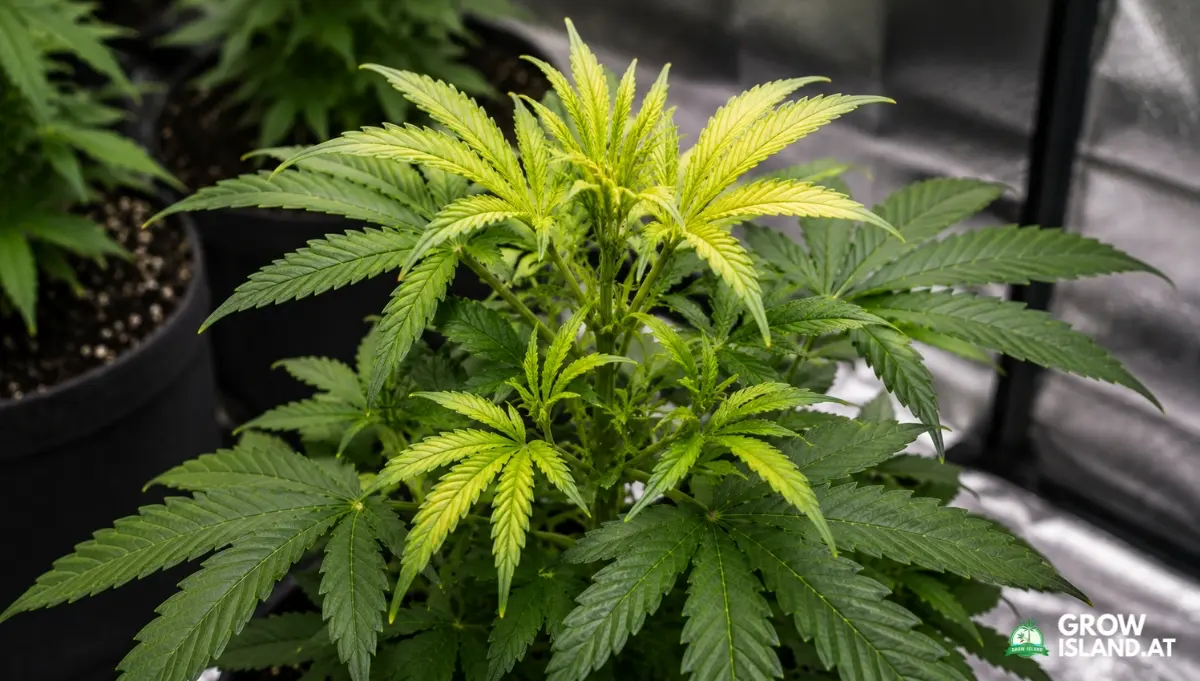
Iron deficiency begins on the youngest leaves. New growth becomes pale yellow or nearly white while veins may initially stay green. A high root-zone pH is a frequent cause because iron can be present but chemically unavailable. Correct pH and root health before adding extra iron; aggressive dosing can create micronutrient imbalance.
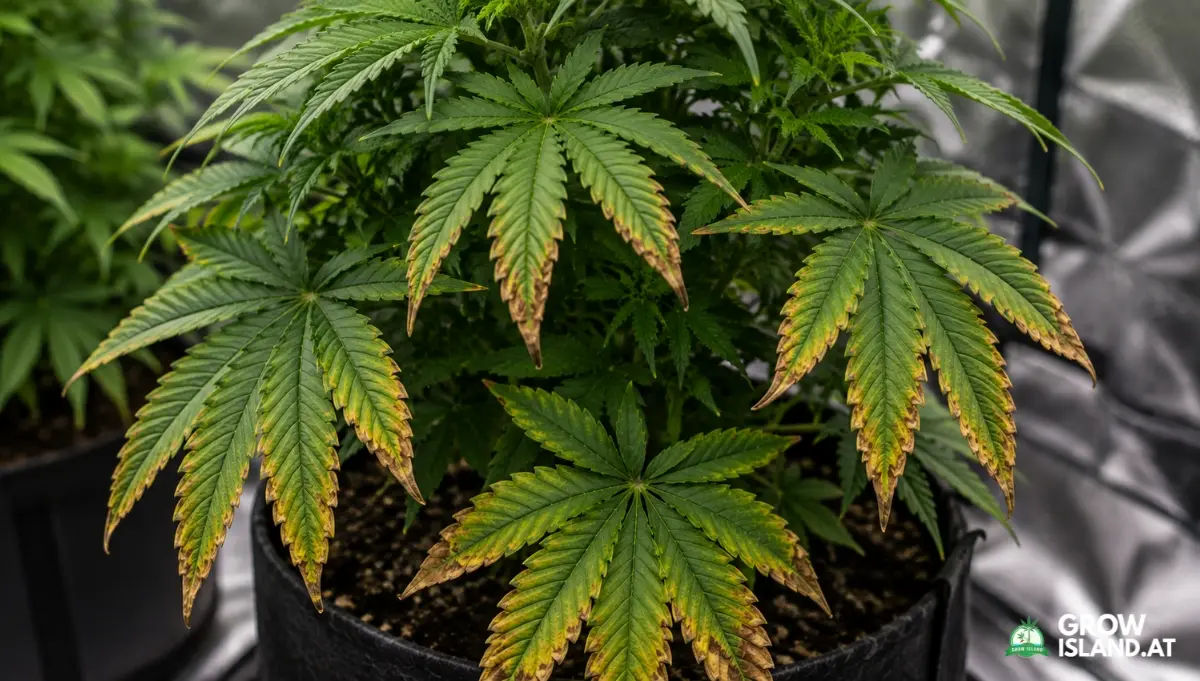
Potassium deficiency commonly starts on older leaves with yellowing along the edges, followed by brown, dry or burnt-looking margins. Plants may have weaker stems and reduced stress tolerance. High salinity or excess calcium, magnesium or ammonium can interfere with uptake. Do not assume that every burnt edge needs a PK booster: fertiliser burn itself can look similar.
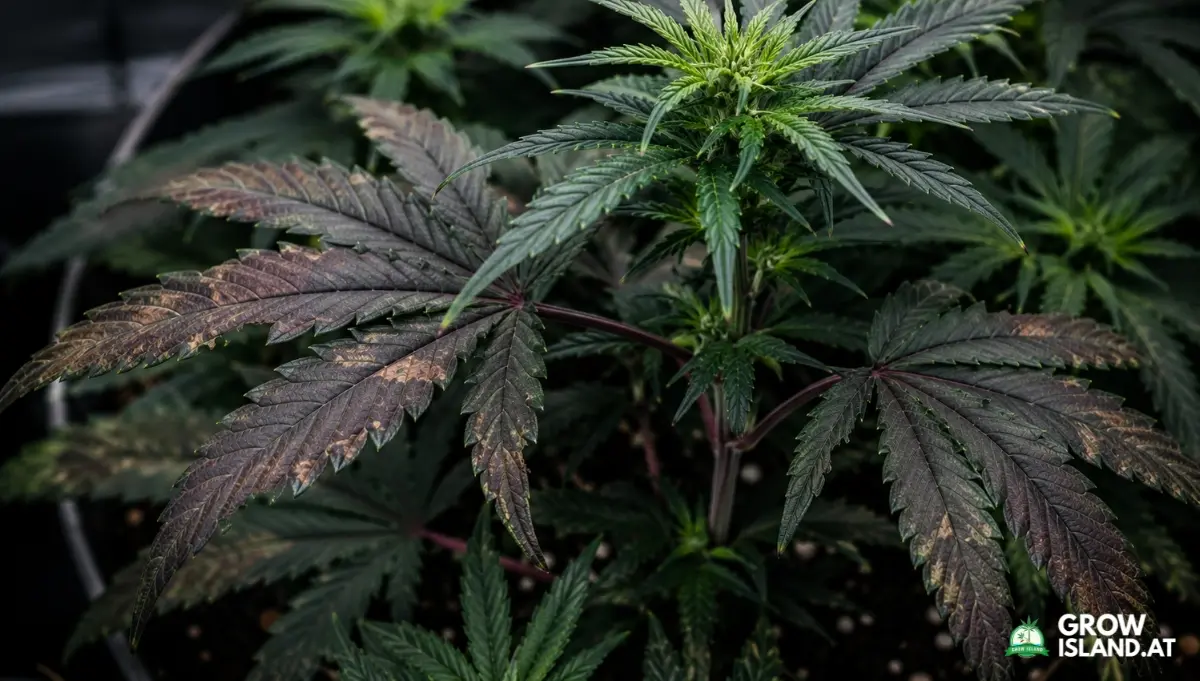
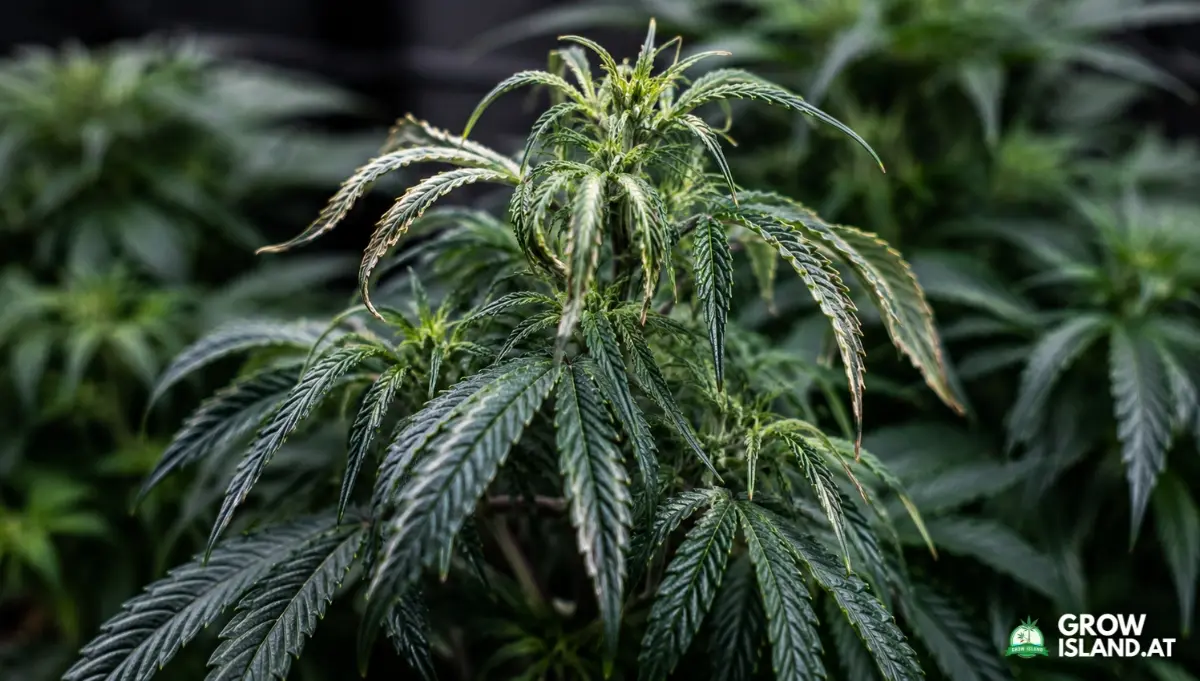
Growth may slow and leaves may become unusually dark, dull or blue-green. Purple petioles and stems can occur, but pigmentation alone is not proof because genetics and cool temperatures also produce purple colour. Learn more in the article about purple cannabis . Cold, wet substrate and unsuitable pH often reduce phosphorus uptake.
Sulphur deficiency tends to make young leaves uniformly pale and can produce thin, weak growth. It is less common with complete cannabis nutrients than many growers assume. Verify pH, root activity and the full product composition before applying a sulphur-specific correction.
Manganese deficiency generally affects younger or middle leaves. Yellowing develops between the veins and may be accompanied by numerous small brown specks. It can resemble iron or magnesium problems, so leaf age matters. Excessively high pH is a common trigger; correct availability before adding more micronutrients.
Boron deficiency may deform growing tips and make new leaves thick, brittle or irregular. Roots and fresh shoots can develop poorly. It is uncommon and easy to confuse with calcium deficiency, heat damage or root stress. Because the difference between sufficient and excessive boron is small, never correct it by guesswork.
Copper deficiency is rare. Young foliage may appear pale, twisted or unusually dark in places, while tips can weaken and die back. High pH, damaged roots and excessive levels of competing elements should be excluded first. Do not apply concentrated copper products without a well-supported diagnosis.
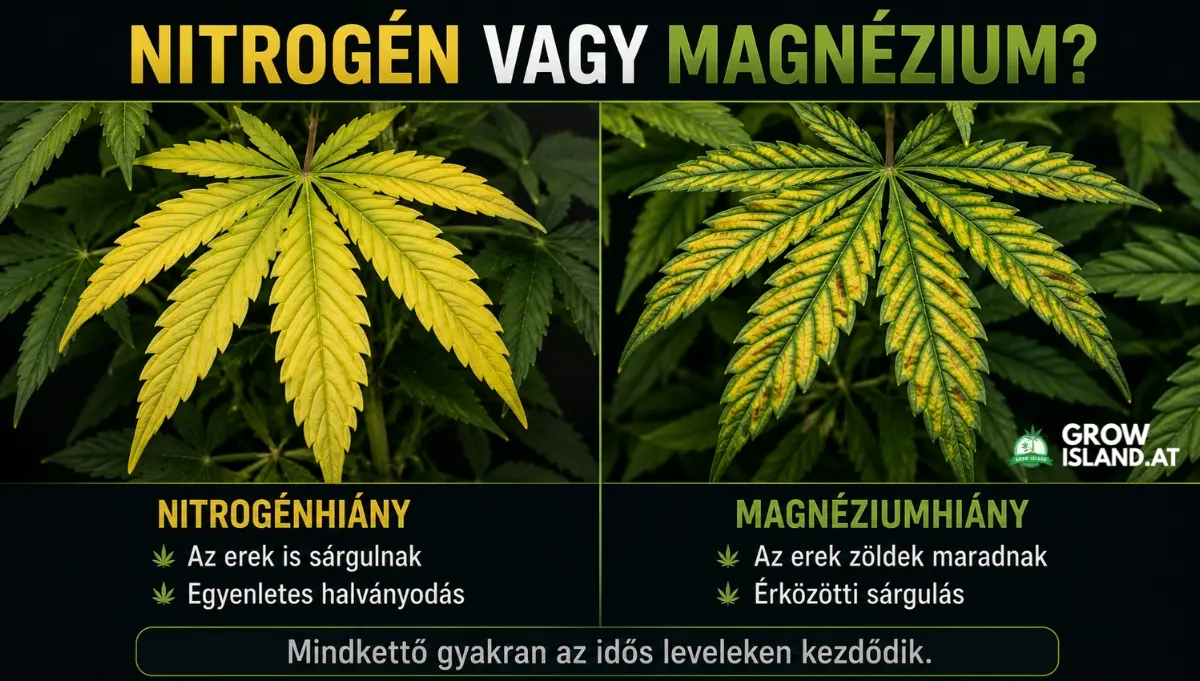
Both begin mainly on old lower leaves. Nitrogen deficiency produces relatively uniform paling, including the veins. Magnesium deficiency produces a more distinct pattern: veins remain greener while the tissue between them turns yellow. This single distinction prevents many unnecessary nutrient changes.
| Nutrient | Starts on | Typical pattern | Common confusion |
|---|---|---|---|
| Nitrogen | Old leaves | Uniform yellowing | Natural late fade, overwatering |
| Magnesium | Old leaves | Yellow between green veins | Nitrogen, manganese |
| Calcium | Young leaves | Distortion and irregular spots | Light stress, boron |
| Iron | Newest growth | Very pale tissue, green veins early | Sulphur, manganese |
| Potassium | Old leaves | Yellow and necrotic margins | Fertiliser burn |
| Phosphorus | Old leaves | Dark dull foliage, slow growth | Cold and genetics |
If several elements appear deficient at the same time, suspect root-zone availability before assuming that every nutrient is missing. Measure the completed input solution after all nutrients are mixed. In coco and hydro, compare the input with runoff or reservoir trends. Correct an unsuitable range gradually and avoid adding several supplements at once.
A high EC can make water uptake harder and cause salt lockout. The leaves may show deficiency patterns even though plenty of fertiliser is present. Conversely, low input and low runoff EC together with healthy roots may support a genuine underfeeding diagnosis. Use feeding schedules as a starting framework, not as an inflexible target.
Determine whether symptoms began on old lower leaves, middle foliage or fresh upper growth. Photograph the whole plant and a close-up in neutral light.
Check whether yellowing is uniform or interveinal, whether veins stay green, and whether damage begins at tips, margins or random spots.
Assess moisture, drainage, smell, root-zone temperature and oxygen. Correct irrigation with the proper cannabis watering guide .
Compare pH, EC, product doses, watering volume, runoff and recent environmental changes. A written trend is more reliable than memory.
Apply the smallest justified correction and observe new growth. Several simultaneous changes make it impossible to identify the actual cause.
A damaged leaf often remains damaged after the plant recovers. The success of a correction is best judged by the quality and speed of new growth, not by waiting for old necrotic tissue to become green again.
Different cultivars and phenotypes naturally vary in colour, leaf shape, petiole pigmentation and feeding tolerance. Purple stems can be genetic, and some healthy plants are lighter green than their neighbours. Compare changes over time and evaluate each plant against its own earlier appearance.
In a fast-reacting coco or hydro system, healthier new growth may be visible within several days after the cause is corrected. Soil can respond more slowly because of its buffer. Severe root damage takes longer. If symptoms continue to spread, reassess the diagnosis rather than repeatedly increasing the dose.
A distinctive Illuminati Lost Seeds selection. Observe its individual phenotype instead of comparing every shade of green with another cultivar.
View seeds
Use stable environmental records to distinguish phenotype-specific colour from a developing nutrient problem.
View seeds
Start conservatively and adjust nutrition to the plant's response, water quality and growing medium.
View seeds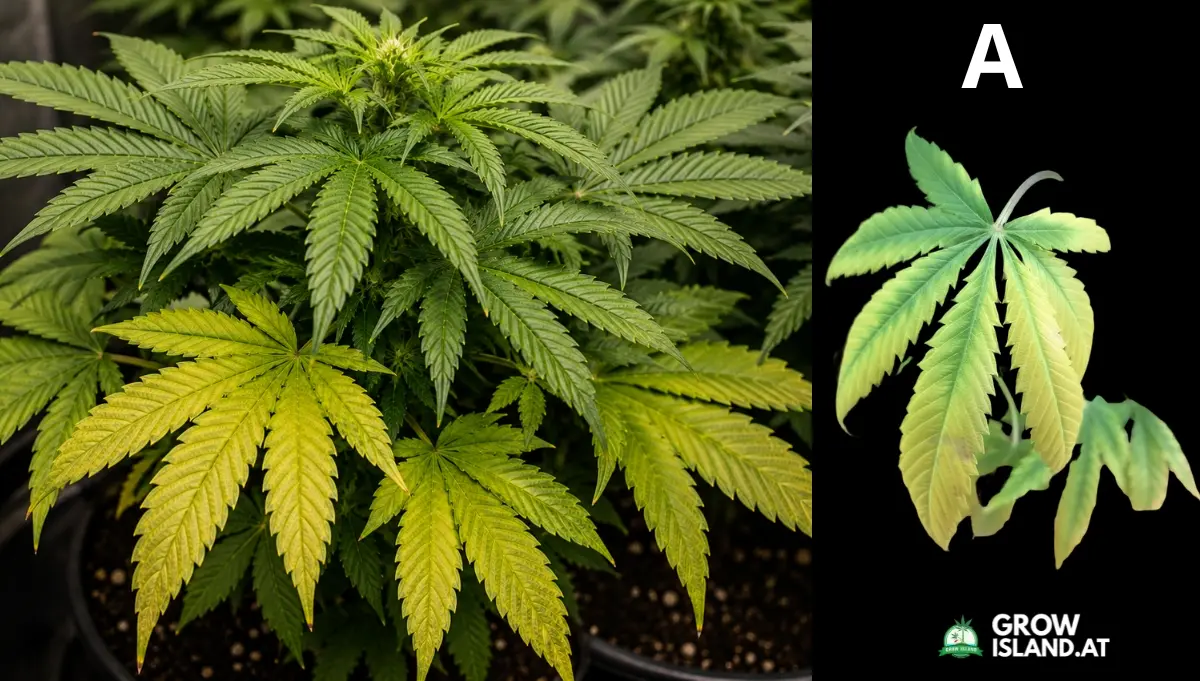
Lower leaves become evenly yellow, including the veins. What is the most likely deficiency?
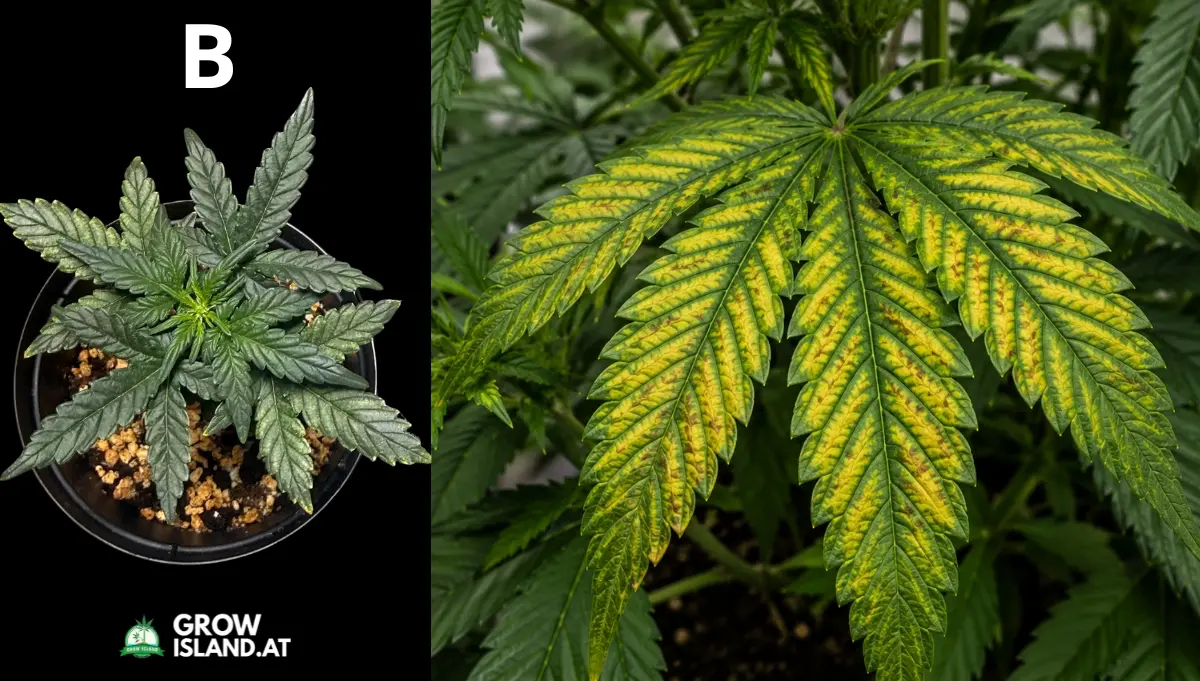
An older leaf has green veins with yellow tissue between them. Which element should be investigated?
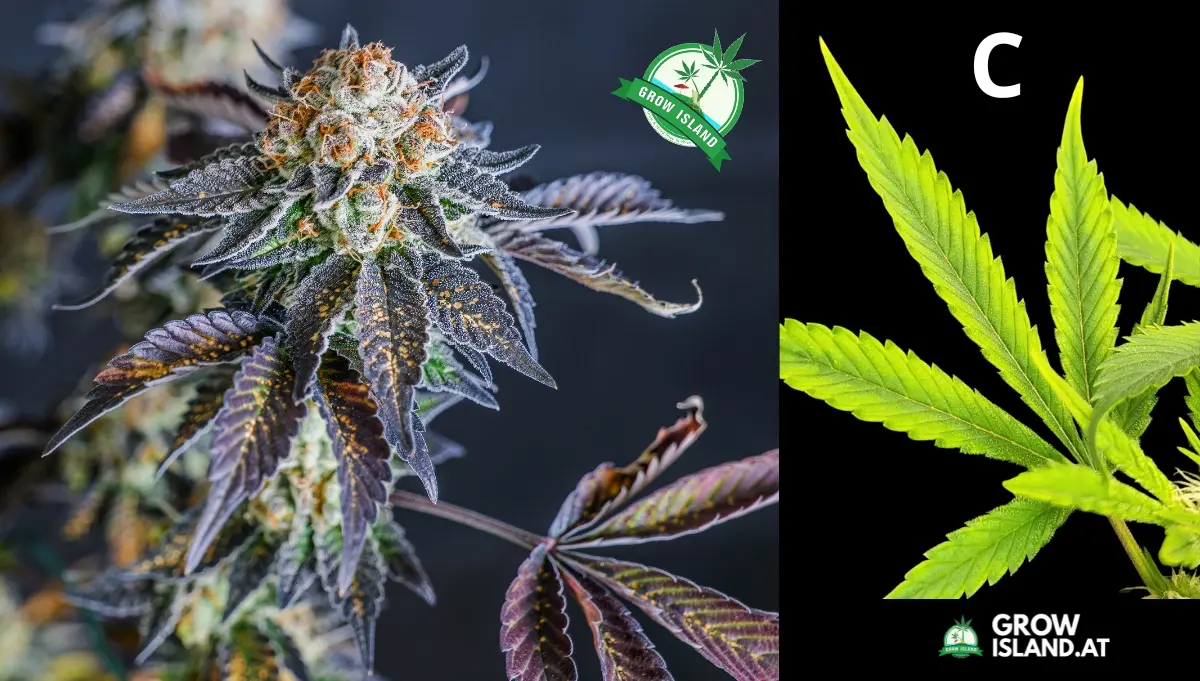
Young leaves are distorted and develop irregular brown spots. Which deficiency pattern fits best?
A: nitrogen. Uniform yellowing begins on old leaves. B: magnesium. Interveinal chlorosis begins on older foliage. C: calcium. Immobile calcium problems affect young tissue and growing points first.
Stabilise irrigation, pH and climate first. Confirm EC and product dosage, then make one measured correction. Avoid severe pruning, transplanting and strong training while the plant is recovering. The Cannabis Stress Guide helps assess combined stress factors.
Begin with leaf age and symptom pattern. Old-leaf problems point more often towards mobile nutrients; new-growth problems towards immobile nutrients or damaged roots. Always rule out pH, EC, watering and environmental stress before increasing fertiliser.
Good diagnosis is a controlled process: observe, measure, make one change and evaluate new growth. This approach is safer and more reliable than treating every yellow leaf as proof that the plant needs more food.
This article provides general botanical and horticultural information. Cannabis cultivation laws differ by jurisdiction. Always check current local law and use fertilisers, acids and alkaline products strictly according to their labels.
Updated: 2026 — written by Bartholomew Alen
© 2026 Grow Island Vienna










Comments