
Combo Pen P160 Pro
pH, EC and temperature can be checked with one instrument, making troubleshooting faster and easier to document.
View product
Written by: Bartholomew Alen
When a cannabis leaf turns yellow, most growers immediately think the plant is hungry. That may be true, but a yellow leaf on its own is not a diagnosis. The same change in colour can result from a nutrient deficiency, unsuitable pH, excessive EC, overwatering, root problems, heat stress or the natural ageing of the leaf.
The right question is therefore not which bottle should be opened first, but where the symptom began, how it is spreading and what changed shortly before it appeared . This diagnostic guide explains how to read the position, veins, margins, tips, spots, colour and posture of a leaf. The individual nutrient deficiencies and their correction will be covered element by element in the next article.
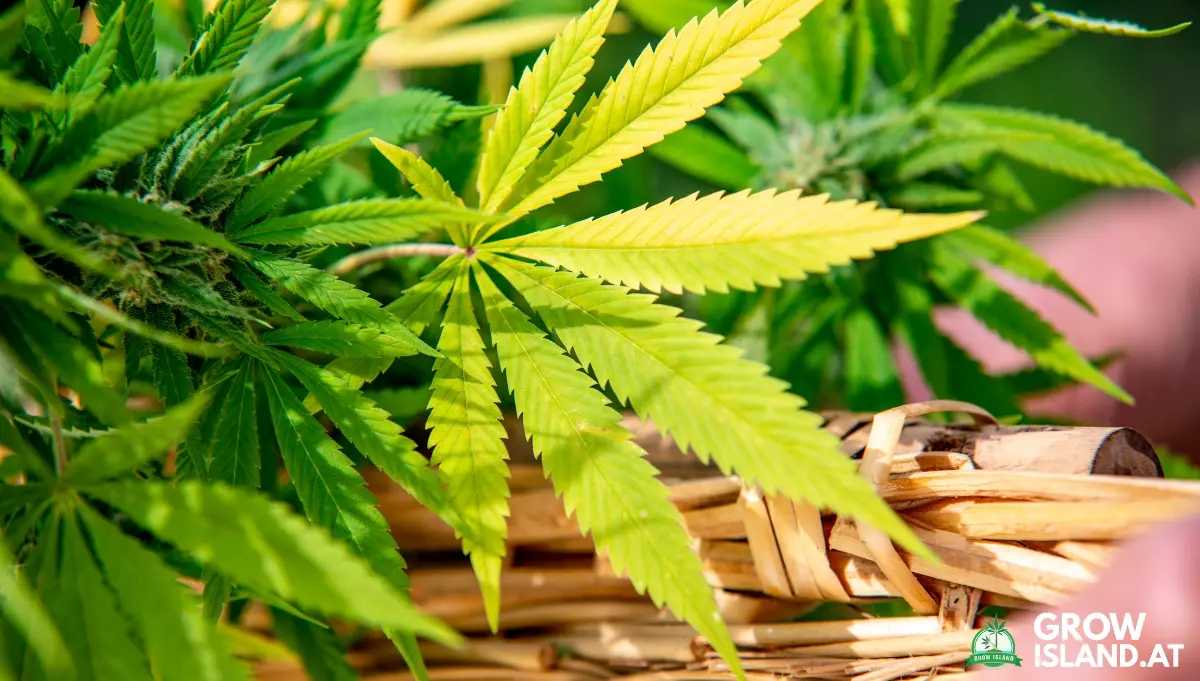
The green colour of a leaf comes primarily from chlorophyll. When chlorophyll levels fall, the yellowish pigments underneath become more visible. This can happen for many reasons: the plant may relocate a mobile nutrient from an older leaf into new growth, the roots may be unable to absorb an element that is present, or the leaf may be damaged by light, heat, drought or excessive water.
Meaningful interpretation begins with understanding plant structure. A growing tip, young leaf, old fan leaf and petiole do not always respond in the same way. The guide to cannabis anatomy and plant health helps distinguish these positions and determine whether a problem begins in old tissue, affects new growth directly or is limited to a locally damaged part of the plant.
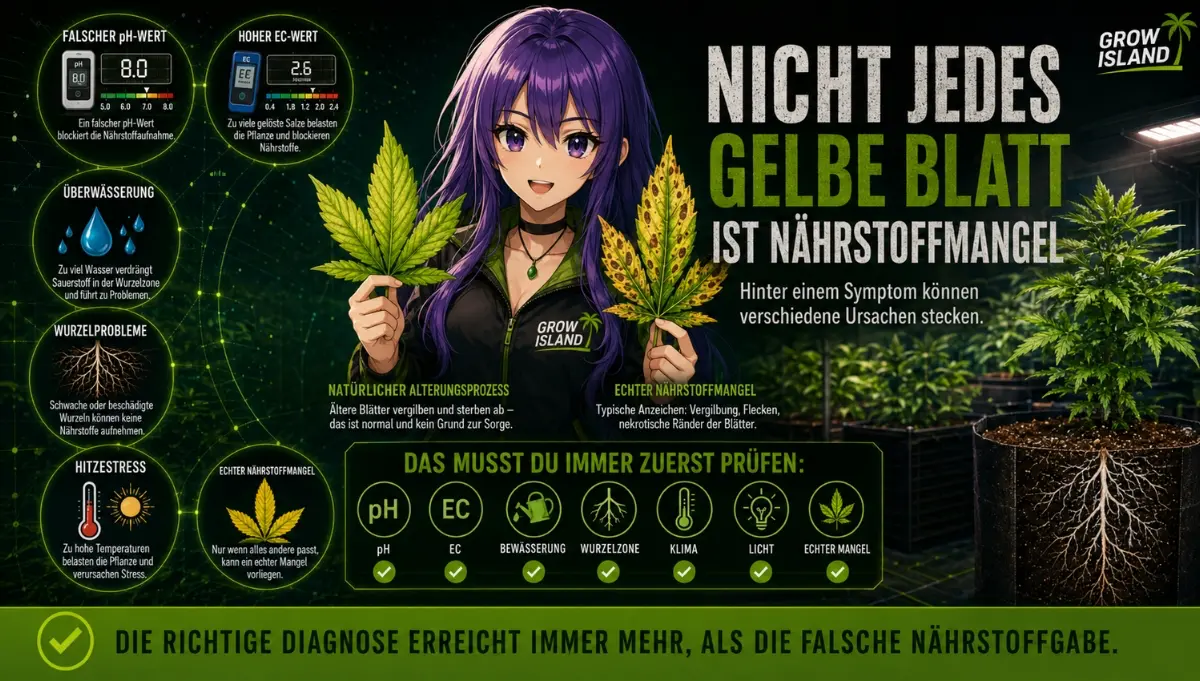
If a few old leaves in the lower part of the plant gradually fade near the end of flowering, this may be part of natural senescence. If almost every leaf on a young plant turns yellow within a few days, however, the plant is signalling a systemic problem.
An overwatered root system can become oxygen deficient. The plant then absorbs water and ions less efficiently even when the medium contains enough nutrients. The article on watering cannabis plants correctly explains how pot weight, the wet-dry cycle, drainage and root-zone aeration work together.
A plant can therefore display a real deficiency without having received too little fertiliser. When pH is unsuitable, EC is excessive or root rot is present, an element may exist in the medium but remain unavailable. This is commonly called nutrient lockout. Increasing nutrient strength in this situation may make the problem worse.
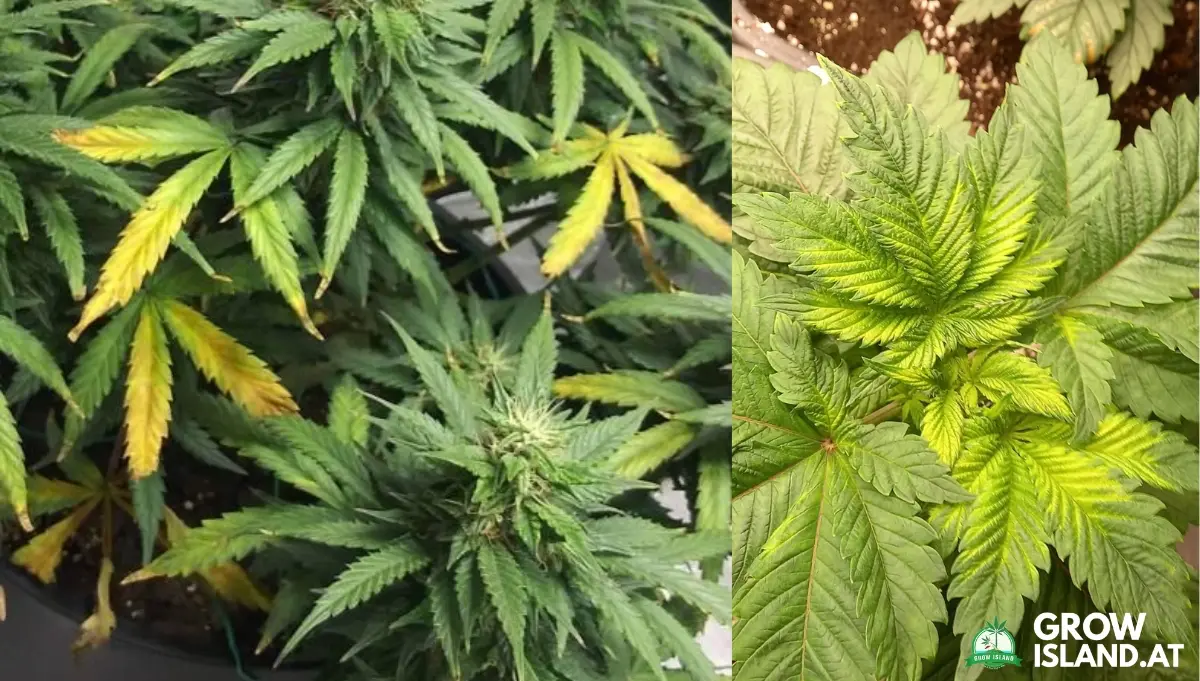
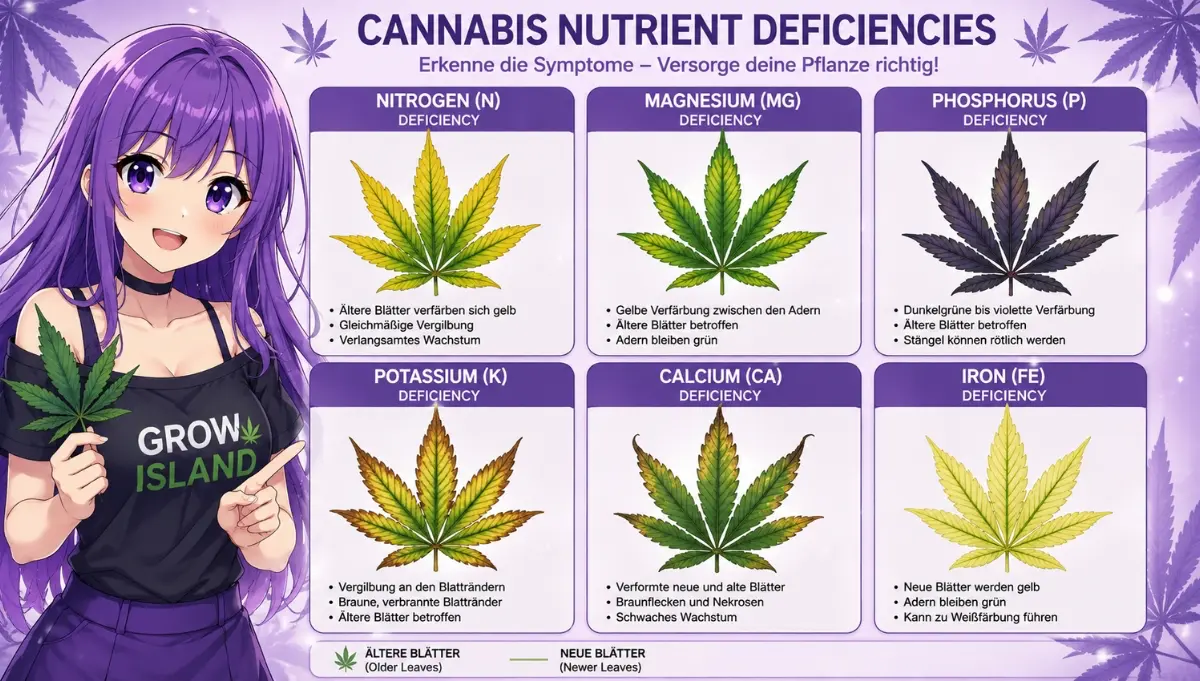
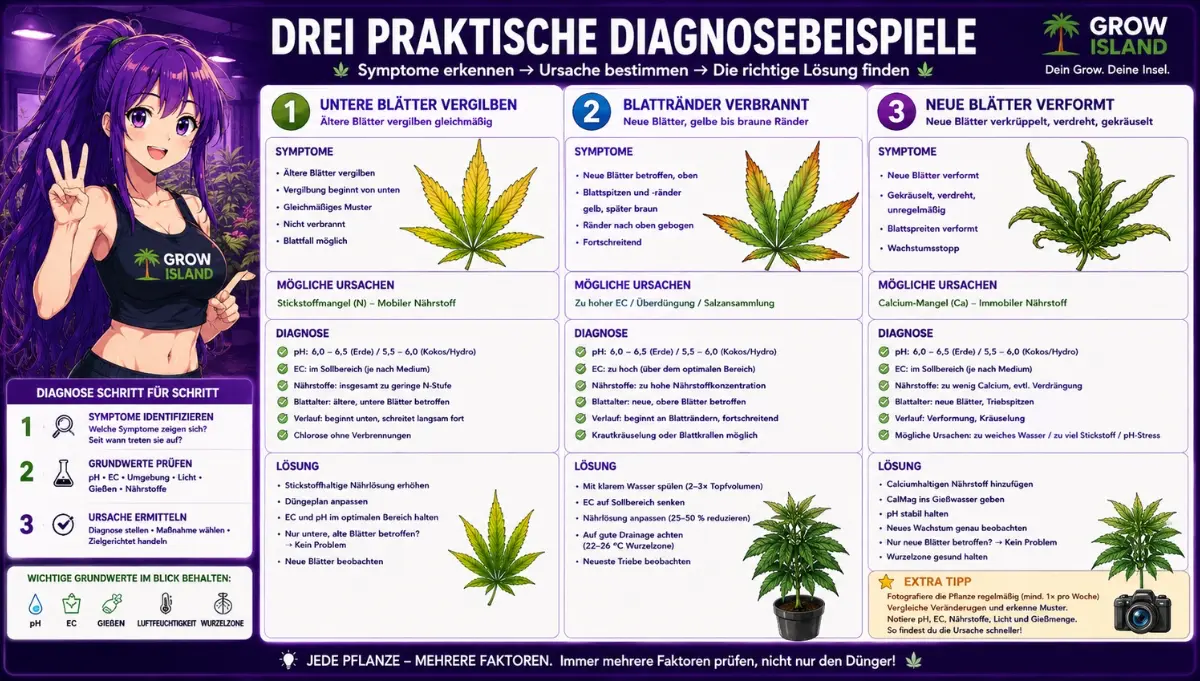
The plant can move certain elements from older leaves into new growing tissue. These are known as mobile nutrients. When one is deficient, symptoms often begin low on the plant. Nitrogen deficiency typically causes an even yellowing of older leaves. Magnesium deficiency frequently appears as yellowing between the veins of older leaves.
Problems involving less mobile elements usually appear first in new growth. When iron uptake is restricted, fresh leaves may turn yellow while their veins initially stay greener. Calcium problems may deform young tissue and produce irregular rust-coloured or brown marks.
It begins at the bottom: Consider mobile nutrients, ageing or a longer-term general shortage.
It begins at the top: Check micronutrients, calcium, pH, the root zone and possible bleaching caused by excessive light intensity.
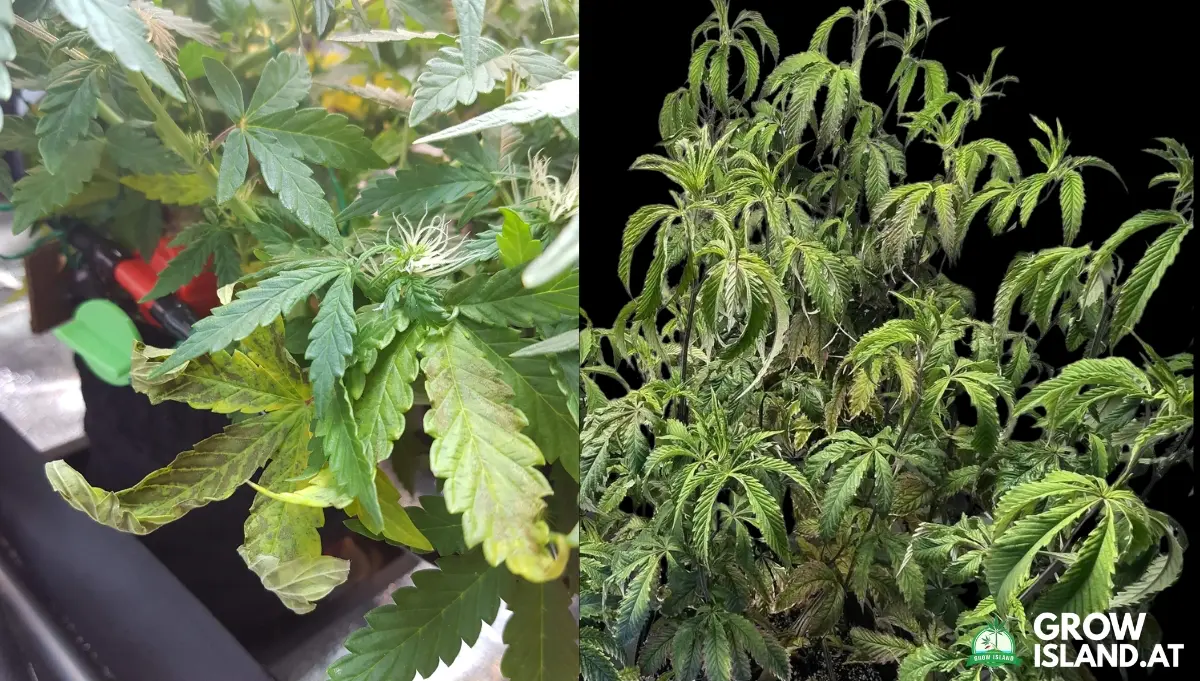
Never assess only one leaf. Determine whether the symptom appears on one side, on a single branch, in the lower third, across the entire canopy or directly beneath the lamp. One-sided damage may point to a local root issue, intense fan wind, mechanical injury or spilled concentrate. Bleaching seen only at the top may instead be caused by light stress.
If the leaves closest to the lamp curl upward, dry out or bleach, check the correct LED grow-light distance for cannabis . If the whole plant slows down, also review the possible causes of slow-growing cannabis plants , including root space, watering, temperature, genetics, pot size and nutrient concentration.
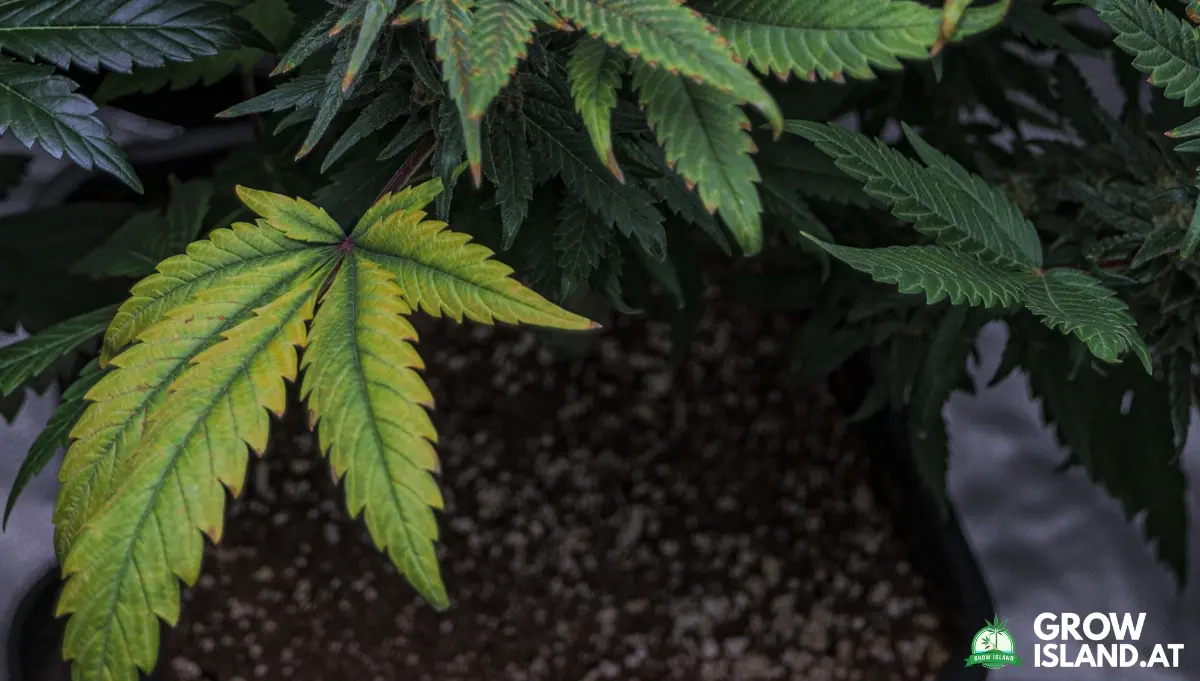
The colour difference between leaf veins and the tissue around them is an important clue. If the entire leaf, including the veins, yellows evenly, consider a general problem such as nitrogen deficiency, root stress or natural ageing. If the veins remain greener while the tissue between them turns yellow, the pattern is called interveinal chlorosis.
Interveinal chlorosis that begins on older leaves often matches a magnesium problem. A similar pattern on young leaves points more strongly toward restricted uptake of iron or other micronutrients. Confirm the hypothesis with a pH measurement, because a high pH can reduce the availability of several trace elements.
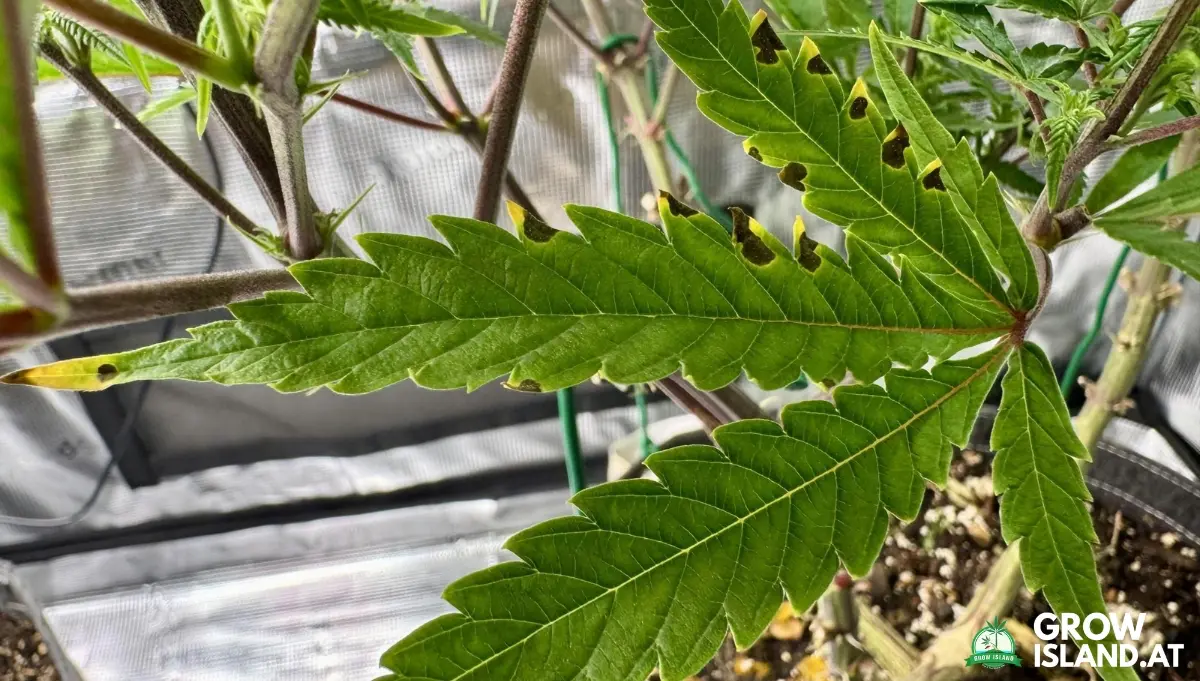
A small brown leaf tip is often an early sign of an overly strong nutrient solution or salt accumulation in the root zone. If necrosis moves inward from the tip along the leaf margin, possible causes include a potassium problem, high EC, drought stress or a combination of these factors.
A slightly burnt tip is not automatically an emergency. If only the extreme end is affected and the damage does not spread, it may be enough to mix the next nutrient solution more mildly and monitor the trend. Aggressive flushing without confirmed salt accumulation can leave the root zone unnecessarily wet and create new stress. When flushing is genuinely justified, follow the guide on how and when to flush cannabis plants properly .
Light green does not mean the same thing in every cultivar. Compare a plant primarily with its own previous condition, not with an unrelated strain. Leaves that rapidly become dark, glossy and claw downward may indicate excess nitrogen. Even fading that progresses from the bottom upward may instead match nitrogen deficiency.
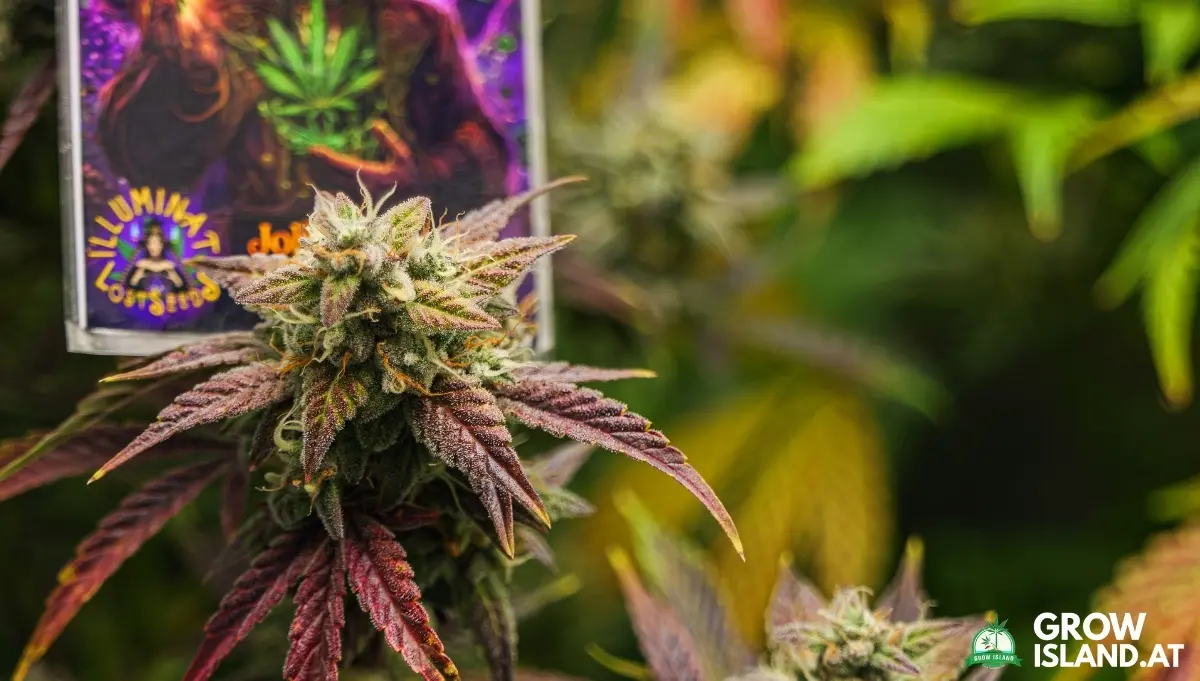
A purple petiole or stem is not proof of phosphorus deficiency. Many genetics naturally produce anthocyanins; cool temperatures, strong light and normal stem maturation can also change colour. If purple colouring appears together with slowed growth, dark dull leaves or deformation, check phosphorus availability, temperature and pH. The article Why Is Cannabis Purple? provides further background.
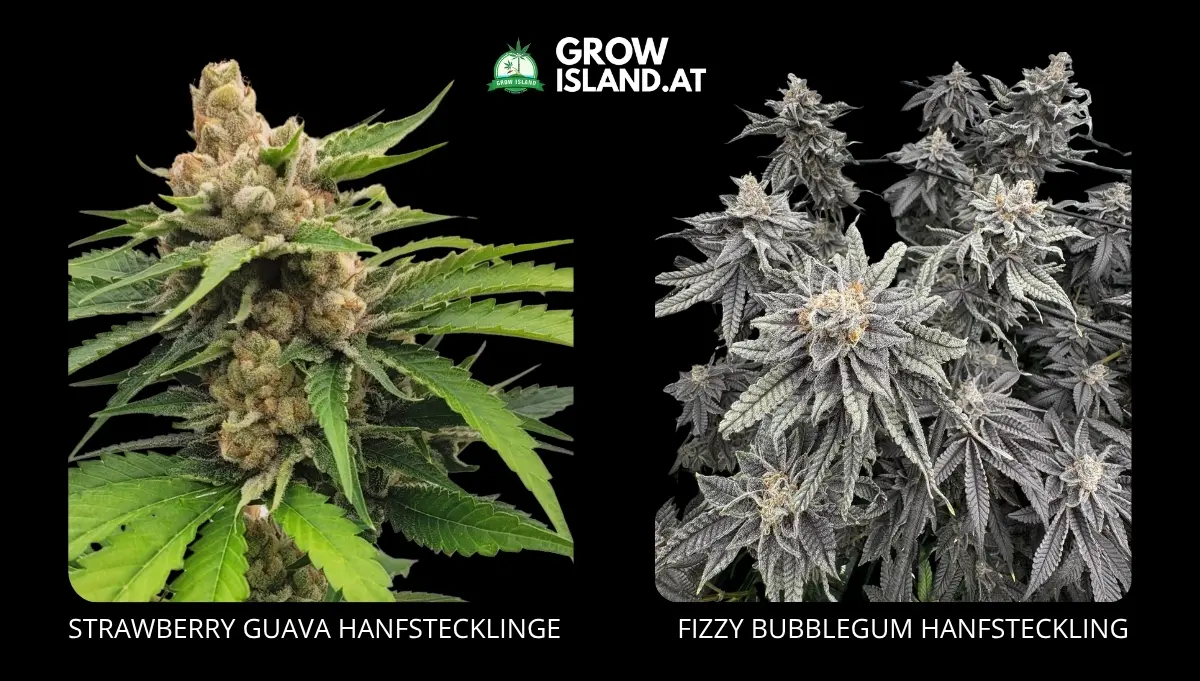
Diagnosis must be based on the normal appearance of the specific genetics. Some cultivars naturally produce lighter lime-green leaves, while others form dark, thick and broad leaf blades. When two different genetics receive the same nutrient solution, one may remain completely healthy while the other already shows signs of excess.
Do not compare leaf colour only with a photograph from the internet. A record of the same plant in its earlier healthy condition is far more useful. If growth is vigorous, new foliage is regular, the roots are healthy and the colour has remained stable for weeks, a lighter tone may simply be a varietal characteristic.
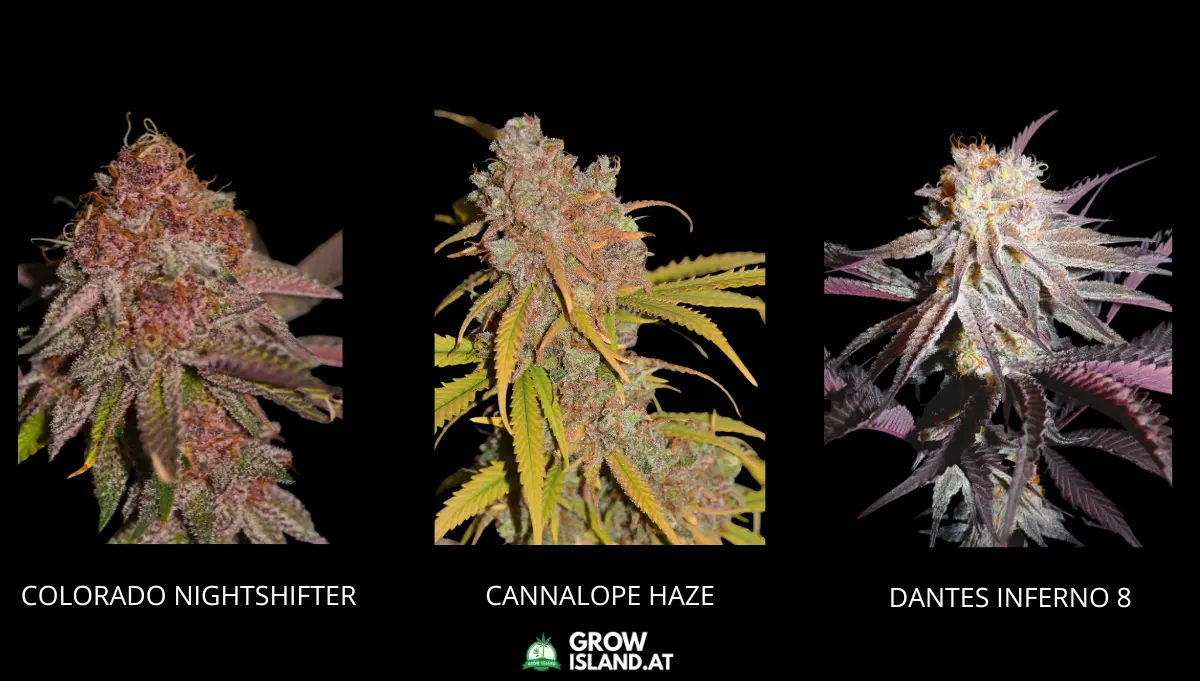
The traditional indica and sativa categories do not provide a complete genetic diagnosis, but they can be a useful starting point for observing morphology. Broader, darker leaves occur more often in indica-type plants, while narrower, lighter leaflets are normal in many sativa-type phenotypes. Modern hybrids may combine these traits in many different ways. The detailed comparison of indica characteristics and sativa characteristics offers more context.
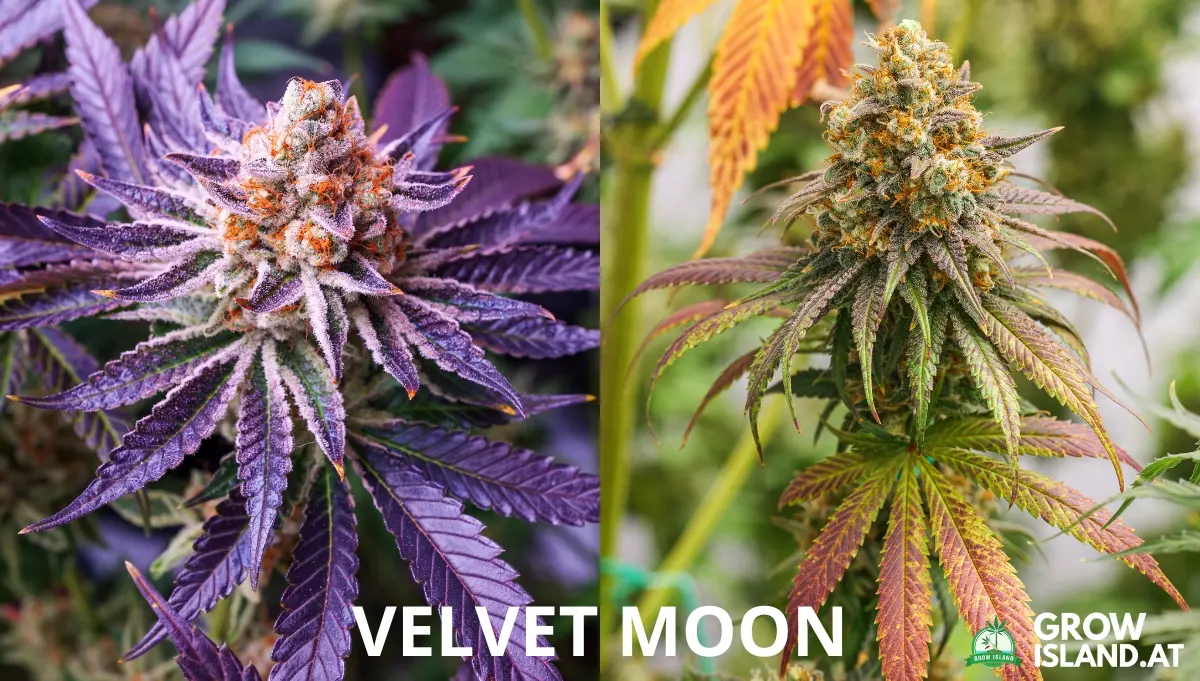
Even plants grown from the same seed pack may differ. One phenotype may tolerate stronger feeding, while another looks healthier at a lower EC. Leaf colour, petiole colour, growth speed, root mass and heat tolerance can also vary. A lighter individual is not necessarily ill.
Comparison is easier with cuttings because clones are genetically almost identical. If one clone differs sharply from the others under the same conditions, a local root, irrigation or injury problem becomes more likely. Greater natural variation must be expected among sibling plants grown from seed.
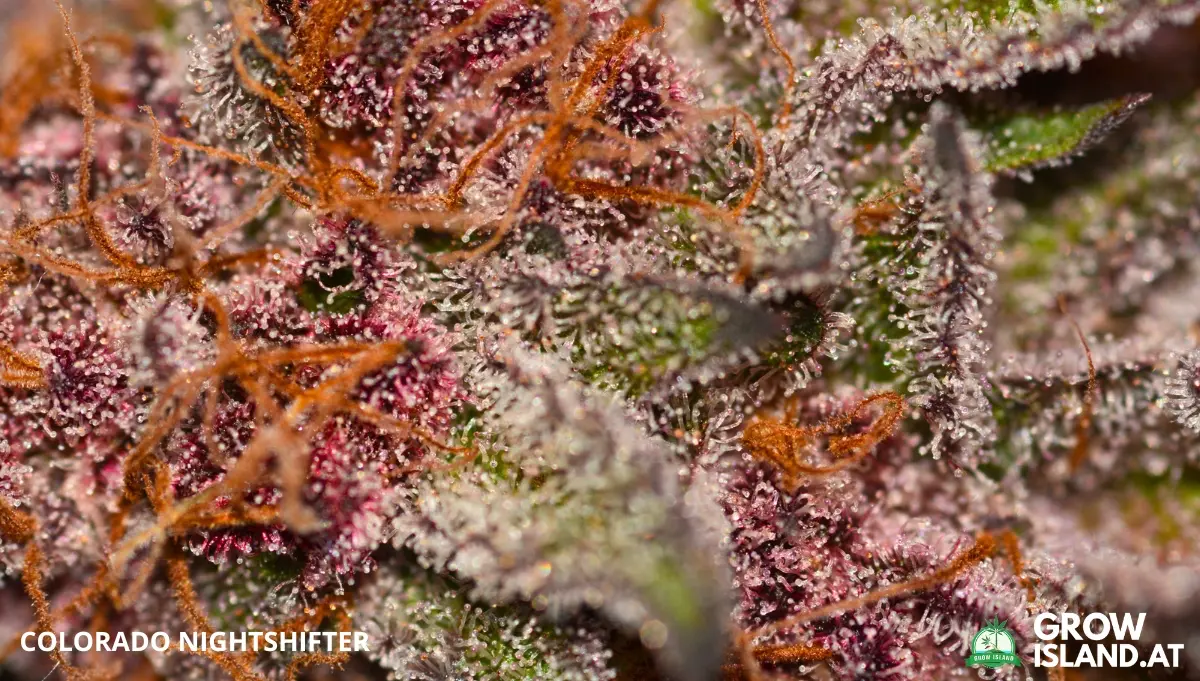
Anthocyanin production is strongly influenced by genetics. Some strains display purple petioles or stems from a young age, while others develop colour only at lower night temperatures. Colour becomes suspicious mainly when it is new, continues to spread and appears together with slow growth, dark or dull leaves, or deformities.
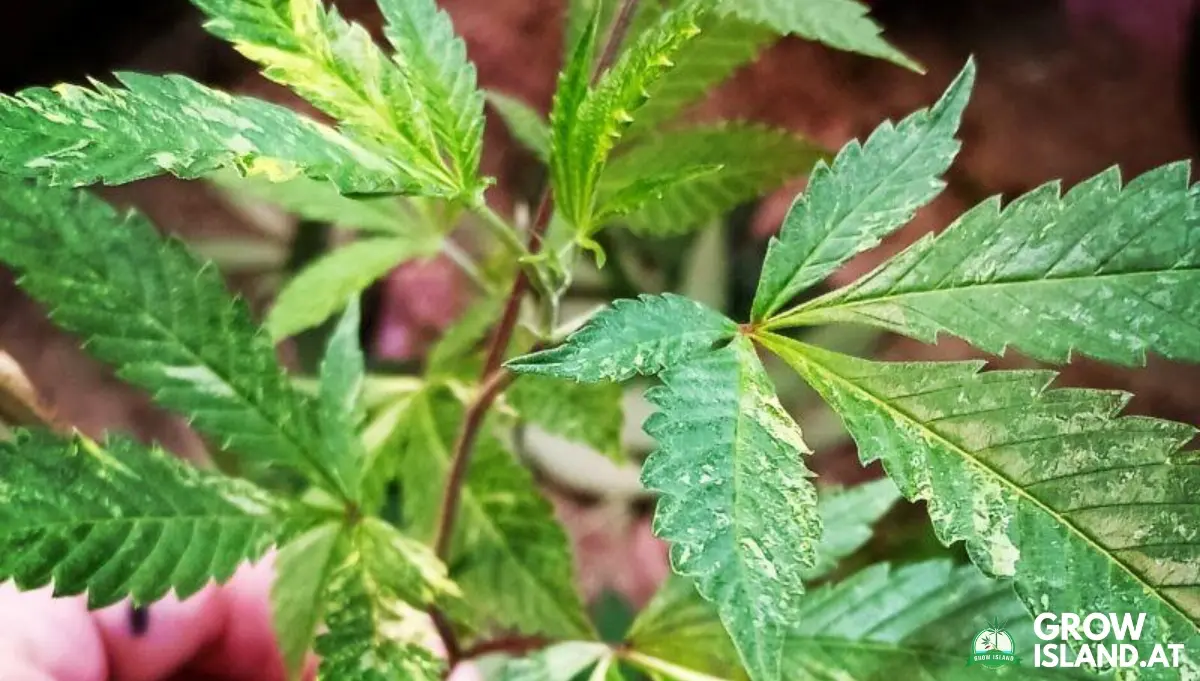
Occasionally, a leaf develops sharply separated yellow, cream or white sectors. If the pattern has clear boundaries, repeats on the same shoot and does not spread like a typical deficiency, it may be genetic variegation. These pale areas contain less chlorophyll and may be more sensitive under intense light.
Mosaic discolouration may also be caused by a pathogen or viroid, particularly when it appears with deformation, stunted growth and uneven branch development. In that case, isolate the plant, disinfect tools and use the guide to Hop Latent Viroid symptoms as a basis for professional assessment.
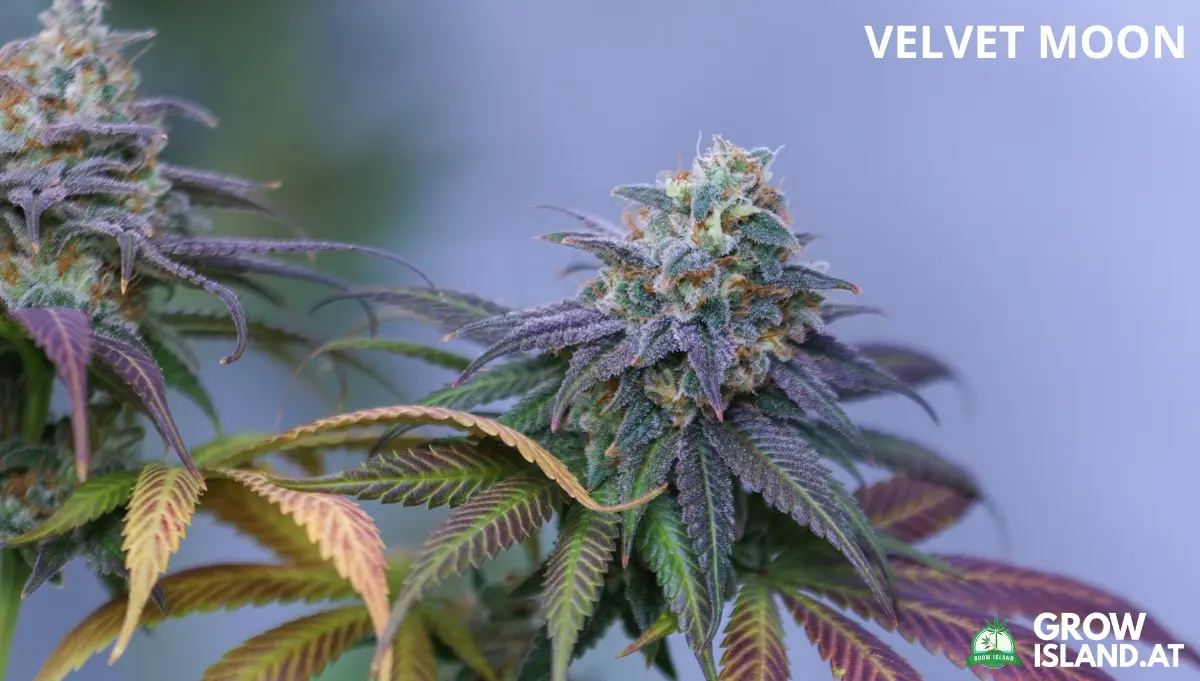
Genetics determine maturation time and influence how quickly lower leaves age. A fast-finishing autoflower may fade sooner than a long-flowering photoperiod plant. Natural senescence is generally gradual, begins low on the plant and does not suddenly deform new growth.
A correct diagnosis therefore requires more than knowing the colour of a leaf. Genetics, phenotype and developmental stage must also be considered. Genetics do not explain every symptom, but they prevent a perfectly healthy varietal trait from being treated as a deficiency.
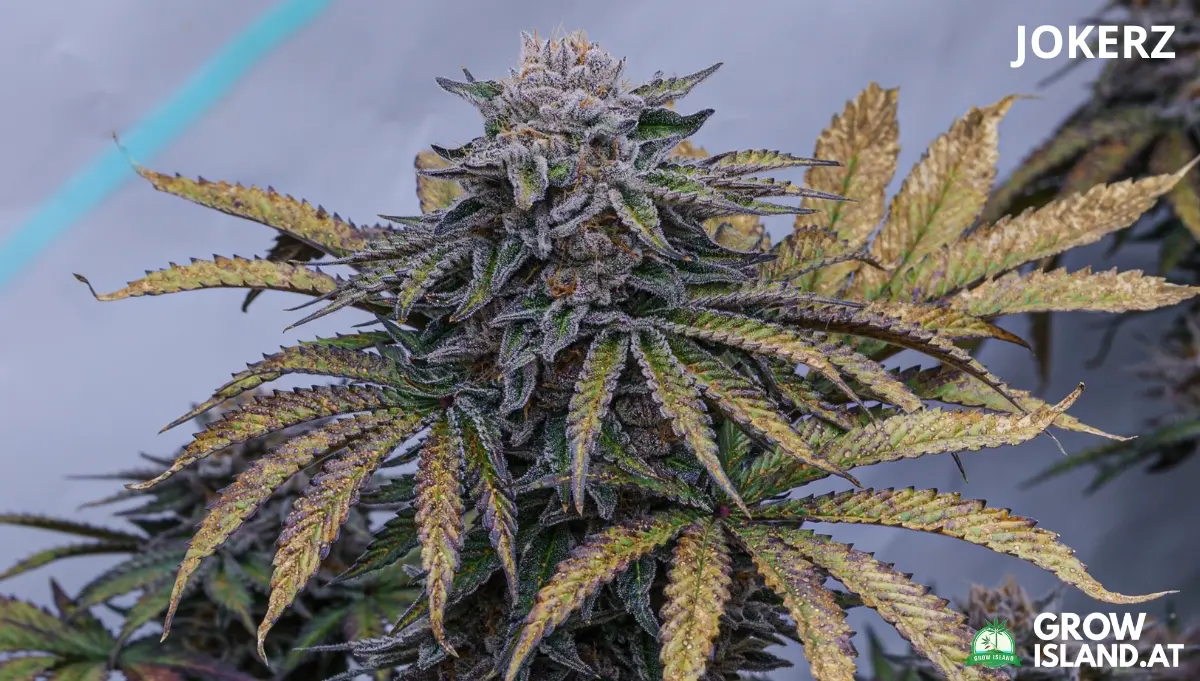
The shape, colour and position of a rust-coloured or brown spot all matter. Calcium problems often affect younger growth, where tissue may deform and spots look irregular. With magnesium problems, necrotic areas commonly appear only after interveinal chlorosis has developed on older leaves.
Concentric, spreading or wet-looking spots may instead indicate a pathogen. Inspect the underside of the leaf for pests, eggs, droppings and fine webbing. The Grow Island guide to pests and mould in cannabis cultivation helps distinguish biological damage from a nutrient pattern. Also consider splash water, droplets under strong light, mechanical damage and contact with concentrated products.
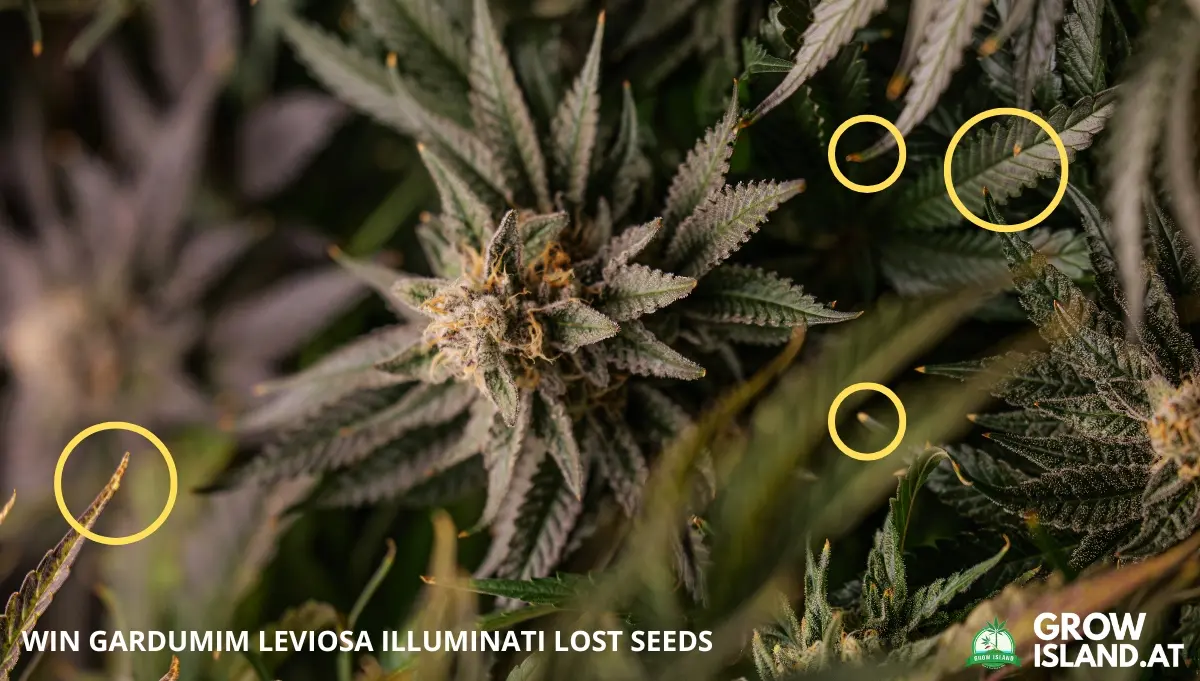
A high salt concentration in the root zone makes water uptake more difficult. The very end of the leaf is often damaged first. High EC may result from an overly strong nutrient solution, hard source water, too many boosters, insufficient runoff or repeated severe drying of the medium.
Do not measure only the input solution. In coco and mineral systems, the trend in runoff EC also matters. If runoff EC rises over several irrigations, the root zone may be becoming progressively more concentrated. Cultivation feeding schedules provide a framework, but they must be adapted to genetics, growth stage, water quality and the plant's actual response.
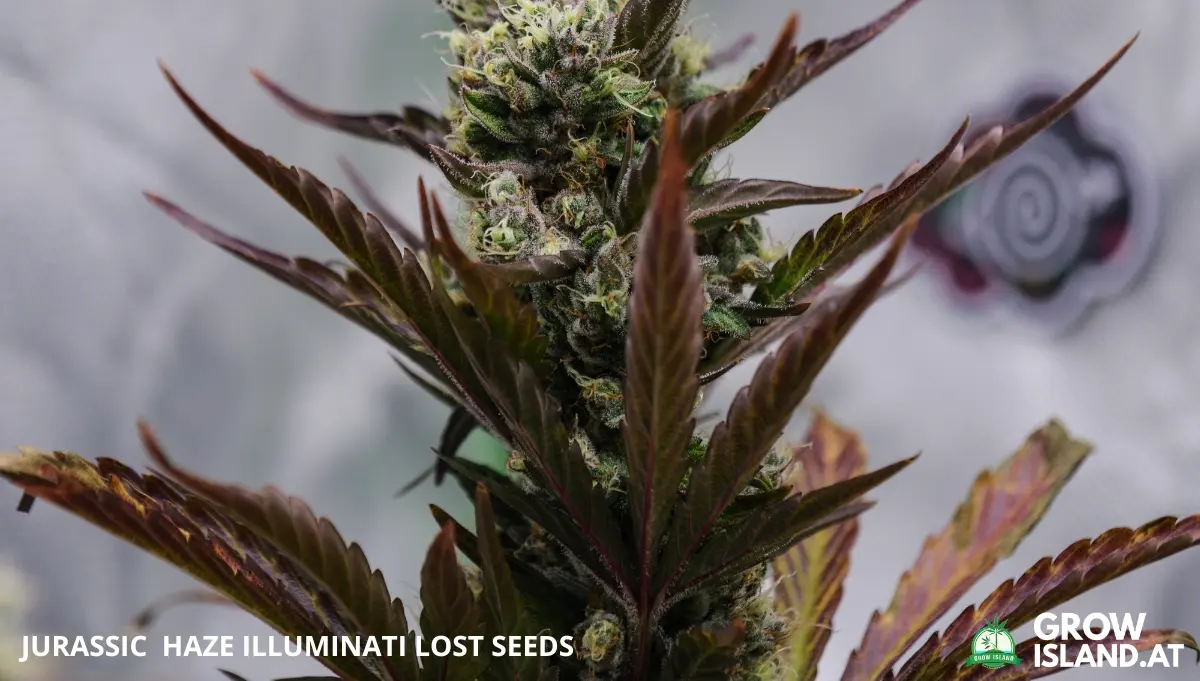
Leaf margins that cup upward often indicate heat, high light intensity or very dry air. The plant may be reducing the area directly exposed to stress. Check canopy temperature, lamp distance, dimming, humidity and airflow. A fan should not continuously blast the same spot at high speed.
Dark tips curling downward, often called a claw, are more consistent with excessive nitrogen. They may also occur together with root stress and overwatering. Colour, leaf texture, substrate moisture and EC must therefore be evaluated together. The Cannabis Stress Guide explains these relationships in more detail.
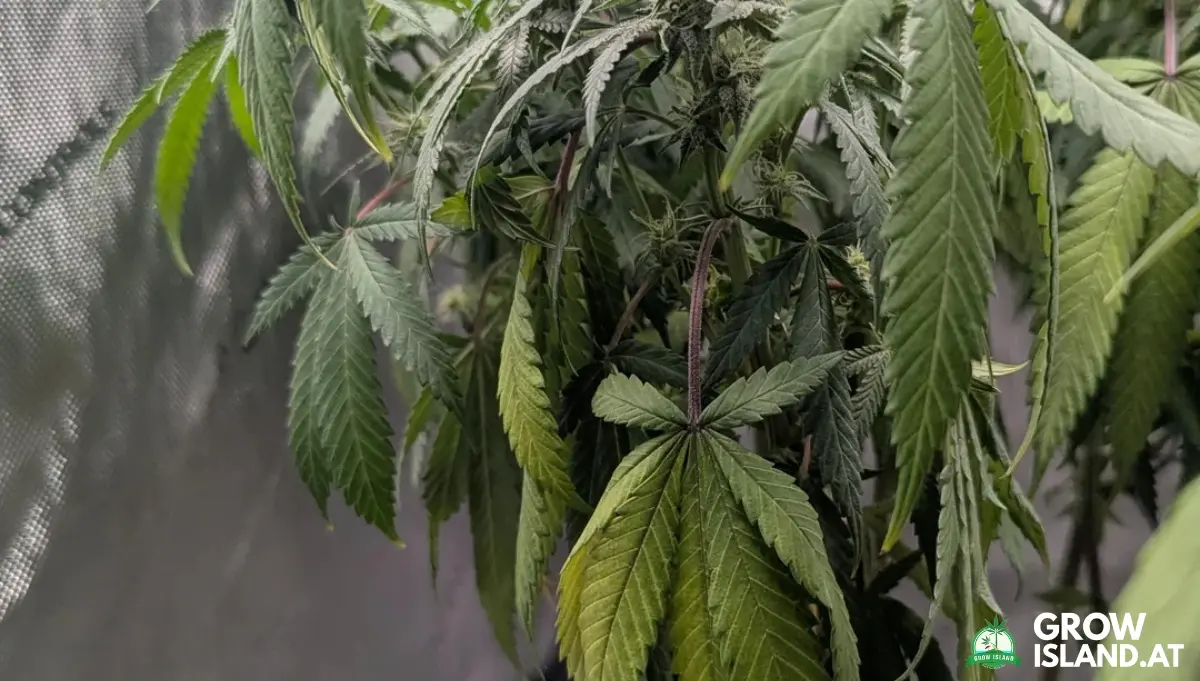
Both too much and too little water can make leaves droop, but the overall appearance differs. With overwatering, leaves and petioles often look heavy, firm and pushed downward, and the pot remains heavy for a long time. With underwatering, the whole leaf and its petiole feel soft and limp, while the medium is light and may pull away from the side of the pot.
If a leaf is both drooping and yellowing, do not automatically add fertiliser. First lift the pot and check moisture, drying time and smell. Brown, slimy roots with an unpleasant odour may indicate rot. An aerated fabric pot and a structurally stable medium reduce risk, but they cannot correct a poor irrigation routine.
This table is a starting point, not final proof. One symptom can have several causes. Always check position, spread, pH, EC, watering, climate and roots.
| Symptom | Common cause | What should be checked? | First step |
|---|---|---|---|
| Lower leaves turn evenly yellow | Nitrogen deficiency or ageing | Growth stage, nutrition and spread | Do not react to one old leaf alone |
| Yellow between veins, beginning low | Magnesium problem | pH, source water and Ca-Mg ratio | Measure before adding CalMag |
| New leaves yellow, veins remain green | Restricted iron uptake | High pH and root condition | Stabilise pH gradually |
| Brown rust spots on new leaves | Calcium problem | pH, coco, soft water and roots | Confirm the cause; do not supplement blindly |
| Dark-green, glossy leaves | Overfeeding or excess nitrogen | Input and runoff EC | Mix the next solution more mildly |
| Burnt leaf tips | High EC or salt accumulation | Source water, boosters and runoff | Measure the trend and correct slowly |
| Purple petioles | Genetics, cold, light or phosphorus | Growth, temperature and pH | Do not diagnose from colour alone |
| Leaf margins curl upward | Heat, strong light or dry air | Canopy temperature, lamp and airflow | Improve the climate gradually |
| Leaves claw downward | Excess nitrogen or root stress | Colour, EC and substrate moisture | Review feeding and irrigation |
| Heavy, drooping leaves | Overwatering | Pot weight and drying time | Wait before watering again |
| Soft drooping leaves and a light pot | Underwatering | The medium's ability to re-wet evenly | Water slowly and evenly |
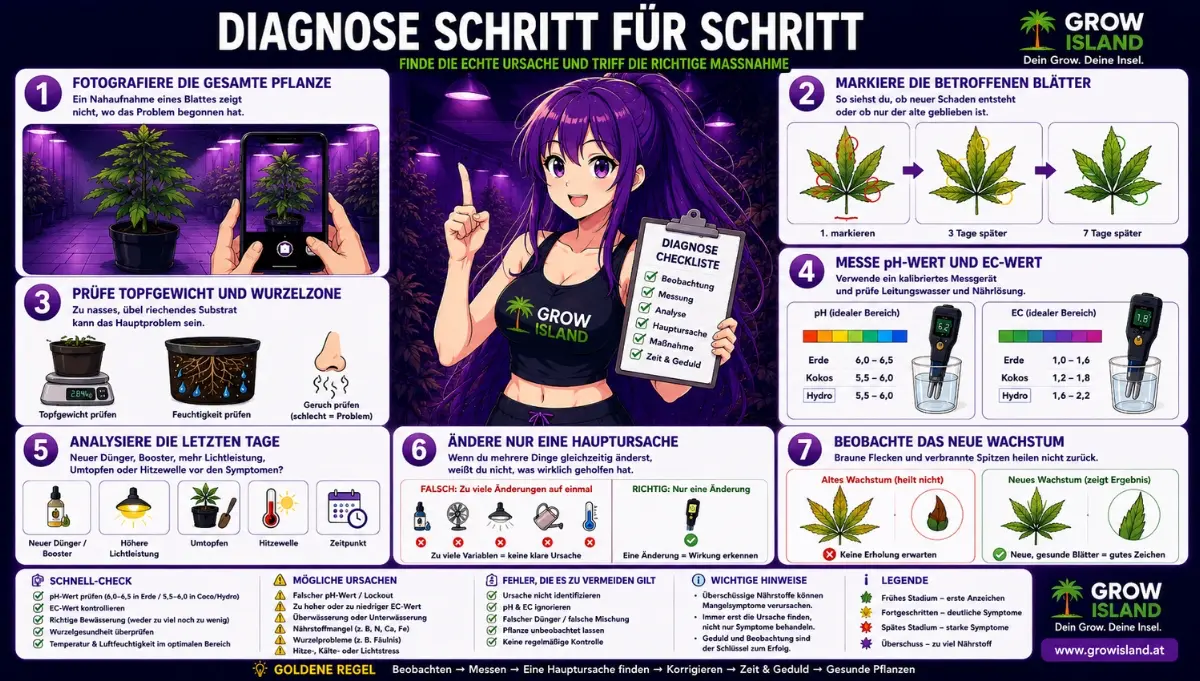
The grower adds more base nutrient, CalMag, pH regulator and root stimulator at the same time, then cannot identify which change caused the plant's response. This kind of overcorrection is a recurring pattern among the ten most common mistakes in cannabis cultivation .
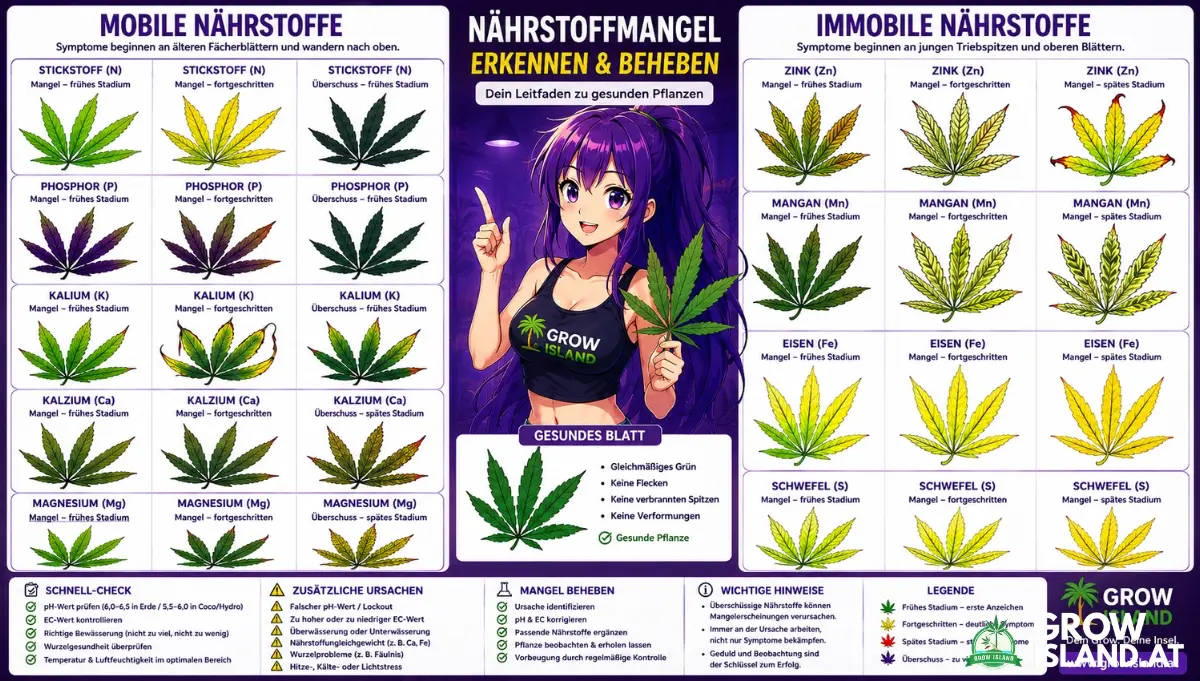
Use symptom charts only together with measurements and an inspection of the root zone. A visual match is a hypothesis, not proof. The Grow Island articles on nutrient-related cannabis problems and cannabis deficiency symptoms provide additional comparisons. Before adding anything, still determine whether the nutrient is absent or merely unavailable.
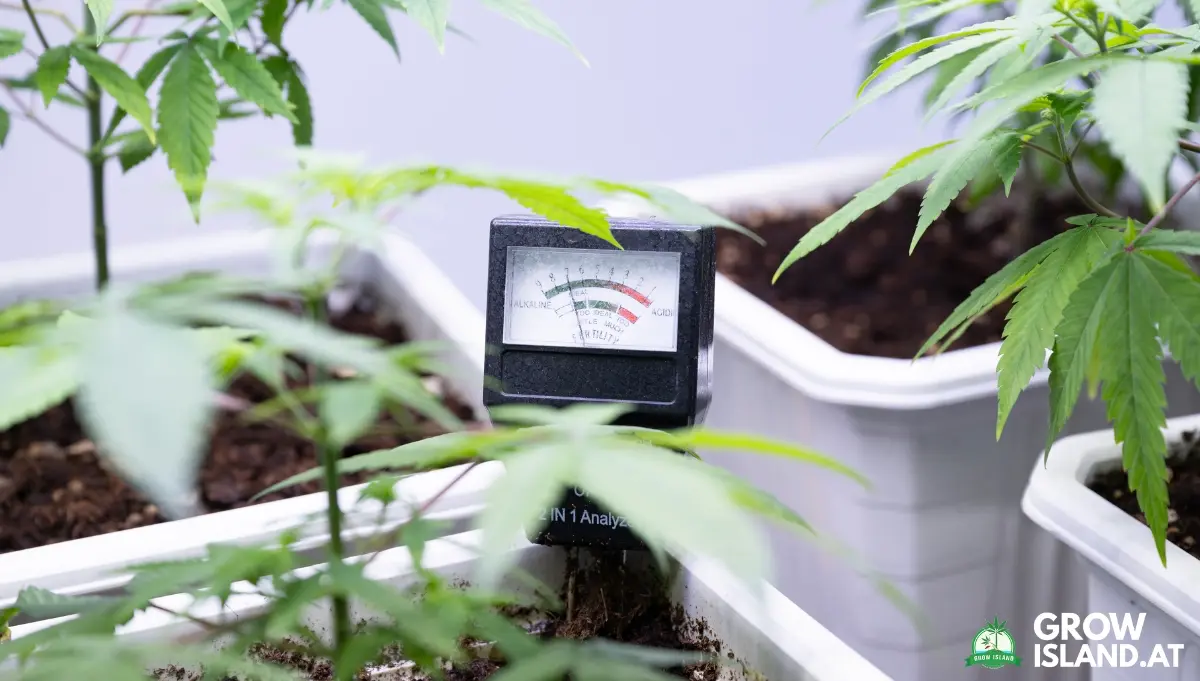
pH affects the chemical form in which nutrients occur around the roots. When it moves outside the range appropriate for the growing medium, a plant may display several apparently contradictory deficiencies at once. Useful starting ranges are approximately 6.2-6.8 in soil, 5.8-6.2 in coco and 5.5-6.0 in hydroponics.
A pH problem often becomes evident when nutrient strength is increased but the plant does not improve. New leaves continue to yellow, spots develop and more salts accumulate in the root zone. Instead of searching for another bottle, test the source water, completed nutrient solution and, where justified, the trend within the root zone using a calibrated meter.
The order of measurement also matters. Mix the water and nutrients completely first, check EC next and adjust pH only at the end. A pH set before adding fertiliser may already be different in the finished solution. After every small correction, wait, mix and measure again.
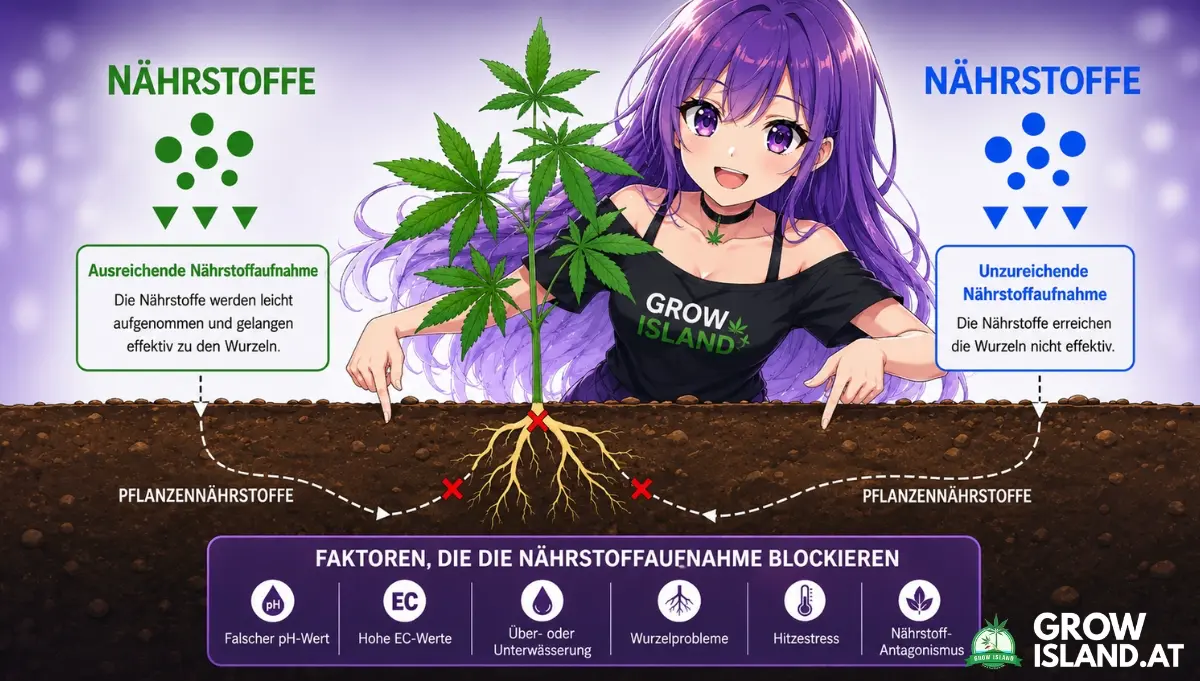
EC describes the total concentration of electrically conductive dissolved ions. It cannot identify which individual element is present, but it shows how concentrated the overall solution is. When EC is too high, water uptake becomes harder for the roots and a plant may show water stress even in moist medium.
Salts do not always accumulate because of one overdose. Hard tap water, multiple additives, regular boosters, insufficient runoff and repeatedly allowing the medium to dry severely can gradually raise the concentration together. Early signs include small burnt tips; later symptoms include dark foliage, clawing, slow growth and several secondary deficiency patterns.
If input EC is moderate while runoff EC rises over several irrigations, accumulation or uneven wetting may be present. One sample does not prove this: the first drops can be more concentrated, while water flowing through channels may distort the reading in the opposite direction.
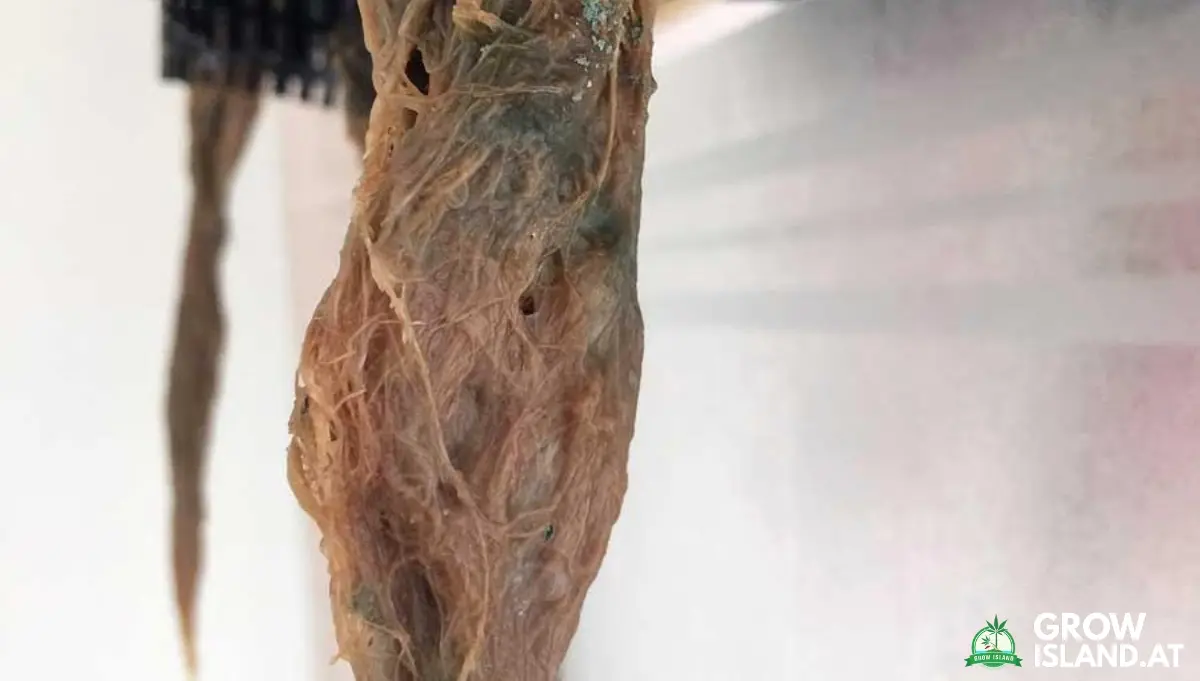
Healthy roots absorb water and nutrients, but they also require oxygen. If the pores of the medium remain filled with water, gas exchange deteriorates. Growth slows, leaves droop and yellow, and the condition can easily be mistaken for nitrogen deficiency.
The risk of root rot increases in warm, poorly aerated and permanently wet media. Affected roots may become brown and slimy and develop an unpleasant odour. More nutrient solution will not correct either the oxygen deficiency or the underlying hygiene problem.
Prevention requires an appropriate pot size, aerated medium, unobstructed drainage and irrigation matched to the size of the plant and its root mass. A small seedling in a very large pot uses little water, so the medium may remain wet for a long time. The guide to raising healthy cannabis seedlings explains the foundations of early root development.
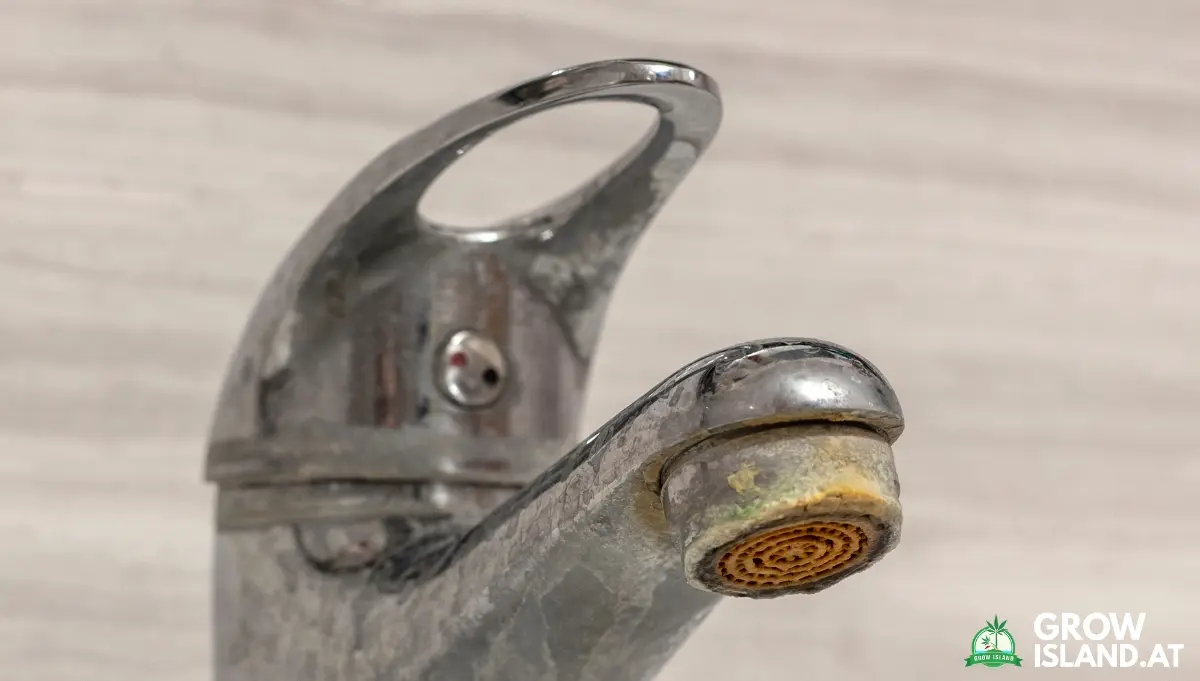
Hard water can contain substantial calcium and magnesium. That does not automatically mean both elements occur in an ideal ratio or in a readily usable form. A meaningful portion of source-water EC may also come from ions with no desirable nutritional value for the plant, such as elevated sodium or chloride.
Source-water EC should not simply be subtracted mechanically from a desired target. Review the local water supplier's analysis and pay attention to calcium, magnesium, sodium, chloride and bicarbonate. Controlled remineralisation may be useful with very soft or reverse-osmosis water. With hard water, blindly adding CalMag may instead increase EC unnecessarily.
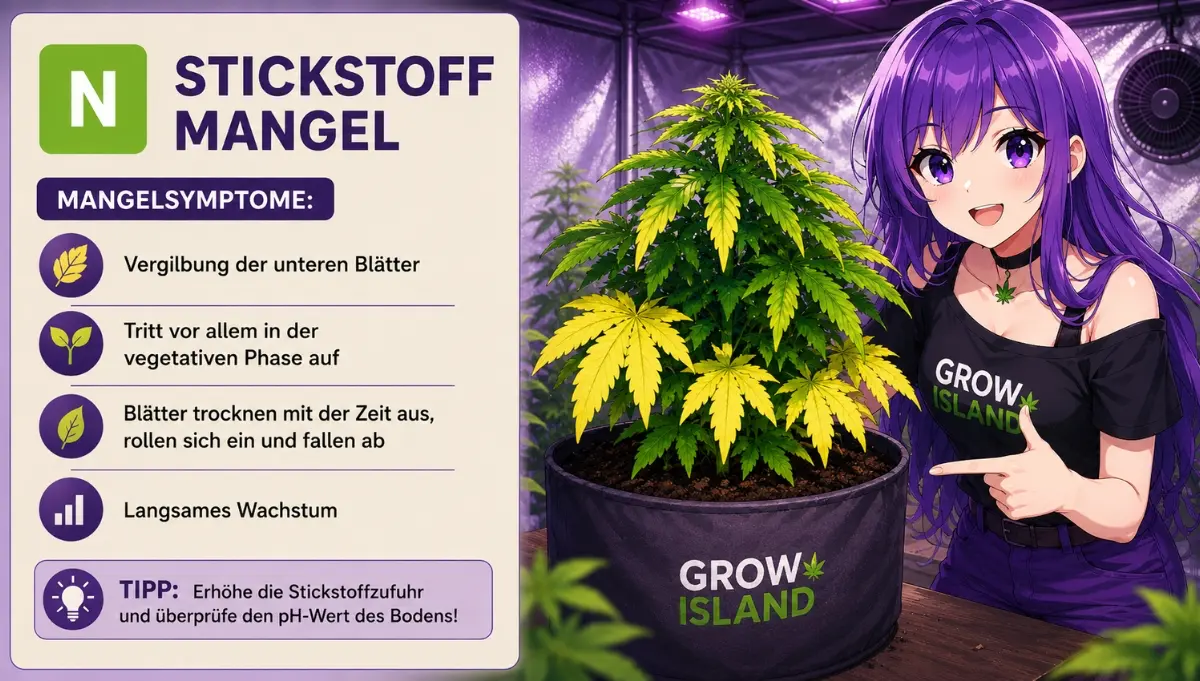
On a plant in the vegetative stage, the lower leaves are becoming evenly paler. The pot dries normally, the roots are healthy, pH is suitable, EC is low and the plant forms new shoots rapidly. In this case, an actual shortage of nitrogen is plausible. The appropriate response is a small, measurable increase rather than doubling the entire dose.
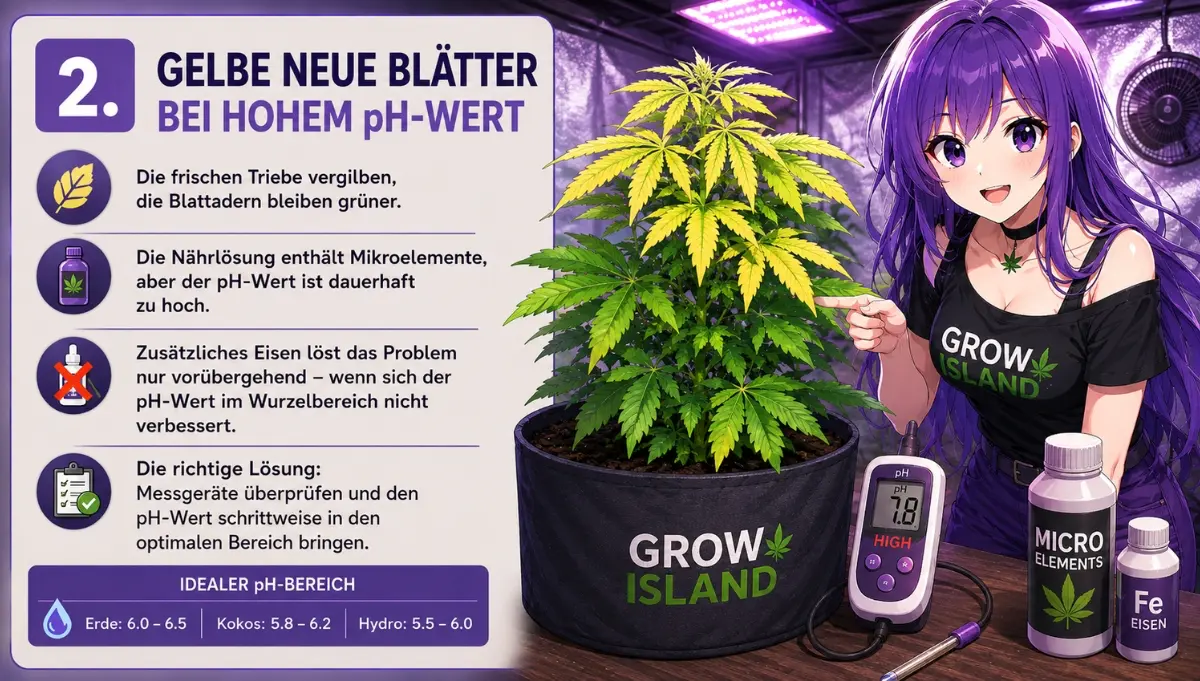
Fresh shoots turn yellow while the veins remain greener. The nutrient solution contains micronutrients, but pH stays too high. Additional iron will not correct the cause while the chemical environment in the root zone remains unsuitable. The right step is to check the meter and gradually return pH to the appropriate range.
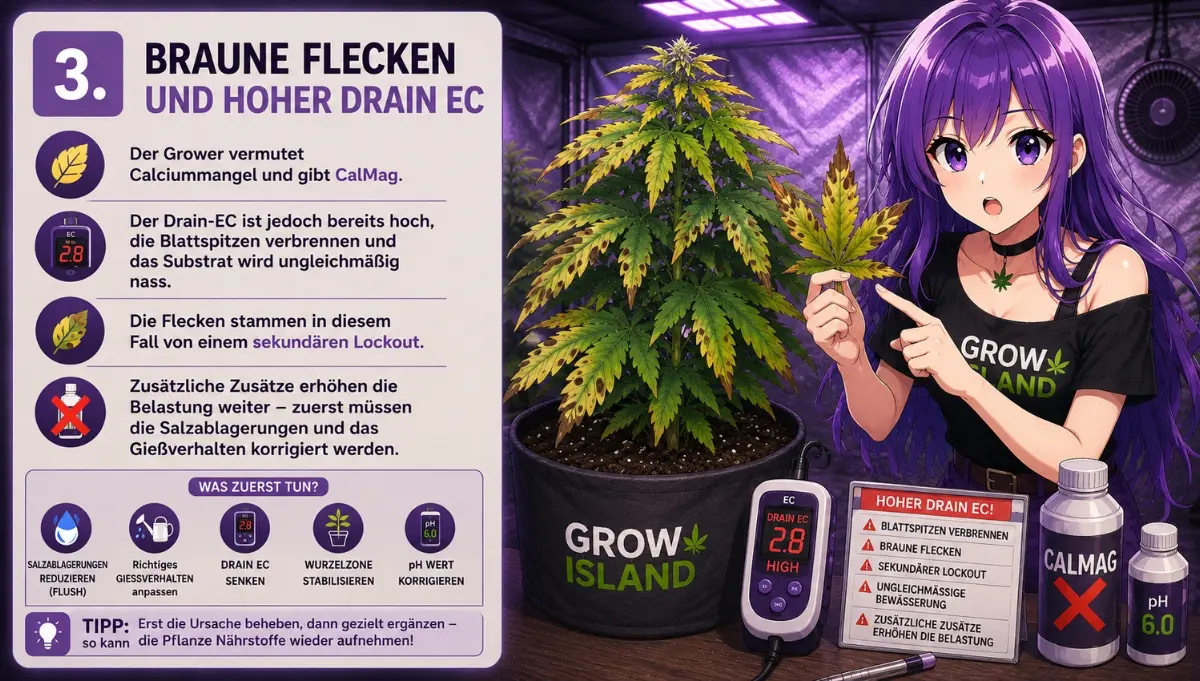
The grower sees an apparent calcium deficiency and adds CalMag. Runoff EC is already high, however, the leaf tips are burning and the medium is being wetted unevenly. In this case, the spots may result from secondary lockout. The additional product increases the load further; salt accumulation and irrigation must be corrected first.
No. A slightly yellow leaf can still photosynthesise and provides valuable diagnostic information. Completely dead leaves that detach easily, or infected leaves, can be removed with clean tools.
Mild chlorosis may sometimes improve. Necrotic, brown or burnt tissue will not heal. Judge recovery mainly from the quality of new growth.
Some ageing of lower leaves may be normal. A rapid decline across the entire canopy should not automatically be dismissed as natural.
Only when growth stage, pH, EC, roots and the pattern of spread also support nitrogen deficiency. Too much nitrogen can cause dark foliage and clawing.
If the medium stays saturated for too long, oxygen deficiency around the roots can slow uptake. Pot weight and drying time are more informative than a fixed calendar.
It may be useful with soft or reverse-osmosis water, in coco, or when a calcium or magnesium problem has been confirmed. It is not an automatic solution when EC is high or the source water is hard.
Depending on the medium and the cause, improvement may require several days or multiple new leaves. Do not change the treatment again every day.
Possible causes include local root damage, stem injury, uneven watering, pests, or localised light and wind stress. Inspect the entire branch and the corresponding section of stem.
A measuring instrument cannot replace observation, but it can rule out assumptions. Supplements should be used only when the underlying cause has been confirmed.
pH, EC and temperature can be checked with one instrument, making troubleshooting faster and easier to document.
View product
A calcium and magnesium supplement for soft water or confirmed demand. Do not use it automatically when EC is high or pH is unsuitable.
View product
A breathable fabric pot can support oxygen supply in the root zone, but it cannot replace correct irrigation.
View product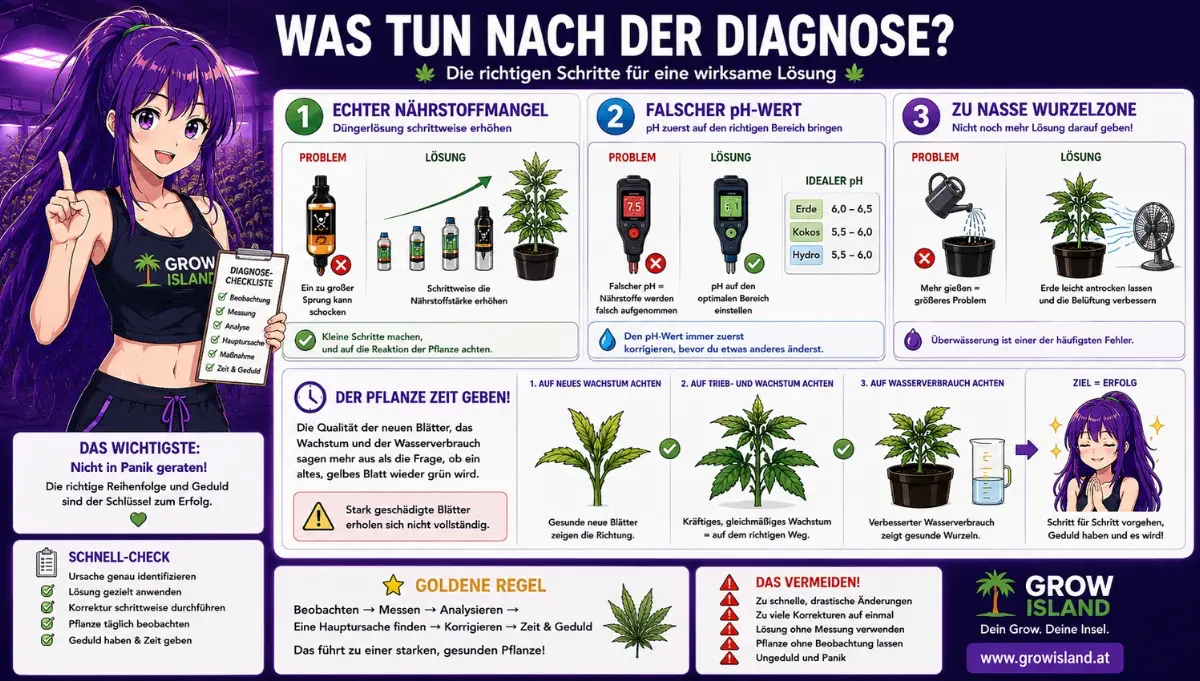
If the cause is a genuine shortage, raise nutrient concentration gradually instead of making one large jump. If pH is incorrect, restore the appropriate range first. If the root zone is too wet, do not pour in another corrective solution merely to feel that immediate action has been taken.
Give the plant time. The quality of new leaves, shoot development and normalised water uptake reveal more than whether an old yellow leaf becomes green again. Heavily damaged tissue does not regenerate completely.
A yellow cannabis leaf is only the beginning of the investigation. Lower or upper position, veins, spots, tip, margin and posture point in the right direction when considered together. Symptoms resembling nutrient deficiency may also be caused by unsuitable pH, high EC, salt accumulation, hard water, root rot, overwatering, heat or light stress.
The next article will examine the individual cannabis nutrient deficiencies separately and in detail: nitrogen, phosphorus, potassium, calcium, magnesium, iron, manganese, zinc, copper, boron, sulphur and molybdenum, each with its symptoms, distinguishing features and controlled correction.
This article provides general botanical and horticultural information. Laws governing cannabis cultivation vary by country and region, so always check the current rules that apply locally. Concentrated nutrients and pH regulators must be used according to their labels and stored safely out of reach of children and animals.









Comments