Properly Watering Cannabis: A Comprehensive Guide Against Over and Under-Watering
Introduction
Cannabis plants consist of about 90% water. This liquid is the transport medium for nutrients and ensures that photosynthesis, cell expansion, and temperature regulation function properly. Despite its importance, watering remains a puzzle for many hobby growers: sometimes there is too much, sometimes too little. Over-watering suffocates the roots and leads to fungi, while under-watering dries out leaves and paralyzes growth. This guide shows you how to find the right balance, recognize symptoms, and manage water quality so that your plants stay vital and yield abundant flowers.
Why Correct Watering is So Important
Water transports macro and micronutrients into the root zone and supports plant turgor. Without sufficient moisture, leaves cannot expand, nutrient uptake is impaired, and photosynthesis stagnates. Too much water, on the other hand, prevents oxygen from reaching the root tips – roots "suffocate," develop rot, and die off. In the worst case, constantly wet soil promotes fungal infestation and reduces yields. Correct watering is therefore not a rigid ritual, but a living process that must adapt to the plant's needs and environmental conditions.
Common Watering Mistakes and Their Causes
Many beginners rely on rigid schedules ("water every other day") and fail to consider that temperature, humidity, pot size, substrate, and plant stage strongly influence water requirements. Water evaporates faster in hot, dry rooms, while the soil stays moist longer in high humidity. Small pots dry out faster than large ones, and a substrate with a lot of perlite or sand drains water more quickly. Such factors lead some growers to overreact and over-water, while others underestimate the water supply. Over-watering is actually more common than under-watering and harder to fix.
Symptoms of Over-Watering
Over-watered plants show clearly recognizable signs of stress:
- Drooping Leaves: Excess moisture reduces the oxygen content in the soil, impairs transpiration, and makes leaves limp.
- Yellow Leaves (Chlorosis): Inhibited nutrient uptake leads to yellowing.
- Leaves Curling Downward (Clawing): Excessive stress causes the typical "clawing."
- Slowed Growth: Physiological processes are disturbed; growth stagnates, and new shoots remain small.
- Fungal Infestation: Wet soil increases humidity in the grow room and creates ideal conditions for powdery mildew and other fungi.
- Sodden soil: If water collects under the pot or the top 3 cm of soil are constantly moist, this is a clear sign of over-watering.
- Root Rot in Seedlings: Over-watering suffocates the roots, which become dark and slimy; seedlings can collapse and die.
- Odor and Weight: Over-watered plants smell musty, and the pots feel unusually heavy.
Forum 42 Fast Buds also points out that yellow, limp leaves, root rot, as well as mold and mildew are typical symptoms of over-watering. Sensi Seeds adds that excessively watered plants react with leaves curled downwards like claws and an overall heavy, moist appearance.

Symptoms of Under-Watering
Too little water also weakens the plant:
- Wilting: Without an adequate water column, leaves lose their turgor and droop weakly.
- Dry, Crispy Leaves: Leaf tips and edges dry out and crumble.
- Discoloration: The plant prioritizes younger growth; older leaves turn yellow or brown.
- Slow Growth: Reduced water absorption decreases metabolic activity and nutrient uptake.
- Leaves Curl Upward or Inward: Fan leaves curl when the plant is dehydrated.
- Dry, Crumbly Soil: Under-watering is indicated by light, dusty soil.
- Light Pot: An empty pot feels significantly lighter.
- Dusty Smell in the Grow Room: Under-watered plants do not develop a musty odor.
Fast Buds emphasizes that dried out, upward-curling leaves, dry soil, and stopped growth are typical signs of under-watering. According to Sensi Seeds, under-watering is recognized by brown, crispy leaf edges, while over-watered leaves bend downwards like claws.

Over-Watering vs. Under-Watering – The Key Differences
A comparison helps to correctly diagnose the plant's condition:
| Feature | Over-Watering (OW) | Under-Watering (UW) |
|---|---|---|
| Soil | Wet, muddy, poorly aerated | Dry, crumbly |
| Leaf Texture | Soft, limp, heavy | Thin, dry, brittle |
| Leaf Color | Dark green | Light green to yellow, brown in extreme cases |
| Leaf Appearance | Curled downwards, bloated | Curled upward or inward, dehydrated |
| Roots | Brown, mushy, rotten (rot) | Dry, brittle |
| Growth | Stunted, new growth discolored | Stunted, plant prioritizes new growth |
| Odor | Musty, moldy | Dusty or neutral |
| Environment | High humidity, low temperature, poor drainage | High temperature, low humidity, fast-drying soil |
Careful observation of these parameters helps to quickly identify the cause of stress and take targeted measures.

How Often Should Cannabis Be Watered?
There is no fixed rule of "watering every two days." Instead, you should regularly check the moisture content of the substrate. Proven methods are:
- Finger or Moisture Meter Test: Stick your finger 3 cm deep into the soil; if it feels dry, it's time to water.
- Lifting the Pot: A dry pot weighs significantly less than a wet one.
- Leaf Observation: Slightly drooping leaves can be a sign of water shortage; in case of pronounced wilting, water immediately.
Most container-grown plants need water every 2–3 days under moderate conditions, while outdoor plants may need to be watered daily in summer. Thorough watering is important: add enough water until the first drops emerge from the bottom of the pot. This corresponds to approximately 25–30% of the pot volume. Excess water should then be removed from the saucer to prevent waterlogging.
The watering frequency depends on numerous factors: plant stage, pot size, medium, temperature, humidity, and light intensity. Seedlings need only a few hundred milliliters of water at short intervals, while large plants in the flowering phase may need a liter or more almost daily. Coco and clay media dry out faster than heavy soil, so watering must be more frequent.
Tip: Buying Cannabis Clones
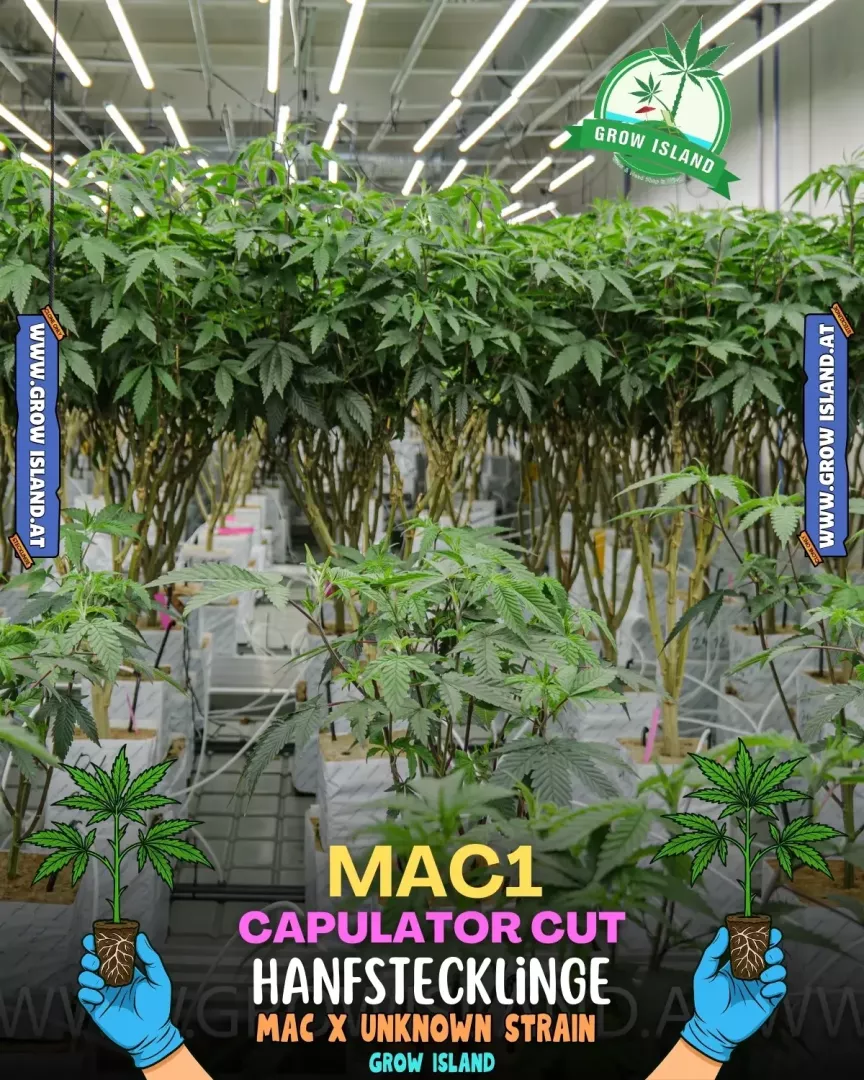
For an easy starter solution that provides a good base for healthy plants, check out our Cannabis Clones. We especially recommend strains like: Animal Tsunami, Runtz x Layer Cake, Banana Runtz, Monster Maker, or Mac 1 Capulator Cut.
For growers who want to work with seeds, we also offer very resilient strains, e.g., from Illuminati Lost Seeds, Barneys Farm, and Sweet Seeds – ideal for beginners or fluctuating climates.
How to Save Over-Watered Cannabis Plants
If you notice signs of over-watering, act quickly but thoughtfully:
- Stop Watering: Let the top 3 cm of soil dry out completely.
- Increase Temperature: Raise the temperature in the grow room to 27–29 °C to promote evaporation.
- Improve Substrate: Mix perlite, sand, or vermiculite into the soil to improve drainage and prevent waterlogging.
- Soil Aeration: Stick skewers into the soil to create air channels and promote ventilation.
- Increase Air Circulation: Place fans in the grow room to accelerate evaporation.
- Choose Suitable Pots: Fabric or smart pots improve drainage and prevent waterlogging.
Emergency Measures for Severe Over-Watering
If the soil is already completely soaked, quick first aid measures help:
- Tilt the Pot: Place a wedge or wooden block under one side of the pot so that excess water can drain.
- Point a Fan Directly at the Soil: This makes water evaporate faster at the surface.
- Slightly Increase Temperature: Place the plant in the sun or under a warm light source for a few hours.
- Apply Absorbent Material: Sprinkle dry coco fibers or perlite on the soil to soak up residual water; remove the material once it is damp.
Repotting as a Last Resort
In severe cases, only a complete substrate change helps:
- Carefully remove the plant from the pot and dry the root ball with paper towels.
- Remove rotten, dark, or slimy roots with clean scissors.
- Fill a new pot with fresh soil and 30% perlite to improve drainage.
- Prepare a hollow for the root ball, sprinkle in 5g of mycorrhiza (promotes root health), and insert the plant.
- Water thoroughly until a slight run-off occurs.

How to Save Under-Watered Cannabis Plants
In case of under-watering, it is important to slowly reintroduce moisture to the roots:
- Soil Aeration: Poke ventilation holes into the soil with a skewer.
- Slow Water Addition: Add about 200 ml of water every 10 minutes over a period of one hour.
- Bottom-Watering: Place the pot in a shallow dish with water so that the plant can absorb water from below. After a few hours, the leaves should regain their turgor.
- Regular, but Moderate Watering: Resume normal watering as soon as the top 3 cm of the substrate are dry again. Under-watered plants recover within three days; in severe cases, it takes up to a week.
- Remove Damaged Leaves: Cut off dead or heavily damaged leaves with clean scissors.
Preventive Measures Against Chronic Under-Watering
To prevent future problems, you should consider the following tips:
- Check Soil Moisture Daily: Check the top 3 cm of soil and water as soon as it is dry.
- Choose Correct Pot Size: Small plants and Autoflowers thrive in 11-liter pots; Sativa-dominant strains need 15–20 liters. Larger pots prevent drying out in warm climates.
- Maintain Constant Humidity: Keep it at 70% in the seedling phase, 60% during growth, and 40% during flowering.
- Lower Temperatures: In case of chronic under-watering, temperatures should remain in the lower range (20 °C during vegetation, 18 °C during flowering).
- Mulching: Straw, worm castings, or grass clippings on the soil surface reduce evaporation and retain moisture.
- Suitable Watering Time: Water in the morning if possible, so that the plants can absorb the water before the midday heat sets in.

Water Quality: pH, PPM, and Purity
Not only the quantity but also the quality of the water determines the health of your cannabis plants.
pH Value
The pH value measures the acid or base content of a solution on a scale from 0 to 14, where 7 is neutral. Cannabis plants prefer slightly acidic conditions: a pH of 6.0–6.8 for soil or 5.5–6.5 for hydroponic systems. Values that are too high or too low impair nutrient uptake and cause symptoms similar to nutrient deficiencies. The pH can be quickly measured on the run-off water with a pH meter. If the pH is too high, use pH-Down products; if the pH is too low, pH-Up helps.
PPM and EC
PPM (parts per million) measures the amount of dissolved mineral salts in the water. A value of 500 ppm is ideal in the vegetative phase, while about 1000 ppm is recommended in the flowering phase. EC meters (electrical conductivity) similarly provide information about the nutrient concentration. Beginners can ignore this technique; monitoring is only useful with increasing experience.
Purity and Filtration
Tap water often contains chlorine, fluoride, and other substances that can harm microorganisms in the substrate. Let tap water stand for 24–48 hours before use or use a carbon filter to remove chlorine. Reverse osmosis filters remove 95–99% of dissolved salts and impurities. However, these systems are costly and more suitable for advanced growers.
Substrates and Watering
The choice of medium influences the watering frequency. Traditional soil stores a lot of water and therefore needs less watering but is prone to waterlogging. Coco fibers dry out faster, which means watering must be more frequent. Clay or rock wool pellets have almost no water retention; precise, continuous watering is essential here. Regardless of the medium, you should always ensure adequate drainage and mix in perlite or expanded clay to create air channels.

Conclusion
Properly watering your cannabis plants is not a rigid schedule but a balancing act. Water is the carrier of vital nutrients, but its quantity and quality determine the fate of your plants. Over-watering manifests as drooping, dark green leaves and musty soil, while under-watering causes dry, yellow leaves and crumbling soil. Instead of watering by the calendar, regularly check the substrate's moisture content, lift the pot, and observe the foliage. Adjust watering to the growth phase, medium, pot size, and environmental conditions, and don't forget to control the pH value and nutrient concentration. With a little attention and the measures described here, your plants will stay healthy and fully unfold their genetic expression.










Comments