How and When to Properly Flush Cannabis Plants
How and When to Properly Flush Cannabis Plants – Practical Knowledge for Serious Growers
Cannabis Strain Researcher and Grow Expert
By Bartholomew Alen
Flushing cannabis plants is a technique that plays a central role in both hobby and professional cultivation. Few topics spark as much debate among experienced growers as whether flushing is truly necessary, when it should begin, and how long it should last. While some cultivators consistently stop all nutrient feeding two weeks before harvest, others consider flushing optional. What ultimately matters, however, is not opinion but an understanding of the plant’s physiological processes.
In practice, growers often encounter the following situation: a plant develops beautifully for weeks, produces dense, resin-rich buds, and undergoes proper drying. Yet the smoke feels harsh, mineral-like, or irritating. In many cases, this can be traced back to excess nutrient salts accumulated in the substrate or an imbalanced feeding strategy during late flowering. This is where controlled flushing becomes relevant.
What Does Flushing Mean in Cannabis Cultivation?
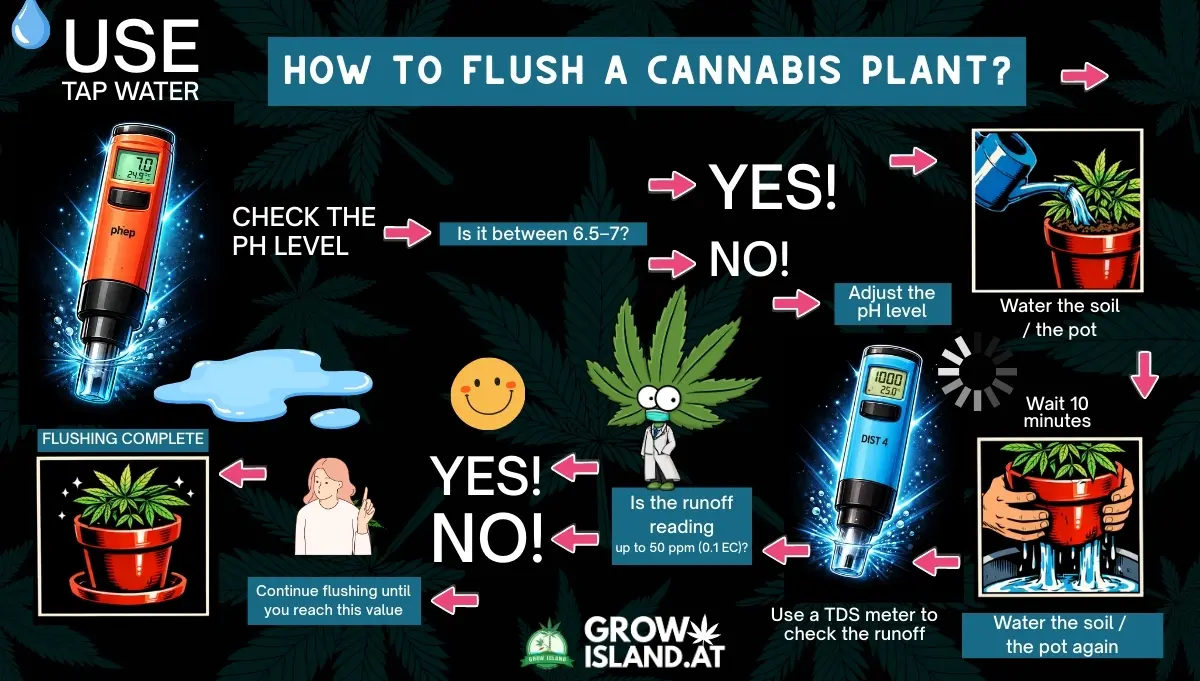
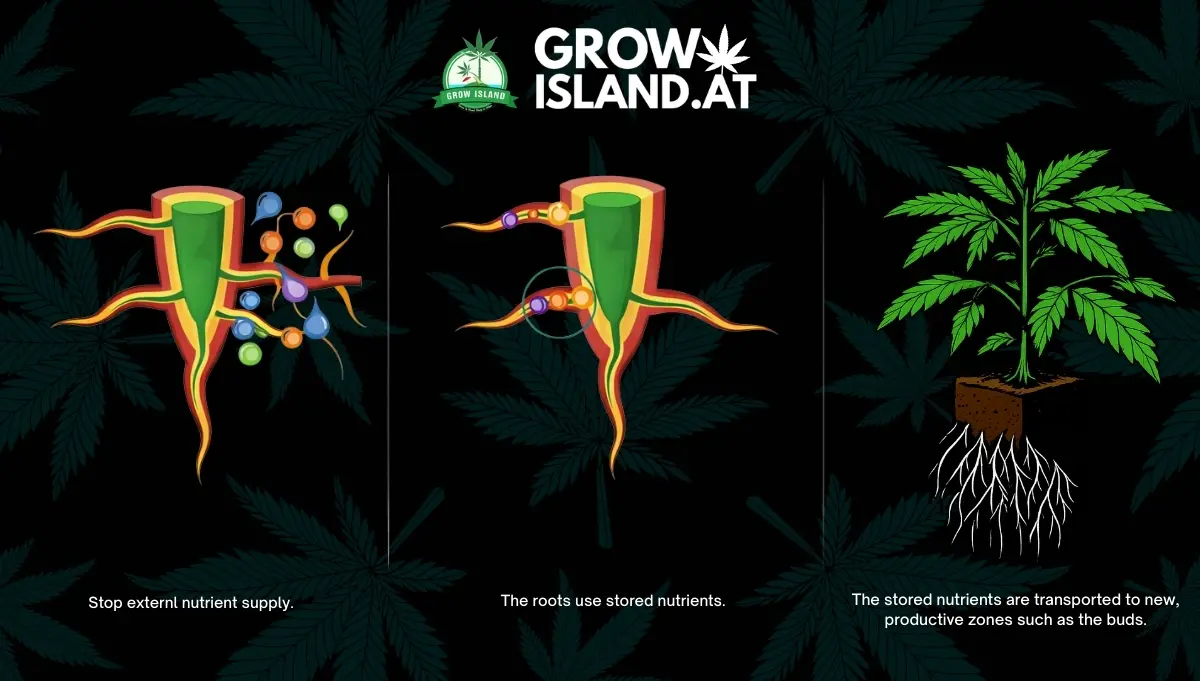
Flushing refers to thoroughly saturating the growing medium with clean, pH-adjusted water in order to wash out accumulated salts and excess nutrients from the root zone. At the same time, all external nutrient input is stopped. The plant receives only water – without added macro- or micronutrients.
From a physiological perspective, this process encourages the plant to mobilize stored nutrients from older tissues. Nitrogen, phosphorus, potassium, and trace elements are transported to active, productive areas – especially the flowers. This internal redistribution is part of the plant’s natural maturation process.
Timing is crucial. Starting too early may reduce photosynthetic efficiency, while starting too late may limit the intended effect.
The Optimal Timing for the Flush Phase
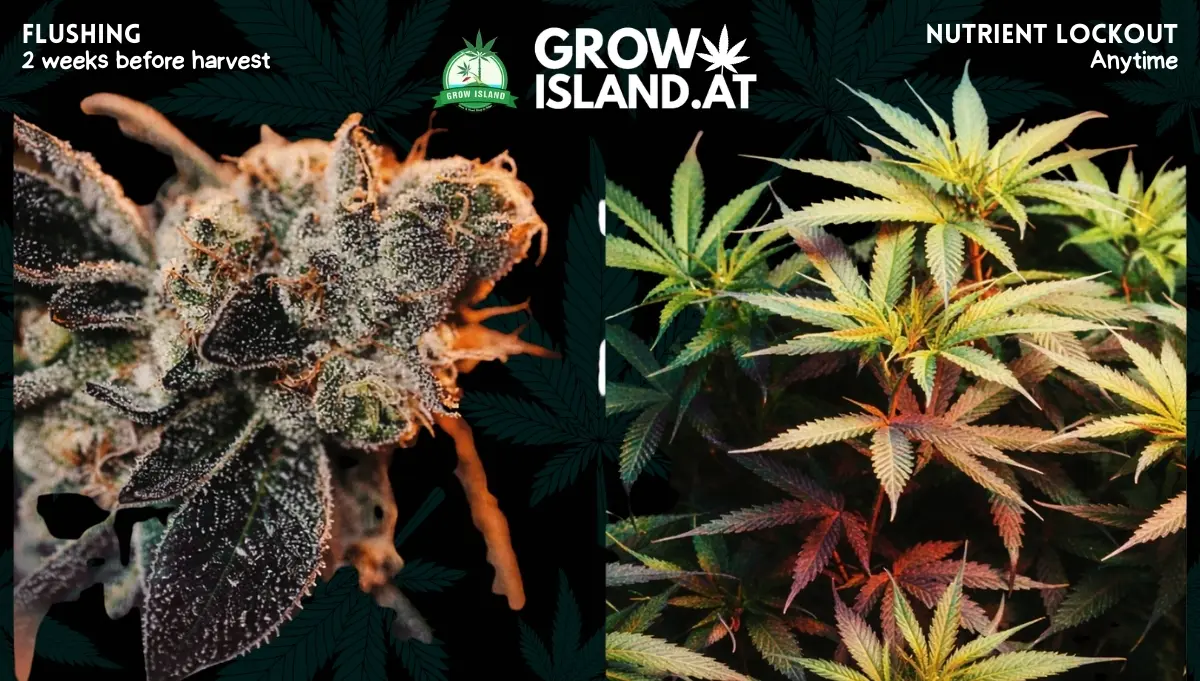
In traditional indoor cultivation, flushing typically begins 10–14 days before the planned harvest. For a strain with an eight-week flowering period, this usually means starting around week six.
However, calendar timing alone is not sufficient. Observing trichome development provides far more precise guidance. When the resin glands shift from clear to milky, the plant is approaching optimal maturity. At this stage, flushing can begin, allowing the plant to rely on stored reserves during the final ripening phase.
Experienced growers combine visual inspection with EC and pH measurements to maintain maximum control.
Flushing in Cases of Overfeeding and Nutrient Lockout
Flushing is not only used before harvest. It can also be necessary during the vegetative phase, especially in cases of overfeeding or nutrient lockout.
Nutrient lockout often results from:
- High salt concentrations in the substrate
- Improper pH balance
- Uncontrolled mixing of different nutrient products
Common symptoms include burnt leaf tips, chlorosis, or stalled growth despite regular feeding. In such cases, thorough flushing can stabilize the medium and restore the roots’ ability to absorb nutrients properly.
Measurements as the Professional Foundation
Precise cultivation is data-driven. EC and TDS meters are therefore essential tools.
- TDS values above 1000 ppm in runoff indicate significant salt buildup.
- The goal is to approach the TDS level of the source water (around 50 ppm).
- EC values should gradually drop toward 0.0–0.2 mS/cm.
At the same time, the runoff water changes from cloudy to clear, visually confirming that the medium is being cleaned.
Flushing in Hydroponic Systems
In hydroponic cultivation, the process is simpler. Since there is no buffering substrate, the nutrient solution is completely drained and replaced with pH-neutral water.
In these systems, the flush phase typically lasts around 48 hours, as the plant immediately loses access to external nutrients.
Impact on Quality and Smoke Experience
Growers who consistently flush often report:
- Smoother, softer smoke
- Reduced throat irritation
- Cleaner burn
- More pronounced terpene expression
However, it is important to emphasize that proper drying and curing are equally critical. During curing, excess chlorophyll continues to break down, significantly improving aroma and smoothness.
When Flushing May Not Be Recommended
In living organic soil or so-called super soil systems, flushing must be approached with caution. These systems rely on active microbiology. Heavy flushing may wash out beneficial microorganisms and disrupt ecological balance.
Since synthetic salt-based nutrients are typically not used in these systems, classical flushing is often unnecessary.
The Scientific Debate
Critics argue that nutrients already incorporated into plant tissues cannot be removed by water alone because molecular bonds remain stable. Flushing primarily reduces nutrient concentration in the medium, not within the plant’s internal chemistry.
Supporters, however, believe that removing external nutrients triggers physiological responses that mobilize internal reserves. Some research also suggests that moderate stress can influence the production of secondary metabolites such as cannabinoids and terpenes.
The truth likely lies in proper application. Genetics, growing medium, nutrient strategy, and environmental conditions all play decisive roles.
Practical Conclusion
Flushing is neither a miracle cure nor a myth. It is a tool that, when applied with knowledge and precision, can improve final quality. Growers who carefully observe their plants, analyze measurements, and understand the specific genetics they work with can optimize the final stage before harvest.
Experimentation, documentation, and comparison ultimately lead to sustainable expertise in cannabis cultivation.
Disclaimer
This content is intended for educational purposes only. When consuming Δ⁹-THC, it is metabolized into 11-hydroxy-THC in the body, which may produce stronger or altered effects. Always act responsibly and ensure an appropriate setting.
Stay Cultivated.
Back to the posts















Comments