AC Infinity Water tank base 4 pcs 3.7 L (for 19L fabric pot)
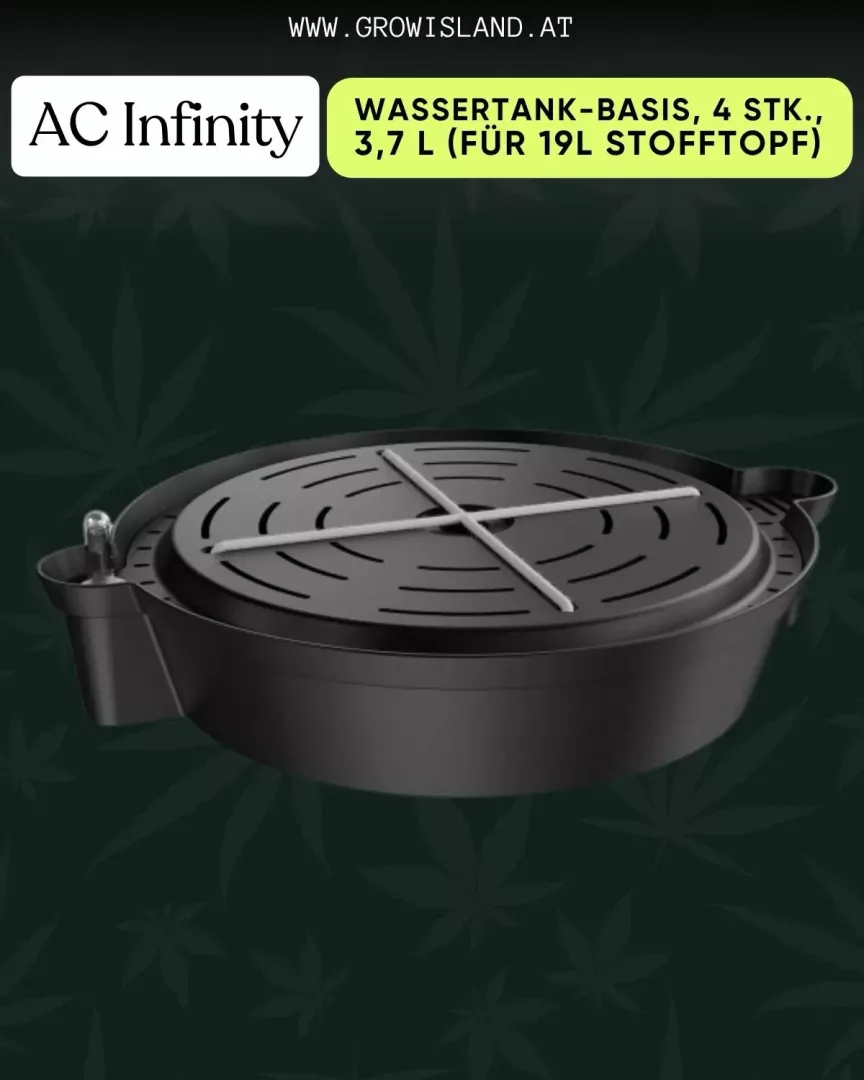
The AC Infinity 4-piece self-watering base set is designed for 19 L fabric pots. Its 3.7 L reservoirs, capillary wicks and water level indicators support a more consistent water supply. Available for pre-order.
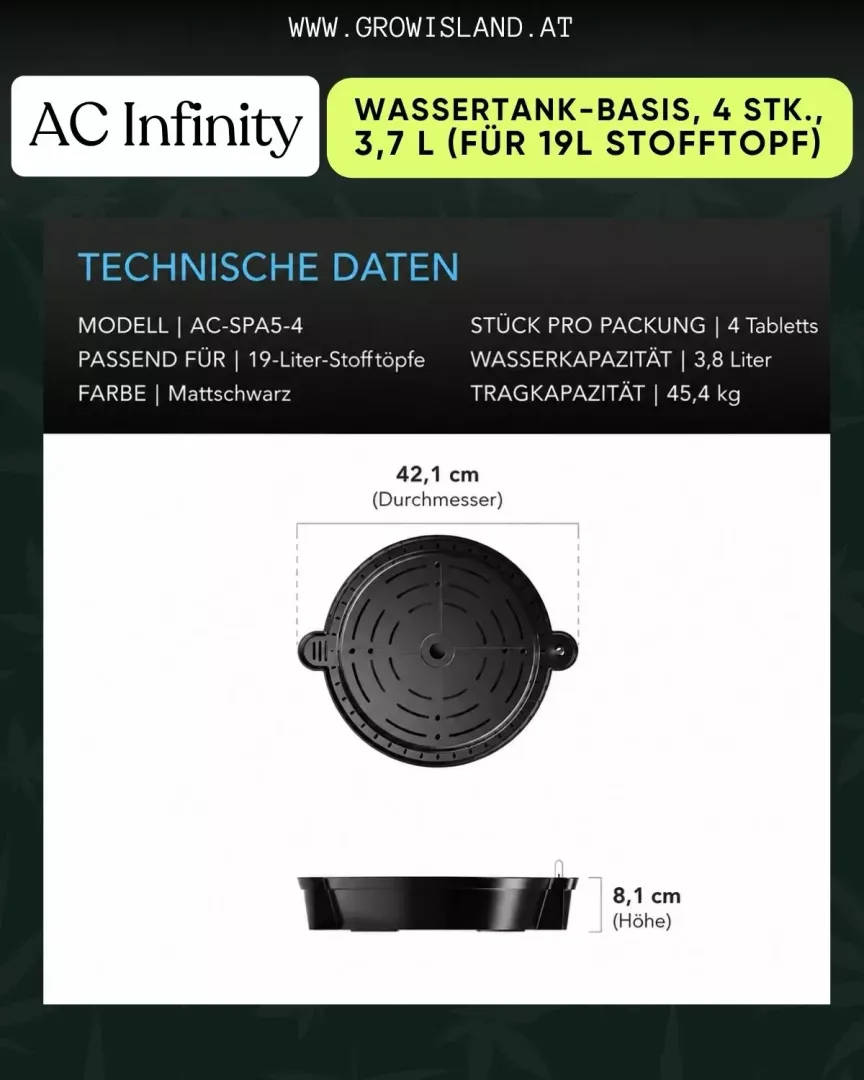
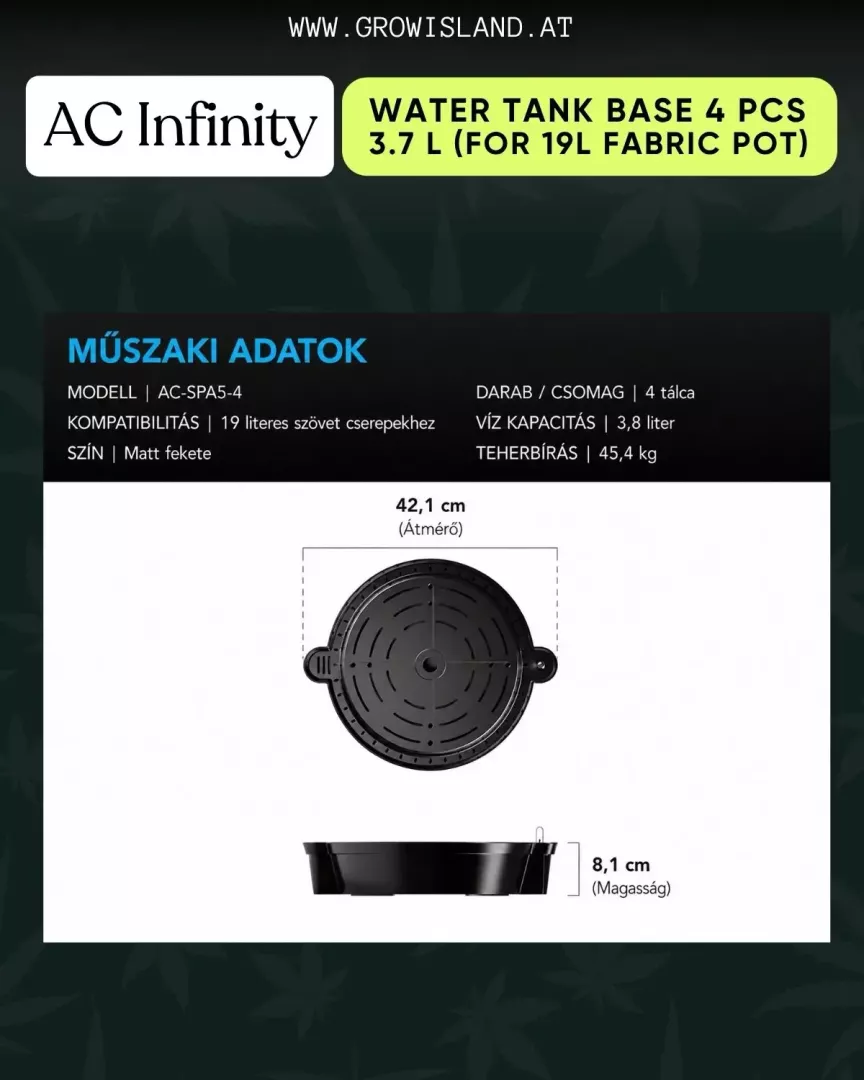
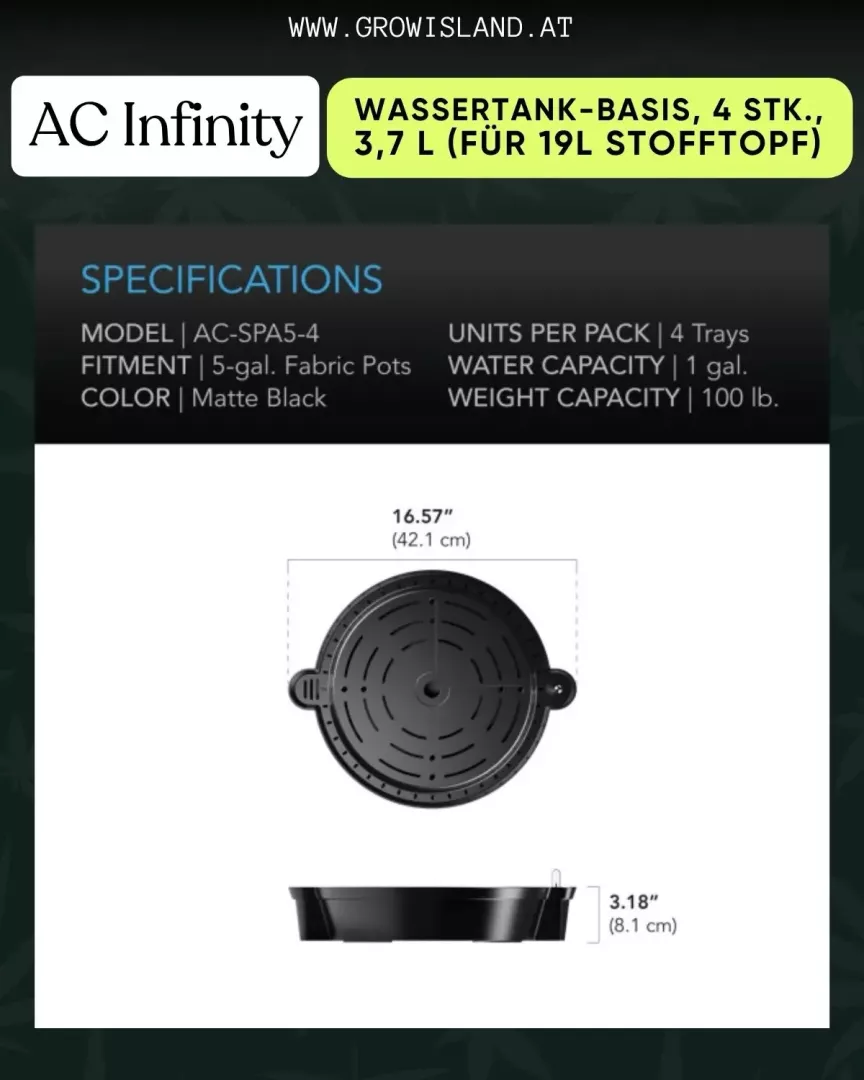
| AC INFINITY SELF-WATERING BASE – Product Data | |
|---|---|
| Brand | AC Infinity |
| Model | AC-SPA5-4 |
| Type | Passive self-watering base |
| Package | 4 pieces |
| Reservoir capacity | 3.7 L per base |
| Compatibility | Fabric pots up to 19 L |
| Watering system | Capillary wicks |
| Water level indicator | Yes |
| Maximum load | Approximately 45 kg per base |
| Power supply | Not required |
| Availability | Available for pre-order |
| Product number | ACI-WT-3,7L |
| Manufacturer |
AC Infinity
GrowTechnology GmbH |
| Weight | 5.00 kg |
Product description
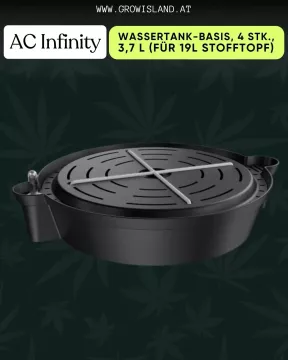
AC Infinity Self-Watering Fabric Pot Base – 4-Pack with 3.7-Litre Reservoirs for 19-Litre Pots
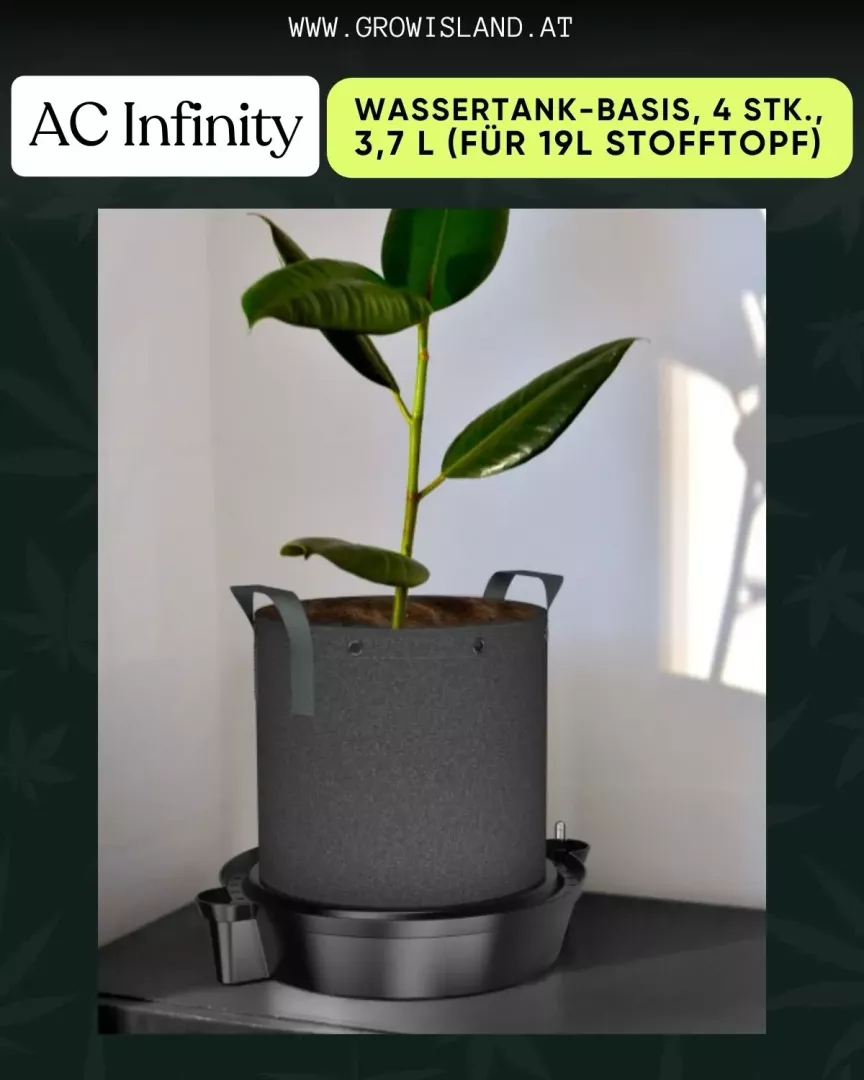
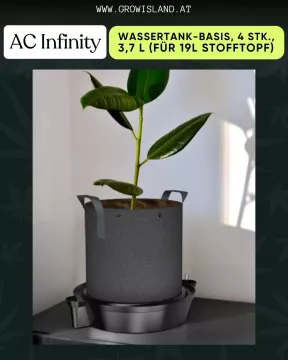
The AC Infinity Self-Watering Fabric Pot Base 4-Pack is a patented passive irrigation system for round fabric pots with capacities of up to 19 litres or 5 gallons. Each base features a water reservoir holding approximately 3.7 litres and uses highly absorbent wick lines to deliver water from below to the fabric pot placed on top.
The system requires no pump, electrical connection, timer or complicated tubing. It uses natural capillary action to transport water from the reservoir into the lower section of the growing medium. This can significantly reduce the time spent on daily manual watering while providing plants with a more consistent moisture supply.
The set contains four independently usable watering bases. It is suitable for grow tents, grow rooms, greenhouses and appropriate indoor or outdoor spaces. The technical specifications are based on information from the official AC Infinity product page.
Passive Self-Watering Through Capillary Action
The system operates according to a simple and reliable physical principle. The ends of the highly absorbent wick lines sit inside the water reservoir, while their upper sections remain in direct contact with the bottom of the fabric pot. Capillary action draws water upwards from the reservoir and into the growing medium, where moisture spreads through the lower part of the pot and becomes available to the roots.
Because water uptake is influenced by both the moisture level of the medium and root activity, the system can respond to plant requirements more naturally than irrigation based exclusively on a fixed schedule. Water delivery is passive and continuous, with no electronic controller required. The actual delivery rate depends on the growing medium, number and placement of wicks, pot size, plant development and environmental conditions.
The irrigation system can be used with plain water or suitable water-soluble nutrients. When using nutrient solution, concentration, pH and salt levels should be checked regularly because collected runoff may re-enter the irrigation cycle.
Continuous Water Level Monitoring
Each of the four bases features a highly visible water level indicator. It displays how much liquid remains inside the reservoir and makes it easier to determine when a refill is required. The fabric pot therefore does not need to be lifted simply to check the water level.
A practical filling and pouring opening with an integrated strainer is located on the opposite side. It allows the reservoir to be filled cleanly and quickly or excess water to be drained. If the base is used only as a runoff tray without the self-watering function, collected drainage water should be emptied when the indicator shows that the reservoir is full.
The integrated gauge reduces uncertainty during watering, although it displays only the amount of water inside the reservoir. The actual moisture level of the growing medium should still be monitored regularly, especially while the system is being adjusted.
Heavy-Duty Construction with an Elevated Drainage Plate
The durable water basin, central support column and elevated drainage plate form a strong platform for the fabric pot. According to the manufacturer, each fully assembled base can support a total weight of up to 100 lb or approximately 45 kg. This makes it suitable for large, fully filled 19-litre fabric pots.
The drainage plate raises the pot above the bottom of the reservoir so that it does not sit directly in standing water. Excess liquid can flow through the openings into the basin below, while the wick lines provide a controlled connection between the stored water and the growing medium.
The small air gap between the bottom of the pot and the water surface supports airflow beneath the fabric container and may help reduce the spread of algae and other deposits. The design does not replace regular inspection and cleaning. Root condition, medium moisture and reservoir hygiene must still be monitored during passive watering.
Four Independent Watering Stations
The set contains four complete base units that can be positioned and filled independently. Each plant receives its own reservoir, while the number of wick lines can be adjusted according to the water requirements of that plant. This is particularly practical when plants with different moisture needs share the same growing area.
Each base holds approximately 3.7 litres of water, giving the complete set a combined reservoir capacity of around 14.8 litres. The actual interval between refills depends on plant type and size, growing medium, temperature, humidity, air movement and light intensity. A universal operating time therefore cannot be specified.
The four separate stations can be arranged flexibly inside a grow tent. Because no connecting tubes are required between the bases, the system remains tidy and modular. An individual plant can be repositioned or removed without changing the remaining watering bases.
Designed for 19-Litre Fabric Pots
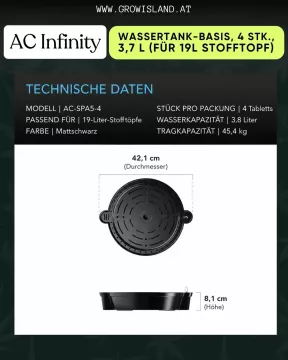
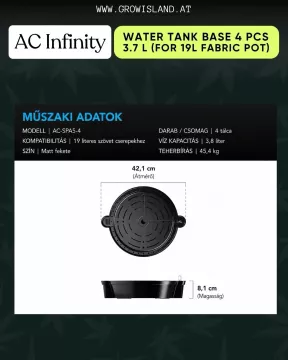
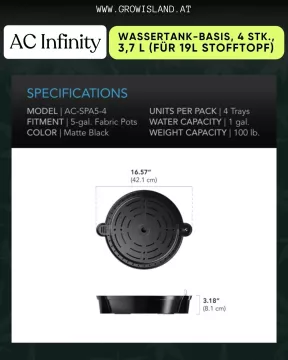
The reservoir base is designed for round fabric pots with capacities of up to 19 litres or 5 gallons. Each base has a total length of approximately 42.1 cm and a height of around 8.1 cm. A completely filled 19-litre fabric pot can therefore stand securely on the elevated drainage plate.
The system can also be used with smaller round fabric pots, provided that they stand securely on the plate and the wick lines are positioned correctly. The bottom of the pot must be made from water-permeable fabric. Rigid plastic pots without direct contact between the growing medium and the wick lines are not designed for this operating principle.
Why Fabric Pots Are Particularly Suitable
Fabric pots are made from water-permeable non-woven material that can absorb moisture and transfer it into the growing medium. At the same time, they allow improved air exchange around the sides and bottom of the root zone. These characteristics complement passive watering through wick lines.
For dependable water delivery, the manufacturer recommends growing media containing peat moss and/or coco coir. These materials have good capillary properties and can distribute moisture drawn through the wick lines. Very coarse or weakly absorbent media should be tested carefully before long-term use.
Requirements for Self-Watering
Passive watering works most reliably when the root system has already reached the lower section of the fabric pot. The roots of very young or recently transplanted plants may not yet extend into the zone moistened by the wick lines. During this stage, the plant should continue to be watered from above.
As a possible guide, the manufacturer notes that the plant may be approximately level with the rim of the pot or that the first dried root tips may be visible through its bottom. Because plant species and growing conditions vary, the transition to exclusive self-watering should be gradual.
During this transition, the moisture level of the medium and the condition of the plant should be checked regularly. Manual top watering should be reduced only after the lower zone of the medium is reliably receiving moisture.
Assembling the Reservoir Base
Assembly requires no tools and can be completed in a few simple steps. The official AC Infinity user manual describes the following basic process:
- Place the support column in the centre of the water basin. Its feet must fit correctly into the designated recesses.
- Insert the water level indicator into the opening provided.
- Thread the wick lines through the selected openings in the drainage plate.
- The ends of the wick lines must reach the bottom of the water reservoir.
- Place the drainage plate over the basin and central support column.
- Fill the reservoir with water or a suitable water-soluble nutrient solution.
- Position the fabric pot in the centre of the drainage plate.
Adjusting the Wick Lines Correctly
The amount of water delivered can be influenced by the number, length and position of the wick lines. For a 19-litre or 5-gallon fabric pot, the user manual generally recommends two wick sections, each approximately 46 cm long.
Thread the wick lines through the openings so that their ends reach the bottom of the reservoir. A single wick can be used to reduce water delivery, while multiple or diagonally positioned wick lines can increase it. Observe the moisture level of the medium after every change before making further adjustments.
Lift the fabric pot before adjusting the wick lines. Rotating or sliding the pot while it remains on the base can pull the lines out of the water. This may interrupt capillary action and cause an uneven water supply. Replace any wick lines that are frayed, discoloured or no longer delivering water reliably.
Filling and Refilling the Reservoir
It is advisable to lift the fabric pot off the base before filling. Water or water-soluble nutrient solution can then be poured directly into the reservoir through the filling opening. The current level is visible on the indicator.
Refill the reservoir whenever the water level indicator shows that it is empty. The pot should be lifted briefly and regularly during refilling. If it remains permanently undisturbed on the base throughout the entire growing cycle, roots and wick lines may become interlocked, which can obstruct water delivery.
Do not fill the reservoir beyond its maximum intended capacity. Overfilling may cause water to spill from the basin or make the bottom of the pot excessively wet. After refilling, place the fabric pot centrally on the drainage plate without rotating it.
Reusing Runoff Water
The heavy-duty lower basin collects excess water and nutrient solution draining through the bottom and sides of the fabric pot. When the self-watering function is active, some of this liquid can return to the growing medium through the wick lines. This can reduce water loss and help keep the cultivation area cleaner.
Runoff reuse should nevertheless be managed carefully. Mineral fertilisers can cause nutrient salts to accumulate inside the reservoir and growing medium. Regularly checking the nutrient solution and periodically flushing and thoroughly cleaning the basin can help prevent unwanted deposits.
Supporting Plant and Root Development
A more consistent water supply can reduce extreme fluctuations between very dry and heavily saturated growing medium. This may support more stable conditions around the root zone without guaranteeing specific growth or yield results. The plant can absorb moisture from the lower part of the pot while the upper layer of the medium does not need to remain permanently wet.
The elevated drainage plate creates a small air gap beneath the fabric pot. Combined with the breathable material of the container, this can support ventilation around the lower root zone. Correct wick adjustment remains important because excessive water delivery may keep the growing medium unnecessarily wet.
Less Daily Watering Work
The AC Infinity reservoir base can significantly reduce daily plant-care work. Instead of repeatedly checking and top-watering each individual pot, the highly visible reservoir gauges become the main points to monitor. This may be especially useful when caring for several plants or during short periods away.
The system is not a completely maintenance-free irrigation solution. Plants must still be observed, reservoirs refilled, wick lines inspected and nutrient solutions checked. Temperature and humidity also influence water consumption and may change the refill schedule.
Cleaning and Regular Maintenance
AC Infinity recommends cleaning and refilling the water basins approximately every two weeks. This can reduce mineral deposits and remove dirt or potential pests before they accumulate. More frequent cleaning may be appropriate when nutrients are used, depending on their composition.
For cleaning, remove the fabric pot, drainage plate, water level indicator and support column from the basin. The reservoir can then be emptied completely through the pouring opening and rinsed with clean water. Before reassembly, inspect every opening, strainer area and wick line for deposits.
Wick lines are wearing components. Replace them when they become heavily discoloured, begin to fray or harden, or no longer absorb water effectively. Clean wick lines support dependable capillary water delivery.
Applications
- Indoor grow tents and smaller grow rooms
- Greenhouses and conservatories
- Indoor gardens and dedicated plant rooms
- Suitable outdoor spaces, patios and gardens
- Vegetative plants in 19-litre fabric pots
- Soil, peat or coco-coir growing media
- Passive irrigation without pumps or electrical connections
- Collection and controlled reuse of runoff water
Key Product Benefits
- Four complete self-watering bases in one set
- Approximately 3.7-litre reservoir capacity per base
- Designed for round fabric pots up to 19 litres
- Passive operation without electricity, pumps or timers
- Capillary watering with adjustable wick lines
- Highly visible water level indicator on every base
- Filtered filling and pouring opening
- Heavy-duty lower basin for collecting runoff
- Elevated plate prevents direct contact with standing water
- Central support column for high load capacity
- Supports up to approximately 45 kg per base
- Flexible and independent positioning
- Suitable for grow tents, grow rooms, greenhouses and gardens
- Reduces the daily manual watering workload
Technical Specifications
| AC INFINITY SELF-WATERING FABRIC POT BASE – Product Data | |
|---|---|
| Manufacturer | AC Infinity Inc. |
| Product model | AC-SPA5-4 |
| Product type | Passive self-watering base |
| Units per set | 4 |
| Reservoir capacity | Approx. 3.7 litres per base |
| Compatible pot size | Round fabric pots up to 19 litres / 5 gallons |
| Total length | Approx. 42.1 cm |
| Total height | Approx. 8.1 cm |
| Weight capacity | Up to 100 lb / approx. 45 kg per base |
| Watering principle | Capillary action through wick lines |
| Water level indicator | Integrated, 1 per base |
| Power supply | Not required |
| Colour | Matte black |
| Patent | US Patent No. 11877546 |
| UPC | 819137022706 |
Package Contents
- 4 × water basins with 3.7-litre capacity
- 4 × elevated drainage plates
- 4 × central support columns
- 4 × water level indicators
- 1 × wick line for custom cutting
Important Usage Information
Place the system only on a level surface with sufficient load-bearing capacity. Do not exceed the maximum supported weight, and never use the base as a step or seat. Before each use, check that the drainage plate, support column and water level indicator are positioned correctly.
Young plants must continue to be watered from above until their roots reach the lower section of the pot. After transitioning to the system, check the moisture of the growing medium regularly and adjust the number or position of wick lines gradually. Proper use can reduce watering work but does not replace ongoing monitoring of the plants and nutrient solution.
Share your experience, write a review.

















.jpg)




.jpg)





Hailea ACO-2202 air pump




 -10%
-10%
Sunny Diamond Haze Cannabis Clone


UGro Pure Coco Perlite 50 L


TBOX mechanical timer



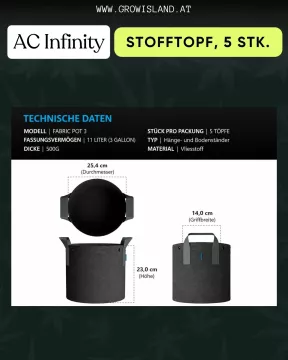
AC Infinity fabric pot 5 pcs

 -19%
-19%
Compact gravity infuser, black
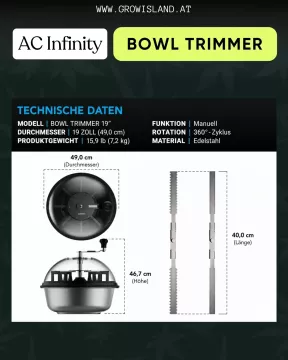


 -30%
-30%
Modül Dok Deluxe Travel Set Tyson 2.0

 -14%
-14%
Solo III Version 1 Vaporizer









 -9%
-9%
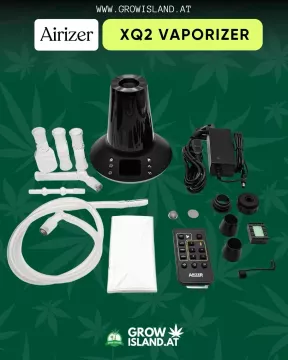
Airizer XQ2 Vaporizer

 -8%
-8%
Veazy Dynamic Blue Vaporizer






AK-74 / AUTO / Trikoma Seeds




The Palmar / FEM / Trikoma Seeds






Patagonia / FEM / Trikoma Seeds


Jack Herer / FEM / Trikoma Seeds




Malquerida / FEM / Trikoma Seeds


Boca Negra / FEM / Trikoma Seeds




AK-74 / FEM / Trikoma Seeds


Gelato / FEM / Trikoma Seeds

 -24%
-24%
Secret Jardin Power Pack LED Vollspektrum 250W 3.01


XMax V4 Pro Vaporizer


VOVA Vaporizer


 -29%
-29%
5 Zombie Snack Auto Mix Pack / Auto / Illuminati Lost Seeds


 -15%
-15%
Sleepy Pack / Fem / Illuminati Lost Seeds


 -26%
-26%
Inferno ACE / Fem / Illuminati Lost Seeds


AlienZ / Fem / Green House Seeds


 -12%
-12%
Urban Garden Q200 LED 36x36cm Full Spectrum 200W 2.8

 -8%
-8%
DynaVap The M7 XL Stealth

 -8%
-8%
Veazy Inspiring Orange Vaporizer


DynaVap The M7


Tightvac 11x1 cm Tightpacs


Microscope Mini 100x with light




Hawaii Maui Waui / FEM / Nirvana






Durban Z / FEM / Barney's Farm






MAC 1 / FEM / Barneys Farm


RS11 / FEM / Barney's Farm




Studio 54 pre-grown hemp plant







 -13%
-13%
Blue Zushi pre-grown hemp plant






Banoreoz pre-grown hemp plant





 -10%
-10%
Smackerz pre-grown hemp plant



 -2%
-2%
Sangria - Aficionado Seed Collection / hemp plant



 -44%
-44%
Pirate Pie - Illuminati Lost Seeds

 -50%
-50%
Akathcuki Jutsu - Illuminati Lost Seeds


 -23%
-23%
Yallah Haze - Illuminati Lost Seeds

 -27%
-27%
Zuviel OG - Illuminati Lost Seeds


Blue Monkey hemp plant

 -11%
-11%
La Bomba hemp plant / Compound Genetics

 -15%
-15%
Fizzy Bubblegum hemp plant


Jokerz 31 pre-grown hemp plant



 -8%
-8%
Prism Marker cannabis clone

 -3%
-3%
The Queen S1 cannabis clone


Runtz cannabis clone

 -25%
-25%
Colorado Nightshifter cannabis clone

 -25%
-25%
Blue Zushi TenCo Cut Cannabis Clone

 -11%
-11%
Snow White cannabis clone


Monster Maker Cannabis clone


Shiatsu Kush cannabis clone


 -32%
-32%
Illuminati Lost Seeds / FEM / Win Gardumim Leviosa

 -11%
-11%
Banana Runtz hemp plant

 -15%
-15%
Super Buff Cherry 26 GMSL cut hemp plant


Amnesia Gold hemp plant

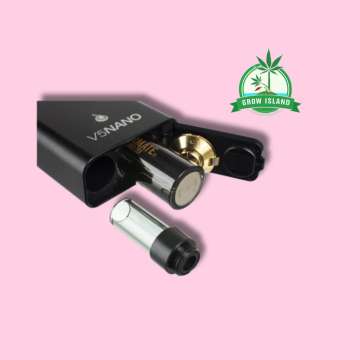
Flowermate V5 Nano Vaporizer


Sour Ripper hemp plant


Pink Payton hemp plant


Zoap hemp plant


Khalifa Kush hemp plant


Sleepy Joe pre-grown hemp plant





Power Plant pre-grown hemp plant

Candy Store pre-grown hemp plant

 -11%
-11%
Lumen King Light Fixture 720W LED Eco Line

 -8%
-8%
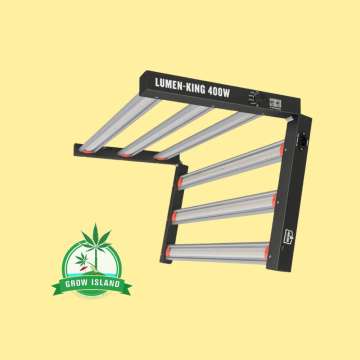
Lumen King Light Fixture 400W LED Eco Line

 -38%
-38%
Canna Terra Easybox


Animal Tsunami hemp plant


Bio Tabs - Perfect Plant Pack
 -27%
-27%
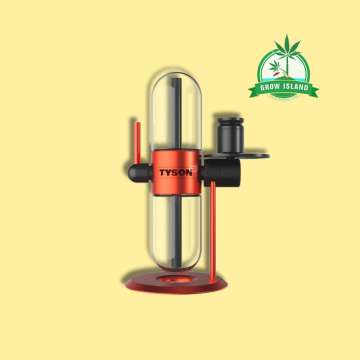
Tyson 2.0 x Stündenglass Gravity Infuser


Blockberry hemp plant
Osmosis filter

 -6%
-6%
VENTY Vaporizer






AK47 pre-grown hemp plant


Gelato 45 pre-grown hemp plant





VapoCane Fusion Set
 -13%
-13%
Trimming bag-Drytrim

HortiLight Green Led headlight


Banoreoz hemp plant





 -11%
-11%
MAC 1 (Capulator cut) hemp plant


Sweet Seeds / FEM / Psicodelicia









Sweet Seeds / FEM / Do-Sweet-Dos


Cap Junky hemp plant






Fast Buds / FEM / Lemon Mandarin

Fast Buds / FEM / Papaya Sherbet

Fast Buds / FEM / Rainbow Melon

Fast Buds / FEM / Gorilla Melon
 -20%
-20%
Dutch Passion / FEM / Melonade Runtz
 -29%
-29%
Dutch Passion / FEM / Lemon Z

 -18%
-18%
Pure Tent V2.0 120x120x200


Sleepy Joe hemp plant




 -16%
-16%
Dantes Inferno 8 (Milehighdave Cut) hemp plant


Strawberry Banana hemp plant


Super Orange Glue hemp plant


Fast Buds / AUTO /Apple Strudel








Anesia Seeds / FEM / Cash Cow


Anesia Seeds / FEM / Nova OG

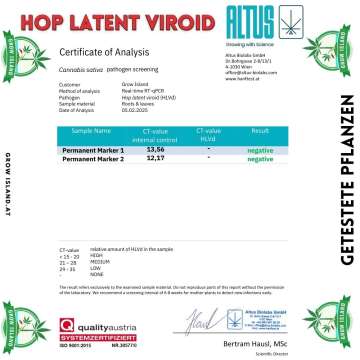
Permanent Marker hemp plant


Wedding Cake hemp plant





Customer Reviews
MacJoe
Läuft einwandfrei, kann ich nur jedem empfehlen, der unkompliziert bewässern will