Guttation in Cannabis – What Do These Mysterious Droplets Mean?
Cannabis Guttation: The Plant's Whisper
The world of cannabis cultivation is full of hidden signals. A slightly yellowing leaf, an unusual scent, a minor change in the plant's posture – all are coded messages. For the experienced grower, the plant is not merely a living organism, but a communicating partner.
Many people, when they first see these tiny, sticky droplets on leaf edges, panic or assume that resin has formed on the leaves. However, these droplets are traces of an important physiological process from which we can learn a great deal – if we pay attention.
What Exactly Is Guttation?
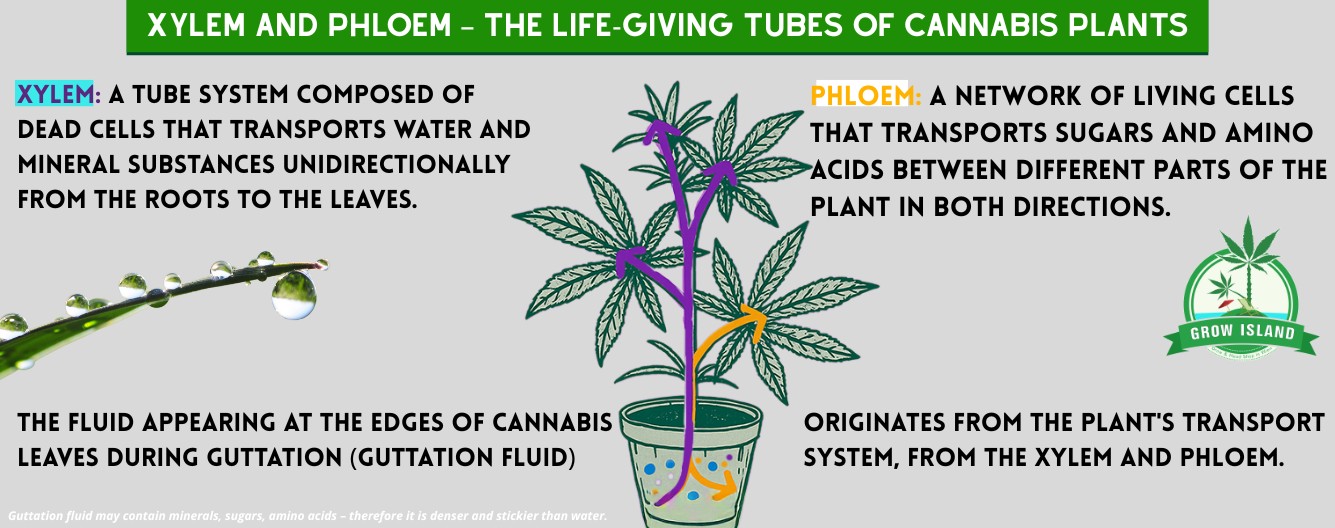
Guttation is a natural plant mechanism through which cannabis eliminates excess moisture and nutrients via the leaf edges. This process activates when the plant keeps its stomata (gas exchange openings) closed at night, but the roots continue to actively absorb water from the soil. Internal pressure (known as root pressure) begins to increase, and to release this pressure, the plant opens special pores – hydathodes – at the leaf edges.
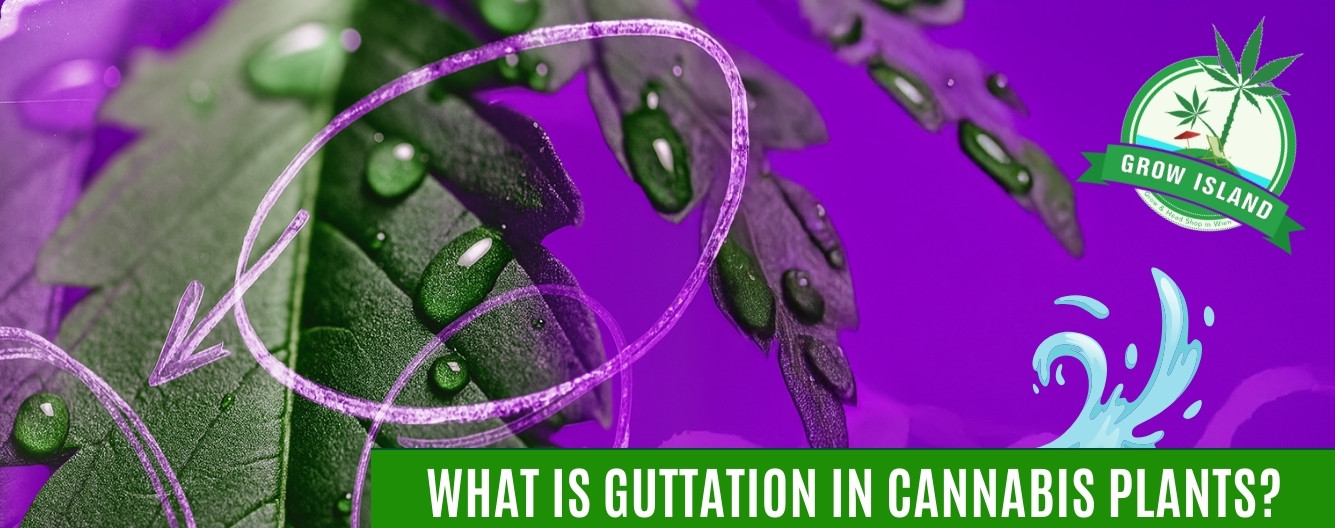
Through these, the guttation fluid is pressed out: a dense liquid enriched with sugars, amino acids and mineral substances, which is much more than just water.
Important: This is not dew and it's not resin either!
Dew: Condensation of air humidity on cold leaves – comes from outside.
Resin: Sticky substance secreted from trichomes – carries cannabinoids and terpene content.
Guttation: Originates from inside the plant and is a physiological response reaction.
What Triggers Guttation?
Nighttime period: No photosynthesis, stomata are closed.
Moist soil: Nothing inhibits the roots' water uptake.
Root pressure: Water absorption continues, but the plant cannot transpire.
.jpg)
This mechanism is present in many other plants as well – for example, in strawberries, corn, and even in certain fungal species (such as the bleeding tooth fungus – Hydnellum peckii, which releases blood-like droplets).
How to Recognize Cannabis Guttation?
- Location: The droplets appear exclusively along the leaf edges and leaf tips.
- Texture: The fluid is sticky, often opalescent, amber-colored, or translucent.
- Timing: Most noticeable in the early morning, usually disappears by evening.
- Absence of external influence: Not associated with visible pests or damage.
Why Can Guttation Be a Good Sign?
- Strong, active root system: The plant is healthily absorbing water.
- Internal balance: The plant is capable of regulating its own water and nutrient management.
- Favorable environment: Temperature, humidity and soil moisture are in sync.
Some research suggests that guttation droplets may also nourish beneficial microorganisms (such as leaf surface bacteria) – thus potentially helping to strengthen the plant's immune system.
When Can It Be a Warning Sign?
- Overwatering: If the plant guttates too frequently, it may be receiving too much water.
- Nutrient loss: Valuable minerals and sugars can be lost through the droplets.
- Humidity increase: The evaporation of guttation droplets indoors can increase humidity levels, which may lead to mold and powdery mildew.
- Pathogen attraction: The sugary fluid can be attractive not only to beneficial microbes but also to harmful ones (e.g., Botrytis).
Is the Guttation Droplet Psychoactive or Medicinal?
No. Although its appearance resembles resin, its content is completely different. Guttation fluid does not contain THC, CBD or other cannabinoids, so it has neither medicinal nor psychoactive effects. So if the thought crossed your mind to "harvest it and smoke it," you'd better put that idea aside – and observe it with scientific curiosity instead.
.jpg)
Closing Thought: Learn from the Droplets
Cannabis guttation is like the plant's whisper to the grower: "I'm feeling good... but maybe you've given me a little too much." This process isn't a flaw, but an information gateway. If you pay attention to it, you can learn a tremendous amount about environmental effects, your watering rhythm, and how your plant feels from roots to leaf tips.
Grow Island Recommendation:
- Consider whether you're watering too frequently?
- Check if the humidity level is appropriate?
- Ensure adequate ventilation in the growing space.
And if everything is fine – simply enjoy the sight. Not every day does one witness such a special plant phenomenon!
Further reading: Want to know which are the 5 most popular cannabis strains in the Netherlands?
Author: Bartholomew Alen – Grow Island Blog
Back to the posts


Comments